J. Damask (a.k.a. Joyce Chng) was kind enough to answer a few questions about her new book, Heart of Fire, which hits digital shelves in September. The book comes from Masque Books, a digital-only division of Prime Books, a notable small press genre publisher (notable most recently for releasing the absolutely amazing Yoon Ha Lee collection, Conservation of Shadows -- check out the Skiffy and Fanty interview here). In other words, Heart of Fire is sure to be damned good! Though you'll have to wait for a little while, you should bookmark this page and remember to buy it in a couple months!
Now for the mini interview:

Showing posts with label Interviews. Show all posts
Showing posts with label Interviews. Show all posts
Thursday, July 11, 2013


Tuesday, July 09, 2013
Week of Joy (Day Five): Neil Clarke and Upgraded: A Cyborg Anthology (Mini Interview) @kickstarter
Neil Clarke, editor-in-chief at Clarkesworld, is currently running a wonderful Kickstarter campaign for an anthology called Upgraded. Folks like Yoon Ha Lee, Tobias Buckell, Elizabeth Bear, Caitlin R. Kiernan, and so on will contribute stories to the collection, and there will be an call for submissions to fill the remaining slots. In short, this anthology will be wicked awesome! Support the campaign if you can (stretch goals = awesome).
I asked Neil if he would be so kind as to answer a few questions about the anthology, science fiction, and other related topics. He was kind enough to oblige. Here is my mini interview with him:
I asked Neil if he would be so kind as to answer a few questions about the anthology, science fiction, and other related topics. He was kind enough to oblige. Here is my mini interview with him:
Sunday, July 07, 2013
Week of Joy (Day Two): Rainbow Lights by Polenth Blake (A Mini Interview)
The lovely Polenth Blake was kind enough to join me during this Week of Joy to briefly talk about her writing and her collection, Rainbow Lights.
 Synopsis:
I grew up in a family of geeks, so science fiction and fantasy were my bedtime stories. Reality is

A deep-sea robot tells stories in every colour, but no shade can describe meeting a giant squid.
Rainbow Lights is the first collection by science fiction and fantasy author Polenth Blake. Alien scorpions, vampire ice cream sellers and clockwork flies, try to find their place in worlds where being human is optional. These thirty-five stories and poems are a mixture of new pieces and work published in venues like Nature, Strange Horizons and ChiZine.What first inspired you to write genre fiction? And why do you think genre fiction is such a potent form for storytelling?
I grew up in a family of geeks, so science fiction and fantasy were my bedtime stories. Reality is
Wednesday, March 07, 2012
An Interview w/ Maureen McHugh (Author of After the Apocalypse)
You can check out my review of After the Apocalypse here.
Now for the interview:
First things first: What initially drew you to writing, and why genre fiction in particular? I was drawn to writing because I loved to read, and when I was reading a story I really really loved, I hated for it to end. So to find the stuff I really really loved to read, I started thinking about writing it myself.
It turned out that writing didn’t necessarily lead to making the stuff that I loved to read, because my best writing seems to be about the things I am most uncertain about. I write to find out what I think. It turns out that a lot of what I love to read and a lot of what I think about falls best into genre.
A question I often ask myself, and others, is what drives people towards post-apocalyptic (or apocalyptic) fiction. Your collection is perhaps on the cusp between "a world crumbling" and "a world crumbled." What do you think accounts for our fascination with catastrophe in its various forms? What about your fascination?
I think there are a lot of reasons to be drawn to the apocalyptic. We are all headed towards a personal apocalypse in that we are all going to die. That’s a terrible thing to truly comprehend, and apocalyptic fiction is a way to rehearse our existential dread, so to speak.
Sunday, September 04, 2011
An Interview with Kevin Hearne
Thanks to Kevin Hearne for taking the time to answer my ridiculous questions. Don't forget to check out my review of Hexed.
Now for the interview:
First things first: what drew you into writing in the first place, and why fantasy in particular?
I was drawn into writing by One Flew Over the Cuckoo's Nest by Ken Kesey. Chief's voice is so well done and I wanted to be able to grab somebody the way that book grabbed me. I wound up writing
Now for the interview:
First things first: what drew you into writing in the first place, and why fantasy in particular?
I was drawn into writing by One Flew Over the Cuckoo's Nest by Ken Kesey. Chief's voice is so well done and I wanted to be able to grab somebody the way that book grabbed me. I wound up writing
Friday, June 17, 2011
An Interview with Andy Remic
(Note: This interview was originally meant to be in audio form for The Skiffy and Fanty Show. Due to technical constraints, Mr. Remic and I decided to conduct the interview in text form.)
The lovely Andy Remic has been so kind as to answer a few questions for my blog. I've reviewed two of his works (Kell's Legend and Serial Killers Inc.) and loved both of them. You should definitely give his work a try, or something bad will happen to you.
Here's the interview
You've recently started up Anarchy Books. What is Anarchy Books and how did you come to be a part of it? What's the story?
I'd written a couple of novels which were not of my "genre" (SFF) and, like every other author, have seen the gradual acceleration of digital publishing during the last couple of years following in the footsteps of the digital music world; and I thought, "why the hell not?" I knew some of my books were doing well digitally, and simply decided I'd give it a try as a vehicle for some of my different genre works. Then I discovered other friends/writers wanted to jump onboard as well, hence Anarchy Books! Ultimately, I suppose it's my longterm backup plan for when I've sexually
The lovely Andy Remic has been so kind as to answer a few questions for my blog. I've reviewed two of his works (Kell's Legend and Serial Killers Inc.) and loved both of them. You should definitely give his work a try, or something bad will happen to you.
Here's the interview
You've recently started up Anarchy Books. What is Anarchy Books and how did you come to be a part of it? What's the story?
I'd written a couple of novels which were not of my "genre" (SFF) and, like every other author, have seen the gradual acceleration of digital publishing during the last couple of years following in the footsteps of the digital music world; and I thought, "why the hell not?" I knew some of my books were doing well digitally, and simply decided I'd give it a try as a vehicle for some of my different genre works. Then I discovered other friends/writers wanted to jump onboard as well, hence Anarchy Books! Ultimately, I suppose it's my longterm backup plan for when I've sexually
Saturday, June 26, 2010
Interview w/ Darren Shan
I've had the pleasure to interview Darren Shan, whose newest book, The Procession of the Dead, came out on the 4th of June. You can find out more about Mr. Shan and his various books, including the Cirque du Freak and Demonata books, at his website.
Now for the interview:
First, thanks very much for doing this interview. Could you let folks know a bit about who you are? What first inspired you to try your hand at writing (for fun and professionally, if you can disentangle the two)?
I've spent the last ten years writing books for older children and teenagers -- Cirque Du Freak and The Demonata -- but I actually started out writing for adults, and now I have returned to that field with Procession of the Dead, the first of a trilogy. I've always wanted to be a writer, ever since I was 5 or 6 years old. I just love telling stories! I began trying to write books when I was a teenager, completed my first full draft when I was 17, and powered on from there. I began writing full time when I was 23 and got my first cheque a couple of years or so later. I struggled to get off the mark with my adult books initially, but then Cirque Du Freak came along by accident -- I didn't plan to write children's books for a living; I just wanted to try it for fun! Fifteen million book sales later, I've never looked back!
 Who are some of the books/writers who have most influenced you? Likewise, who are some of your favorite authors/books from the last ten years?
Stephen King's been my biggest single influence, but I like to read widely and have been directly inspired by all sorts of writers, from Mark Twain and Frances Hodgson Burnett, to Ray Bradbury and Kurt Vonnegut, to Jonathan Carroll and James Ellroy, and many, many more. From the last ten or so years, His Dark Materials by Philip Pullman has impressed me the most. I also loved Neil Gaiman's The Graveyard Book.
Your bio indicates that you are a huge movie and comic fan. Which movies and comics do you find yourself going back to over and over and what draws you to them?
With movies, all sorts, but some of the ones which I watch religiously every few years or so are everything by Sergio Leone, 2001: A Space Odyssey, Being There (the Peter Sellers film), The Chocolate War, Pulp Fiction, the Star Wars movies, the Godfather films, The Searchers... As for comics, The Watchmen is absolutely amazing and my favourite single work of any medium. V For Vendetta, Miracleman, The Killing Joke, The Dark Knight Returns, Love & Rockets, Cerebus, The Sandman, Bone.
What does your writing space look like? Are you the messy desk type, or the old cushy chair with the patches type? Pen and paper, old typewriter, or computer?
I write on a PC, and I like organised chaos! My office is fairly tidy, and my books are stacked meticulously on their shelves, but there are always bits of paper everywhere, books on the floor waiting to be sorted through and shelved (my books are published in almost 40 countries, so I get lots of foreign editions in the post every month!), CDs of photos waiting to be uploaded to my site, and so on. It's all fine as long as nobody comes in to disturb it!

Do you develop your novels, whether in The City Trilogy or your previous series, with the idea of a series in mind, or do they sort of take a life of their own after the first book? What for you is the most difficult aspect of writing a series of books?
No, all of my three series to date started out as stand-alone story ideas. With Cirque Du Freak I knew there would be room to do some sequels if I felt like it, but I didn't have a long series planned. With Lord Loss and Procession of the Dead I never dreamt that either would be the first book of a series. But after I'd written them, I came up with ideas for stories that tied in with them and took things from there.
 Procession of the Dead reminds me a lot of Gangs of New York and some of the work by Brian Evenson (along with other 1920s-30s-styled books/movies). What was the inspiration for this particular novel? How did it develop in your head? And why blind Incan priests who seem to be invisible to everyone else?
It actually started life when I was watching Barton Fink! I wanted to write a quirky, funny book about an insurance agent and his wacky mentor. But as I played around with ideas it quickly became something more sinister and involved. I wrote the first draft back in the early 90s. Other influences would have been the Godfather movies, Once Upon A Time In America, the old gangster movies that I've always loved (the ones with Jimmy Cangey, George Raft, Bogie, etc), the books of Jonathan Carroll. The Incan angle came after I'd pieced together most of the main story. I was looking for a good title for the book, and I remembered reading an Incan calendar some months earlier. When I went back to it, I liked what I found and chose the names for the chapter headings. Then, as I worked on the book and subsequent drafts, the Incans just sort of grew and became more integral.
Your books have a particularly dark fantasy slant to them, and Procession of the Dead certainly seems to play even more with the dark, odd, and bizarre. What draws you to the dark and the bizarre and what do you think it is that intrigues us, as readers, about such things?
I think it has to do with our fear of death. We're aware that we have limited time on this planet, and I think most people like to believe that death won't be the end of us, that we'll live on somehow, some way. Any sort of fantasy helps us cling to the idea that there's more to life than this one short burst of it. Even if it's a horror story, I think people would rather believe in a world of monsters and dark magic than a world of plain, brutal reality when we live for a while, die, and the universe moves on quite nicely without us. Fantastical explorations, whether they take the form of religious books or horror novels, are crucial to keeping most of us sane and on the right track. In a world of darkness, there's a chance that a force of supreme good exists and that we are being judged. In a world of bland reality, why should we obey laws, respect the rights of other people, toe the line? If anyone ever proves that there are no gods or ghosts or any other supernatural beings, I think we're going to find ourselves in a whole heap of trouble! In the meantime, let's dream big and believe whatever the hell we want to and play with all the dark, morbid, other-worldly stories that our fevered minds can conjure up -- it's fun and it's good for us!
Do you keep maps of your world(s), such as the City in Procession of the Dead, or do the places you play with in your writing exist as vivid dreams in your mind?
The only time I've ever drawn a map was when I wrote The Thin Executioner, which is an out-and-out fantasy novel set on a make-believe world. Otherwise I keep my stories in this realm, although I do often play around with geography -- I don't feel like I have to completely obey the laws of reality, and places like The City are a mix of various towns, cities and villages which I have visited or imagined over the years.
Being a bestselling author, you have undoubtedly dealt with modern innovations in distributing stories, such as ebooks and so on. Do you think we will live in a mostly paperless world, with physical books becoming more like collector's items than the preferred medium?
I definitely think hard copy books are on the way out -- digital books just offer too many advantages. It's like DVD versus video, CD versus tapes -- there's only ever going to be one outright winner! However, I think it will take time for books to go completely digital. People like me, who grew up on books, have an emotional attachment to them that's hard to break -- that's why many people ridicule the very idea of reading from a screen, because to them it's an insult to even suggest that they might ever abandon their beloved paperbacks. But as computers become more commonplace in schools, and as more and more children are taught to read by looking at a screen, they will grow up without that emotional attachment, and they will opt for the more advanced digital world over the very 20th century world that we have come from. The revolution will truly begin with the young, but it's a revolution I look forward to -- it will make access to books far easier and more widespread than it could ever otherwise be, and I think it will lead to even more people reading.
 What other projects do you have coming up besides The City Trilogy? Can you tell us a bit about them?
In August I release my one-off book, The Thin Executioner. Then in October I start a four book series called The Saga Of Larten Crepsley, about one of the characters from my vampire series.
What unusual piece of advice would you give to any aspiring writers out there?
Don't think too hard! Writer's block only happens when you think too much about a story. It's like riding a bike -- don't stand there looking at the damn thing and trying to analyse everything that must be done in order to operate it -- just jump the hell on and see where the ride takes you!
 Random Question: If you could bring to life any dark fantasy creature you've either invented, written about, or read about, which creature would it be and why?
This world would be a very interesting place with the chess-playing Lord Loss from my Demonata series, an eight-armed demon master with a hole where his heart should be, filled with dozens of tiny, writhing snakes, and a desperate yearning to experience human sorrows in all their forms and flavours. Oprah would love him!
---------------------------------------------------
And that's it, folks! Thanks again to Mr. Shan for his time and patience. Now go get a copy of Procession of the Dead!
Now for the interview:
First, thanks very much for doing this interview. Could you let folks know a bit about who you are? What first inspired you to try your hand at writing (for fun and professionally, if you can disentangle the two)?
I've spent the last ten years writing books for older children and teenagers -- Cirque Du Freak and The Demonata -- but I actually started out writing for adults, and now I have returned to that field with Procession of the Dead, the first of a trilogy. I've always wanted to be a writer, ever since I was 5 or 6 years old. I just love telling stories! I began trying to write books when I was a teenager, completed my first full draft when I was 17, and powered on from there. I began writing full time when I was 23 and got my first cheque a couple of years or so later. I struggled to get off the mark with my adult books initially, but then Cirque Du Freak came along by accident -- I didn't plan to write children's books for a living; I just wanted to try it for fun! Fifteen million book sales later, I've never looked back!
Who are some of the books/writers who have most influenced you? Likewise, who are some of your favorite authors/books from the last ten years?Stephen King's been my biggest single influence, but I like to read widely and have been directly inspired by all sorts of writers, from Mark Twain and Frances Hodgson Burnett, to Ray Bradbury and Kurt Vonnegut, to Jonathan Carroll and James Ellroy, and many, many more. From the last ten or so years, His Dark Materials by Philip Pullman has impressed me the most. I also loved Neil Gaiman's The Graveyard Book.
Your bio indicates that you are a huge movie and comic fan. Which movies and comics do you find yourself going back to over and over and what draws you to them?
With movies, all sorts, but some of the ones which I watch religiously every few years or so are everything by Sergio Leone, 2001: A Space Odyssey, Being There (the Peter Sellers film), The Chocolate War, Pulp Fiction, the Star Wars movies, the Godfather films, The Searchers... As for comics, The Watchmen is absolutely amazing and my favourite single work of any medium. V For Vendetta, Miracleman, The Killing Joke, The Dark Knight Returns, Love & Rockets, Cerebus, The Sandman, Bone.
What does your writing space look like? Are you the messy desk type, or the old cushy chair with the patches type? Pen and paper, old typewriter, or computer?
I write on a PC, and I like organised chaos! My office is fairly tidy, and my books are stacked meticulously on their shelves, but there are always bits of paper everywhere, books on the floor waiting to be sorted through and shelved (my books are published in almost 40 countries, so I get lots of foreign editions in the post every month!), CDs of photos waiting to be uploaded to my site, and so on. It's all fine as long as nobody comes in to disturb it!
Do you develop your novels, whether in The City Trilogy or your previous series, with the idea of a series in mind, or do they sort of take a life of their own after the first book? What for you is the most difficult aspect of writing a series of books?
No, all of my three series to date started out as stand-alone story ideas. With Cirque Du Freak I knew there would be room to do some sequels if I felt like it, but I didn't have a long series planned. With Lord Loss and Procession of the Dead I never dreamt that either would be the first book of a series. But after I'd written them, I came up with ideas for stories that tied in with them and took things from there.
Procession of the Dead reminds me a lot of Gangs of New York and some of the work by Brian Evenson (along with other 1920s-30s-styled books/movies). What was the inspiration for this particular novel? How did it develop in your head? And why blind Incan priests who seem to be invisible to everyone else?It actually started life when I was watching Barton Fink! I wanted to write a quirky, funny book about an insurance agent and his wacky mentor. But as I played around with ideas it quickly became something more sinister and involved. I wrote the first draft back in the early 90s. Other influences would have been the Godfather movies, Once Upon A Time In America, the old gangster movies that I've always loved (the ones with Jimmy Cangey, George Raft, Bogie, etc), the books of Jonathan Carroll. The Incan angle came after I'd pieced together most of the main story. I was looking for a good title for the book, and I remembered reading an Incan calendar some months earlier. When I went back to it, I liked what I found and chose the names for the chapter headings. Then, as I worked on the book and subsequent drafts, the Incans just sort of grew and became more integral.
Your books have a particularly dark fantasy slant to them, and Procession of the Dead certainly seems to play even more with the dark, odd, and bizarre. What draws you to the dark and the bizarre and what do you think it is that intrigues us, as readers, about such things?
I think it has to do with our fear of death. We're aware that we have limited time on this planet, and I think most people like to believe that death won't be the end of us, that we'll live on somehow, some way. Any sort of fantasy helps us cling to the idea that there's more to life than this one short burst of it. Even if it's a horror story, I think people would rather believe in a world of monsters and dark magic than a world of plain, brutal reality when we live for a while, die, and the universe moves on quite nicely without us. Fantastical explorations, whether they take the form of religious books or horror novels, are crucial to keeping most of us sane and on the right track. In a world of darkness, there's a chance that a force of supreme good exists and that we are being judged. In a world of bland reality, why should we obey laws, respect the rights of other people, toe the line? If anyone ever proves that there are no gods or ghosts or any other supernatural beings, I think we're going to find ourselves in a whole heap of trouble! In the meantime, let's dream big and believe whatever the hell we want to and play with all the dark, morbid, other-worldly stories that our fevered minds can conjure up -- it's fun and it's good for us!
Do you keep maps of your world(s), such as the City in Procession of the Dead, or do the places you play with in your writing exist as vivid dreams in your mind?
The only time I've ever drawn a map was when I wrote The Thin Executioner, which is an out-and-out fantasy novel set on a make-believe world. Otherwise I keep my stories in this realm, although I do often play around with geography -- I don't feel like I have to completely obey the laws of reality, and places like The City are a mix of various towns, cities and villages which I have visited or imagined over the years.
Being a bestselling author, you have undoubtedly dealt with modern innovations in distributing stories, such as ebooks and so on. Do you think we will live in a mostly paperless world, with physical books becoming more like collector's items than the preferred medium?
I definitely think hard copy books are on the way out -- digital books just offer too many advantages. It's like DVD versus video, CD versus tapes -- there's only ever going to be one outright winner! However, I think it will take time for books to go completely digital. People like me, who grew up on books, have an emotional attachment to them that's hard to break -- that's why many people ridicule the very idea of reading from a screen, because to them it's an insult to even suggest that they might ever abandon their beloved paperbacks. But as computers become more commonplace in schools, and as more and more children are taught to read by looking at a screen, they will grow up without that emotional attachment, and they will opt for the more advanced digital world over the very 20th century world that we have come from. The revolution will truly begin with the young, but it's a revolution I look forward to -- it will make access to books far easier and more widespread than it could ever otherwise be, and I think it will lead to even more people reading.
What other projects do you have coming up besides The City Trilogy? Can you tell us a bit about them?In August I release my one-off book, The Thin Executioner. Then in October I start a four book series called The Saga Of Larten Crepsley, about one of the characters from my vampire series.
What unusual piece of advice would you give to any aspiring writers out there?
Don't think too hard! Writer's block only happens when you think too much about a story. It's like riding a bike -- don't stand there looking at the damn thing and trying to analyse everything that must be done in order to operate it -- just jump the hell on and see where the ride takes you!
Random Question: If you could bring to life any dark fantasy creature you've either invented, written about, or read about, which creature would it be and why?This world would be a very interesting place with the chess-playing Lord Loss from my Demonata series, an eight-armed demon master with a hole where his heart should be, filled with dozens of tiny, writhing snakes, and a desperate yearning to experience human sorrows in all their forms and flavours. Oprah would love him!
---------------------------------------------------
And that's it, folks! Thanks again to Mr. Shan for his time and patience. Now go get a copy of Procession of the Dead!
Friday, June 04, 2010
Interview w/ Susan Beth Pfeffer
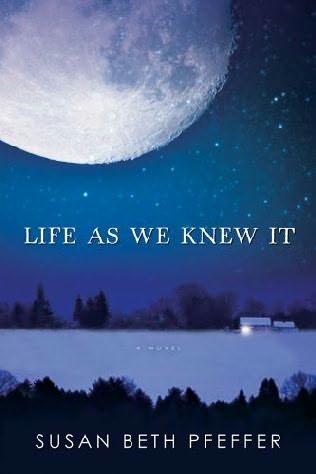
I've interviewed Susan two times before, which you can see here and here. Thanks again to Susan for taking the time out of her day to answer my questions once more, this time about her most recent novel, This World We Live In (my review can be found here). Here goes:
This World We Live In marks the third novel in your post-apocalyptic Earth series for young adults. What was it like finally returning to some of your previous characters?
When I was first working out the idea for a third book, I was a little nervous about returning to Miranda and, in particular, her diary. A lot had changed in my life since I'd written Life As We Knew It, and I didn't know if I could slip back into her mind. I wasn't concerned about Alex from The Dead and the Gone, since there was a gap of several months between the end of d&g (which ends before New Year's) and the start of This World We Live In (which starts late April). But a month or less would have passed between LAWKI and TWWLI, and I was concerned that Miranda hadn't changed, but I had.
But once I began writing, Miranda came right back to me. I had Matt make a major life change, which affected how he behaved and made things more fun for me. I created two new characters and there was less focus on Mom.
 Was merging casts for this novel particularly difficult? What was most challenging for you?
The trickiest part was that time gap. I knew from the time I wrote The Dead and the Gone that if there was a third book, Miranda and Alex would meet. But I had to figure out where Alex and Julie were during the winter and, of course, how to get Miranda and Alex at the same place at the same time.
For a while, I assumed Miranda was no longer in her house and she and Alex would meet on the road somewhere. But Alex had a minimum of a three month head start on the road, so I could never get that to work.
It was an enormous relief to me when I figured out how to have Alex show up in Pennsylvania, rather than Miranda showing up in Ohio or Indiana (or Texas or anyplace). As soon as I worked that out, the rest of the book was fairly easy to work out.
I knew that I wanted the book to end with something big and bad, but I went through some different variations of big and bad before I was satisfied. But that's just part of the process.
 One of the interesting things about This World We Live In is that it is both a science fiction survival story and a story about the interaction between family members, all within the epistolary format (which you have used since the start of the series). This seems to be a very difficult way to develop relationships among new characters, and yet you manage to do just that through the journal entries of the main character. Can you talk about how you managed to do this? Did the epistolary format hinder you as a writer, perhaps forcing you to plan your narrative in more detail than you have had to do for your other novels?
I loved writing Life As We Knew It, and a lot of what I loved about it was the diary format. Diary books are so easy. You're limited to just what your main character sees. You don't have to worry about fancy writing (which I'm incapable of, but it's nice to have an excuse not to try). It really feels like the diary keeper is doing all the work for you; she's dictating and I'm just writing it down.
The Dead and the Gone was harder because it was third person. I considered doing This World We Live In in third person, but decided against that. If Miranda was going to be the viewpoint character, then it was back to her diary I needed to go.
This World We Live In was a very tricky book to work out, because it was a sequel to two different books, and there were going to be people who read it without having read Life As We Knew It or The Dead and the Gone (there are actually some people who haven't read either book, and I was aware of that possibility as well). I had to let readers know just enough, but not too much, since I assumed people who'd read one of the two books might go back and read the other one.
I don't think I've ever thought through a book as much as I did TWWLI. It took lots and lots of brain cells.
 Cats make a prominent appearance in your post-apocalyptic novels, and also on your blog. What's the deal? Why cats? (You pulled my heartstrings with the death of the family cat in this series, by the way.)
When I was growing up, I wanted to have a dog, but my parents wouldn't let me. I didn't push to get a cat, but they probably would have said no to that as well.
As soon as I had my first apartment, when I was in college, I got a kitten, and I've had a cat or cats pretty much ever since. I went for a few months a couple of years ago, after my two cats had died, and I was uncertain if I wanted to take on another pet. But the desire for a cat overwhelmed me, and I adopted a little black and white I named Scooter.
Scooter is a lunatic, but there was no way of predicting that when I looked at his darling kitten face.
I spent this weekend listening to the Listening Library audiobook version of This World We Live In (Emily Bauer, who was also the reader for Life As We Knew It does a brilliant job). I found all the stuff about the family cat difficult to listen to, since it brought back memories of the cats I lost two years ago.
 Are there plans for any more novels in this post-apocalyptic world?
I have no plans for another such book, and I don't think my publisher is interested in one. I think we're all pleased where I ended things.
What are you currently working on and what can we expect to see from you in the near future?
I've been working on a book called Blood Wounds. At least that's its working title, and no one has told me they want the title changed. It's a YA novel, and it goes back to what I think of as my basic theme, that of a family whose life is changed by one extraordinary event. This time it's officially realistic fiction.
I'm waiting to hear from my editor about rewrites. It's scheduled to come out in the fall of 2011.
Now for a random Question: If the world was ending and you could save one piece of art (fine art, like painting or drawing), which piece would you save and why?
That is a great random question. My immediate response was a painting I don't even know the name of. It's a giant Matisse painting of women dancing in a circle that used to be the first thing you'd see when you went to the Museum of Modern Art.
I think if there could only be one painting to represent humanity, it'd be good if it were something joyous and musical.
Thanks again to Susan for her time. If you enjoyed the interview, please check out her books. All three are fantastic!
This World We Live In marks the third novel in your post-apocalyptic Earth series for young adults. What was it like finally returning to some of your previous characters?
When I was first working out the idea for a third book, I was a little nervous about returning to Miranda and, in particular, her diary. A lot had changed in my life since I'd written Life As We Knew It, and I didn't know if I could slip back into her mind. I wasn't concerned about Alex from The Dead and the Gone, since there was a gap of several months between the end of d&g (which ends before New Year's) and the start of This World We Live In (which starts late April). But a month or less would have passed between LAWKI and TWWLI, and I was concerned that Miranda hadn't changed, but I had.
But once I began writing, Miranda came right back to me. I had Matt make a major life change, which affected how he behaved and made things more fun for me. I created two new characters and there was less focus on Mom.
Was merging casts for this novel particularly difficult? What was most challenging for you?The trickiest part was that time gap. I knew from the time I wrote The Dead and the Gone that if there was a third book, Miranda and Alex would meet. But I had to figure out where Alex and Julie were during the winter and, of course, how to get Miranda and Alex at the same place at the same time.
For a while, I assumed Miranda was no longer in her house and she and Alex would meet on the road somewhere. But Alex had a minimum of a three month head start on the road, so I could never get that to work.
It was an enormous relief to me when I figured out how to have Alex show up in Pennsylvania, rather than Miranda showing up in Ohio or Indiana (or Texas or anyplace). As soon as I worked that out, the rest of the book was fairly easy to work out.
I knew that I wanted the book to end with something big and bad, but I went through some different variations of big and bad before I was satisfied. But that's just part of the process.
One of the interesting things about This World We Live In is that it is both a science fiction survival story and a story about the interaction between family members, all within the epistolary format (which you have used since the start of the series). This seems to be a very difficult way to develop relationships among new characters, and yet you manage to do just that through the journal entries of the main character. Can you talk about how you managed to do this? Did the epistolary format hinder you as a writer, perhaps forcing you to plan your narrative in more detail than you have had to do for your other novels?I loved writing Life As We Knew It, and a lot of what I loved about it was the diary format. Diary books are so easy. You're limited to just what your main character sees. You don't have to worry about fancy writing (which I'm incapable of, but it's nice to have an excuse not to try). It really feels like the diary keeper is doing all the work for you; she's dictating and I'm just writing it down.
The Dead and the Gone was harder because it was third person. I considered doing This World We Live In in third person, but decided against that. If Miranda was going to be the viewpoint character, then it was back to her diary I needed to go.
This World We Live In was a very tricky book to work out, because it was a sequel to two different books, and there were going to be people who read it without having read Life As We Knew It or The Dead and the Gone (there are actually some people who haven't read either book, and I was aware of that possibility as well). I had to let readers know just enough, but not too much, since I assumed people who'd read one of the two books might go back and read the other one.
I don't think I've ever thought through a book as much as I did TWWLI. It took lots and lots of brain cells.
Cats make a prominent appearance in your post-apocalyptic novels, and also on your blog. What's the deal? Why cats? (You pulled my heartstrings with the death of the family cat in this series, by the way.)When I was growing up, I wanted to have a dog, but my parents wouldn't let me. I didn't push to get a cat, but they probably would have said no to that as well.
As soon as I had my first apartment, when I was in college, I got a kitten, and I've had a cat or cats pretty much ever since. I went for a few months a couple of years ago, after my two cats had died, and I was uncertain if I wanted to take on another pet. But the desire for a cat overwhelmed me, and I adopted a little black and white I named Scooter.
Scooter is a lunatic, but there was no way of predicting that when I looked at his darling kitten face.
I spent this weekend listening to the Listening Library audiobook version of This World We Live In (Emily Bauer, who was also the reader for Life As We Knew It does a brilliant job). I found all the stuff about the family cat difficult to listen to, since it brought back memories of the cats I lost two years ago.
Are there plans for any more novels in this post-apocalyptic world?I have no plans for another such book, and I don't think my publisher is interested in one. I think we're all pleased where I ended things.
What are you currently working on and what can we expect to see from you in the near future?
I've been working on a book called Blood Wounds. At least that's its working title, and no one has told me they want the title changed. It's a YA novel, and it goes back to what I think of as my basic theme, that of a family whose life is changed by one extraordinary event. This time it's officially realistic fiction.
I'm waiting to hear from my editor about rewrites. It's scheduled to come out in the fall of 2011.
Now for a random Question: If the world was ending and you could save one piece of art (fine art, like painting or drawing), which piece would you save and why?
That is a great random question. My immediate response was a painting I don't even know the name of. It's a giant Matisse painting of women dancing in a circle that used to be the first thing you'd see when you went to the Museum of Modern Art.
I think if there could only be one painting to represent humanity, it'd be good if it were something joyous and musical.
Thanks again to Susan for her time. If you enjoyed the interview, please check out her books. All three are fantastic!
Monday, May 24, 2010
Interview w/ Jack Skillingstead
Jack Skillingstead was kind enough to answer a few questions for me. You can read my review of his novel, Harbinger, here. Thanks again to Mr. Skillingstead for his time and patience. Here goes:
First things first, can you tell us a little about yourself (a sort of mini bio)?
I was born in a working class suburb of Seattle and grew up there, which I suppose formed my character in all the usual ways of environmental influences. My dad was a model builder for the Boeing company. He worked on the moon buggy for the later Apollo missions and built wind tunnel models for the piggy-back 747 / space shuttle. I remember him being quite excited about that project. My mother was a housewife and the big reader in the house. I remember being impressed, as a small child, that she was reading a science fiction story -- the Post's serialization of Asimov's "Fantastic Voyage." I learned to read by following along with my mother's repeated out loud readings to me of favorite comic books. And I remember the exact moment the black marks in the word balloon became a recognizable word. The word was "said." Bradbury claims to remember being born. I don't remember that, but I remember my birth as a word-recognizer. That remains the most important educational step in my autodidactic life. As for formal education, mine proceeded along unremarkable lines. I have three brothers and one sister, all older. My own kids are grown. One is a student at Chapman University in California, the other is following a more erratic path in life -- as have I. Currently I live in the city with fellow writer Nancy Kress, which makes life very pleasant.
Who are some of your favorite authors and what are some of your favorite books? What are you currently reading?
I especially love the stories and novels of Daryl Gregory. He's a kindred spirit. Paolo Bacigulupi is doing incredible work, of course. The short stories of Ted Kosmatka are all knockouts, and Del Rey is doing his first novel, The Helix Game, next year. I'm very much looking forward to that one. Those are some of my contemporaries, in terms of publishing time lines, though I'm a little older than all of them. I'm also enamored with Kessel, Kress, Willis, Haldeman and numerous others. Going back, it's Bradbury, Matheson, Beaumont, Ellison, Sturgeon and Zelazny. These are all writers I return to again and again. I'm talking about genre now, that's leaving out mainstream and classic writers. Currently I'm reading Dying Inside by Robert Silverberg and Parallel Lives by Phyllis Rose, which is a study of Victorian-era marriages of literary types.
What drew you into writing, and, specifically, what drew you to science fiction?
 From my earliest memory I've been attracted to science fiction, fantasy and horror. When I was younger -- teenage through 20s -- the emphasis was more on horror. Lovecraft, Ramsey Campbell, Dennis Etchison, Weird Tales era Bradbury, Richard Matheson's short stories plus Hell House and of course I Am Legend. Stephen King. Peter Staub's early novels, pre Ghost Story. This was also a time when I read a lot real-world horror -- the fast and dirty novels of James Ellroy, for instance. Holy shit! Blood On The Moon. Suicide Hill. That stuff was disturbing. But to get back to your question, I can't tell you what drew me and continues to draw me to science fiction. People simply have different filters. My filters catch anything that occurs off the straight and narrow path of the mainstream. As for writing my own stories, I always wanted to do that, though my approach was in more of an optimistic vein when I was a kid and thought I'd write Star Trek type stories. When I actually started producing fiction the quality was pretty wretched, and whatever hotspots occurred usually came out of the dark side of my psyche. So it has been ever since. John Clute said something very perceptive is his mini-review of my collection. He said, paraphrasing, sometimes the stories seemed like a form of therapy. I would only add that these therapy sessions, like real therapy, tended to yield the most interesting results the darker and less certain the outcome.
 Your novel, Harbinger, is placed in a rather interesting place within the spectrum of narratives about immortals. While fantasy has largely focused on vampires and other inhuman immortals, your novel takes a more science-fictional approach to the concept. What inspired you to write Harbinger?
There is a science fiction cliché: The ordinary man in extraordinary circumstances. I wanted to see what happened to an ordinarily warped man in extraordinary circumstances -- the man so warped and the circumstances so extraordinary that the reader, at times, wouldn't even know if the circumstances were real. This is a little bit of a Phillip K. Dick approach, but I also wanted the book to be fun and adventurous. And of course it had to be tied in to me personally -- you know, a "therapy" book. My first inspiration to write it at all was simply that I wanted to do a novel that I could sell. I'd already written several that hadn't been successful. This felt like a do-or-die effort. It was time. Of course, the book got rejected all over the place, and I didn't die as a result. And it did eventually find a publisher.
You're right about the current tendency to focus on vampires, but I don't think Ellis Herrick is too far out of the spectrum of immortals in science fiction history. Zelazny wrote about science fiction based immortals all the time, as did other accomplished writers in decades past. Personally, I can't get behind romanticizing the vampire, though I did like the first two Ann Rice books.
Additionally, what do you think it is that draws us to immortals? Why are we fascinated by characters who can live forever and why do we keep coming back to them, whether in vampiric form or in the vein in which you have written Harbinger?
The answer is so obvious that I am tempted to think it must be wrong. We're attracted to immortals because. . . we don't want to die! Well, there's probably more to it, but it all comes back to that. With Harbinger, I was interested in the marvelous freedom suggested by Ellis's evolution. Have you read Zelazny's Amber books? I really loved that whole walking through Shadow concept, and I wanted a little bit of that flavor in my own book. All that stuff in the final section, where they are driving the Bus across space-time reality, and when Ellis walks down the tunnel and the living rock sort of blends into the wall plaster of his childhood home hundreds of years lost and gone back on Earth -- I'm highly enamored of the idea that time and space just might be an illusion that we more or less prop up with our own minds. In the sense of memory and imagination, of course, that is a true proposition. Sit back, right now, and allow your mind to conjure something from when you were, say, twelve years old. Is it vivid? Like it just happened? Chances are some of it is. And if the memory is constructed around an incident your mind is probably imposing some kind of narrative structure, parts of which "really happened" and others that you think happened, but probably didn't, at least not in exactly the way you seem to be remembering. This is what writers do all the time: Plunge into memory and imagination and make something new that feels authentic. The best fiction resides in the reader's mind like a true memory.
 What, for you, was the most difficult aspect of putting together a story that spans hundreds of years with one character at the helm? Writing about an immortal must be just as difficult as being one!
Making the future believable was difficult, but I side-stepped a number of potential problems by writing it as an interior novel and telling it in first person. Ellis isn't exactly the classic unreliable narrator, but we are in his head an awful lot and so we are seeing the changing world through a largely solipsistic personality -- which means we are seeing Ellis's version of the world as it is reflected in his self-absorption.
Since Harbinger does contain some elements of the "non-scientific" (i.e. the metaphysical and so on), how do you view the collaboration of the religious or non-scientific and science itself? Do you subscribe to the belief that the two often speak to one another, or are they like two sides of a coin?
I want to believe they speak to each other, but I also know that's a slippery slope. As soon as you authenticate, in your own mind if nowhere else, the non-rational, you are in trouble. The next thing you know you're seeing Fairies in the garden, as did Conan Doyle, or receiving advice about your Plan For America directly from God Almighty, as Glenn Beck believes. On the other hand, I can't abide a strictly rationalist view, either. Science is as limiting as it is liberating. When I talk with an immovable rationalist it begins to feel, after a while, like I'm talking to a committed religionist. The God-believer type, if he doesn't have an answer about, say, human suffering, simply passes it off as an unknowable manifestation of the deity. A rationalist, if he admits he doesn't know something (fat chance!), passes it off by saying something along the lines of, "We don't know it NOW but science (God) will eventually reveal the truth." I don't subscribe to a metaphysical viewpoint, but I don't dismiss it out of hand, either. I know that's equivocal. So what?
Switching gears, I'm curious for your opinion on the present state of science fiction as a genre and where you think it is going in light of the fascinating development of digital publishing. Where do you think science fiction is going? Is it a good place? Are there barking robots and flying cars there?
Digital publishing is more disturbing to me than fascinating. It's not nostalgia for paper (though I usually prefer it), nor my inner Luddite asserting himself (he doesn't exist). It's simply that the digitalizing of everydamnthing makes it convenient and irresistible to appropriate without compensation the stories, movies, music, etc. of working artists. Coupled with the freedom of the internet, emphasis on "free," a situation arises in which the former business template is collapsing with no acceptable new template to replace it. I'm not on-board with the "information wants to be free" crowd. Information doesn't want anything. You might as well say information wants to be controlled.
The present state of science fiction writing exists outside this mess. Writers do what they have always done: Write. There are many wonderful new writers working now, though I don't see a recognizable movement in any deliberate direction. There is, however, a blurring of lines between literary mainstream and genre. I like that. Guys like Chabon and Lethem cross effortlessly back and forth, scuffing the border to near invisibility. They are outstanding writers who happened to like the same sorts of things most of us in genre like. At the same time there's the "new" space opera, the "new" weird, magic realism, hard, etc. -- in short EVERYthing is on the table. This is healthy. I don't think it spells the end of genre sf or the victory of mainstream or any such bullshit.
Can you tell us a little about some of your upcoming projects? Any interesting new novels on the way?
I'm working on what I hope is the final draft of Life On the Preservation, a novel based very loosely on my short story of the same title. I'm throwing everything I've got into it and hope to start shopping it around by the end of summer. I've been so busy with this project that I haven't had much time to write new short stories. I do have one coming up in Asimov's, though. It's called "The Flow and Dream" and runs along fairly traditional sf lines. This was an interesting sale for me, in that I submitted it electronically the first day Asimov's began accepting stories that way. It's not that I was gnashing my teeth waiting for the glorious day to arrive. I don't really care whether a magazine accepts electronically or requires paper manuscripts in traditional format. But I went to their website to double-check the mailing address, saw I could just send the story directly from my computer, and did so. It sold practically overnight, which was fun.
What one piece of unusual advice would you give to budding writers out there?
Hmm. Unusual? I'd say, remember that perception is intentional. Slow down, sometimes. Invest your words with magic. Regard them as keys to limitless inner worlds. I'm talking about individual words. Regard them as play things. Type a noun onto your screen, or write it on a blank sheet of printer paper with a pencil or pen. Stare at the word, let yourself fall into the myriad conscious and unconscious associations the word evokes. A word such as OCEAN could lead you into endless thought experiments. If you practice this, you eventually get past all the obvious associations the top of your mind throws up and you start receiving the personally significant associations. Do this once in a while. It's good for your creative mind. Sometimes you will land on an image or idea you didn't realize was lurking. But when you are writing a story forget all that crap, dig in and use words like practical tools to get the job done.
And now for a random question: If you could invent one technology to change the world, what technology would you invent and why?
I have to go obvious here and say an efficient, cheap and universally accessible mechanism for harnessing solar energy and distributing it to run anything that requires power input. This is not going to happen.
--------------------------------------------------
That's it! You can find Jack Skillingstead on his website.
First things first, can you tell us a little about yourself (a sort of mini bio)?
I was born in a working class suburb of Seattle and grew up there, which I suppose formed my character in all the usual ways of environmental influences. My dad was a model builder for the Boeing company. He worked on the moon buggy for the later Apollo missions and built wind tunnel models for the piggy-back 747 / space shuttle. I remember him being quite excited about that project. My mother was a housewife and the big reader in the house. I remember being impressed, as a small child, that she was reading a science fiction story -- the Post's serialization of Asimov's "Fantastic Voyage." I learned to read by following along with my mother's repeated out loud readings to me of favorite comic books. And I remember the exact moment the black marks in the word balloon became a recognizable word. The word was "said." Bradbury claims to remember being born. I don't remember that, but I remember my birth as a word-recognizer. That remains the most important educational step in my autodidactic life. As for formal education, mine proceeded along unremarkable lines. I have three brothers and one sister, all older. My own kids are grown. One is a student at Chapman University in California, the other is following a more erratic path in life -- as have I. Currently I live in the city with fellow writer Nancy Kress, which makes life very pleasant.
Who are some of your favorite authors and what are some of your favorite books? What are you currently reading?
I especially love the stories and novels of Daryl Gregory. He's a kindred spirit. Paolo Bacigulupi is doing incredible work, of course. The short stories of Ted Kosmatka are all knockouts, and Del Rey is doing his first novel, The Helix Game, next year. I'm very much looking forward to that one. Those are some of my contemporaries, in terms of publishing time lines, though I'm a little older than all of them. I'm also enamored with Kessel, Kress, Willis, Haldeman and numerous others. Going back, it's Bradbury, Matheson, Beaumont, Ellison, Sturgeon and Zelazny. These are all writers I return to again and again. I'm talking about genre now, that's leaving out mainstream and classic writers. Currently I'm reading Dying Inside by Robert Silverberg and Parallel Lives by Phyllis Rose, which is a study of Victorian-era marriages of literary types.
What drew you into writing, and, specifically, what drew you to science fiction?
From my earliest memory I've been attracted to science fiction, fantasy and horror. When I was younger -- teenage through 20s -- the emphasis was more on horror. Lovecraft, Ramsey Campbell, Dennis Etchison, Weird Tales era Bradbury, Richard Matheson's short stories plus Hell House and of course I Am Legend. Stephen King. Peter Staub's early novels, pre Ghost Story. This was also a time when I read a lot real-world horror -- the fast and dirty novels of James Ellroy, for instance. Holy shit! Blood On The Moon. Suicide Hill. That stuff was disturbing. But to get back to your question, I can't tell you what drew me and continues to draw me to science fiction. People simply have different filters. My filters catch anything that occurs off the straight and narrow path of the mainstream. As for writing my own stories, I always wanted to do that, though my approach was in more of an optimistic vein when I was a kid and thought I'd write Star Trek type stories. When I actually started producing fiction the quality was pretty wretched, and whatever hotspots occurred usually came out of the dark side of my psyche. So it has been ever since. John Clute said something very perceptive is his mini-review of my collection. He said, paraphrasing, sometimes the stories seemed like a form of therapy. I would only add that these therapy sessions, like real therapy, tended to yield the most interesting results the darker and less certain the outcome.Your novel, Harbinger, is placed in a rather interesting place within the spectrum of narratives about immortals. While fantasy has largely focused on vampires and other inhuman immortals, your novel takes a more science-fictional approach to the concept. What inspired you to write Harbinger?There is a science fiction cliché: The ordinary man in extraordinary circumstances. I wanted to see what happened to an ordinarily warped man in extraordinary circumstances -- the man so warped and the circumstances so extraordinary that the reader, at times, wouldn't even know if the circumstances were real. This is a little bit of a Phillip K. Dick approach, but I also wanted the book to be fun and adventurous. And of course it had to be tied in to me personally -- you know, a "therapy" book. My first inspiration to write it at all was simply that I wanted to do a novel that I could sell. I'd already written several that hadn't been successful. This felt like a do-or-die effort. It was time. Of course, the book got rejected all over the place, and I didn't die as a result. And it did eventually find a publisher.
You're right about the current tendency to focus on vampires, but I don't think Ellis Herrick is too far out of the spectrum of immortals in science fiction history. Zelazny wrote about science fiction based immortals all the time, as did other accomplished writers in decades past. Personally, I can't get behind romanticizing the vampire, though I did like the first two Ann Rice books.
Additionally, what do you think it is that draws us to immortals? Why are we fascinated by characters who can live forever and why do we keep coming back to them, whether in vampiric form or in the vein in which you have written Harbinger?
The answer is so obvious that I am tempted to think it must be wrong. We're attracted to immortals because. . . we don't want to die! Well, there's probably more to it, but it all comes back to that. With Harbinger, I was interested in the marvelous freedom suggested by Ellis's evolution. Have you read Zelazny's Amber books? I really loved that whole walking through Shadow concept, and I wanted a little bit of that flavor in my own book. All that stuff in the final section, where they are driving the Bus across space-time reality, and when Ellis walks down the tunnel and the living rock sort of blends into the wall plaster of his childhood home hundreds of years lost and gone back on Earth -- I'm highly enamored of the idea that time and space just might be an illusion that we more or less prop up with our own minds. In the sense of memory and imagination, of course, that is a true proposition. Sit back, right now, and allow your mind to conjure something from when you were, say, twelve years old. Is it vivid? Like it just happened? Chances are some of it is. And if the memory is constructed around an incident your mind is probably imposing some kind of narrative structure, parts of which "really happened" and others that you think happened, but probably didn't, at least not in exactly the way you seem to be remembering. This is what writers do all the time: Plunge into memory and imagination and make something new that feels authentic. The best fiction resides in the reader's mind like a true memory.
What, for you, was the most difficult aspect of putting together a story that spans hundreds of years with one character at the helm? Writing about an immortal must be just as difficult as being one!Making the future believable was difficult, but I side-stepped a number of potential problems by writing it as an interior novel and telling it in first person. Ellis isn't exactly the classic unreliable narrator, but we are in his head an awful lot and so we are seeing the changing world through a largely solipsistic personality -- which means we are seeing Ellis's version of the world as it is reflected in his self-absorption.
Since Harbinger does contain some elements of the "non-scientific" (i.e. the metaphysical and so on), how do you view the collaboration of the religious or non-scientific and science itself? Do you subscribe to the belief that the two often speak to one another, or are they like two sides of a coin?
I want to believe they speak to each other, but I also know that's a slippery slope. As soon as you authenticate, in your own mind if nowhere else, the non-rational, you are in trouble. The next thing you know you're seeing Fairies in the garden, as did Conan Doyle, or receiving advice about your Plan For America directly from God Almighty, as Glenn Beck believes. On the other hand, I can't abide a strictly rationalist view, either. Science is as limiting as it is liberating. When I talk with an immovable rationalist it begins to feel, after a while, like I'm talking to a committed religionist. The God-believer type, if he doesn't have an answer about, say, human suffering, simply passes it off as an unknowable manifestation of the deity. A rationalist, if he admits he doesn't know something (fat chance!), passes it off by saying something along the lines of, "We don't know it NOW but science (God) will eventually reveal the truth." I don't subscribe to a metaphysical viewpoint, but I don't dismiss it out of hand, either. I know that's equivocal. So what?
Switching gears, I'm curious for your opinion on the present state of science fiction as a genre and where you think it is going in light of the fascinating development of digital publishing. Where do you think science fiction is going? Is it a good place? Are there barking robots and flying cars there?
Digital publishing is more disturbing to me than fascinating. It's not nostalgia for paper (though I usually prefer it), nor my inner Luddite asserting himself (he doesn't exist). It's simply that the digitalizing of everydamnthing makes it convenient and irresistible to appropriate without compensation the stories, movies, music, etc. of working artists. Coupled with the freedom of the internet, emphasis on "free," a situation arises in which the former business template is collapsing with no acceptable new template to replace it. I'm not on-board with the "information wants to be free" crowd. Information doesn't want anything. You might as well say information wants to be controlled.
The present state of science fiction writing exists outside this mess. Writers do what they have always done: Write. There are many wonderful new writers working now, though I don't see a recognizable movement in any deliberate direction. There is, however, a blurring of lines between literary mainstream and genre. I like that. Guys like Chabon and Lethem cross effortlessly back and forth, scuffing the border to near invisibility. They are outstanding writers who happened to like the same sorts of things most of us in genre like. At the same time there's the "new" space opera, the "new" weird, magic realism, hard, etc. -- in short EVERYthing is on the table. This is healthy. I don't think it spells the end of genre sf or the victory of mainstream or any such bullshit.
Can you tell us a little about some of your upcoming projects? Any interesting new novels on the way?
I'm working on what I hope is the final draft of Life On the Preservation, a novel based very loosely on my short story of the same title. I'm throwing everything I've got into it and hope to start shopping it around by the end of summer. I've been so busy with this project that I haven't had much time to write new short stories. I do have one coming up in Asimov's, though. It's called "The Flow and Dream" and runs along fairly traditional sf lines. This was an interesting sale for me, in that I submitted it electronically the first day Asimov's began accepting stories that way. It's not that I was gnashing my teeth waiting for the glorious day to arrive. I don't really care whether a magazine accepts electronically or requires paper manuscripts in traditional format. But I went to their website to double-check the mailing address, saw I could just send the story directly from my computer, and did so. It sold practically overnight, which was fun.
What one piece of unusual advice would you give to budding writers out there?
Hmm. Unusual? I'd say, remember that perception is intentional. Slow down, sometimes. Invest your words with magic. Regard them as keys to limitless inner worlds. I'm talking about individual words. Regard them as play things. Type a noun onto your screen, or write it on a blank sheet of printer paper with a pencil or pen. Stare at the word, let yourself fall into the myriad conscious and unconscious associations the word evokes. A word such as OCEAN could lead you into endless thought experiments. If you practice this, you eventually get past all the obvious associations the top of your mind throws up and you start receiving the personally significant associations. Do this once in a while. It's good for your creative mind. Sometimes you will land on an image or idea you didn't realize was lurking. But when you are writing a story forget all that crap, dig in and use words like practical tools to get the job done.
And now for a random question: If you could invent one technology to change the world, what technology would you invent and why?
I have to go obvious here and say an efficient, cheap and universally accessible mechanism for harnessing solar energy and distributing it to run anything that requires power input. This is not going to happen.
--------------------------------------------------
That's it! You can find Jack Skillingstead on his website.
Tuesday, December 22, 2009
Interview w/ Brian Evenson
Below is my interview with Brian Evenson, author of Last Days from Underland Press and many other novels. Please check out his latest novel, Last Days. It's good stuff!
Now, here goes:
Thanks for doing this interview. First things first, tell us a bit about yourself? Where do you hail from and other biographical goodies?
I was born in Iowa and grew up in Utah (I was raised Mormon, but have left the church), but have lived in a number of other places since--Seattle, Syracuse, NY, Stillwater, OK, Milwaukee, France, Denver, etc. Currently I live in Providence, Rhode Island, where I teach creative writing at Brown University.
Who/what are some of your favorite authors/books?
Some of the people I always go back to are Franz Kafka, Samuel Beckett, especially the trilogy, Mervyn Peake’s Gormenghast trilogy, Muriel Spark, Isak Dinesen, Henry Green, and Cormac McCarthy. Recently I’ve been reading and enjoying Roberto Bolano and a French writer named Antoine Volodine. There are a few Poe and Lovecraft stories that I love. I’ve just rediscovered J. G. Ballard and am glad to have done so--his story “The Drowned Giant” is really terrific. As soon as I finish this interview, I’m sure I’ll remember a dozen things I should have mentioned...
 As a professor at Brown University (and a previous professor at numerous other universities), what has your experience been like with young creative writers? Do you notice any unique trends in the quality or styles of fiction coming into existence over the last decade? Is there an overabundance of overconfidence beyond what is considered normal?
I like teaching a great deal and it’s always interesting to see what up and coming writers are reading and thinking about. In terms of influences and trends, things seems to come in waves--books and stories that undergrads love one year are completely forgotten or even hated by the students who come two or three years later. I think the biggest trend I’ve noticed, maybe partly because it’s something I’ve encouraged, is that I see more students reading across genre boundaries now than I did ten years ago. The boundaries between literary and genre fiction are a lot more flexible than they once were and that’s reflected in student work--there’s less interest in strictly realistic fiction and more acceptance of fiction that ten or fifteen years ago people would have dismissed as being non-realistic. I think that’s largely due to exceptionally talented writers like Kelly Link and George Saunders writing in a way that made those distinctions seem less important than they do when, say, you’re reading 70s dirty realism.
I don’t think there’s an overabundance of confidence among the students--when there is, it’s usually in students that have the least to be confident about. I think, at least at Brown the opposite is true, that many students are almost too self-conscious and self-critical and as a result are in danger of crippling themselves. They have to be taught to see what’s worthwhile in their work and how to make the most of it. I think a lot of students are ambitious, but also very aware that the stories they write don’t measure up to their ambitions: a smart self-critical student who’s actually a pretty good writer can also be very good at talking himself or herself out of ever publishing because the work isn’t as good as, say, Chekhov. The thing they forget is that a good portion of the time Chekhov himself isn’t as good as Chekhov: only a fraction of his stories are really great.
You’ve written nine books—eight books of fiction and one critical book. What drew you into writing fiction in the first place? Additionally, what drew you to the dark side of fiction?
I’ve always loved to read, and loved to read fiction--I think it offers readers things that non-fiction or poetry just don’t offer. I started writing fiction when I was fairly young, partly in response to my mother writing and publishing a science fiction story. I think I kept writing because it gave me a kind of satisfaction that I didn’t seem to be able to find in any other activity.
As for what drew me to the dark side of fiction, I’m not sure. I think I gravitated naturally toward it, maybe partly because I grew up in a culture that was relentlessly cheerful and insisted on looking at the bright side of things. That attitude, perhaps not surprisingly, made me intensely aware of what wasn’t being said, of what was being passed over, of the darker, stranger side of things. When I was fourteen or so my father gave me a volume of Kafka’s stories. It immediately clicked for me, seemed to express exactly the kind of things that the Mormon culture around me was very deliberately trying not to think about. I think, too, that that dark side gives us inroads into the nature of consciousness in a way that the bright sunny side never does, that it reveals things about human nature that are the foundation for the way the mind works.
 What made you write Last Days (and the story that preceded it)? Did you read something somewhere? Was it a random thought? Did your town actually have a roving cult of amputees?
I think it came very simply from thinking for years and years about the Biblical verse that opens the volume, encouraging you to remove parts of yourself if they offend you--at first thinking it was rhetorical flourish and symbolic but then thinking “Well, okay, what if we take it literally? Could it serve as the basis for a gospel?” From there everything imagined itself into existence.
I wish that my town had had a cult of roving amputees, but no such luck. I did live across the street when I was very, very young from someone who had lost his hand and I was somewhat fascinated by and frightened of him.
The pace of Last Days is fairly quick, not simply because it’s a short novel. Is fast pace endemic to the horror genre? Or did you think that something as dark as Last Days needed a fast pace to keep the reader on his or her toes?
I don’t think it’s endemic to the horror novel and in fact can think of a number of horror novels that are beautifully sprawling and wonderfully conceived, that build very slowly but nonetheless remain terrifying. Peter Straub and Dan Simmons both can do that, for instance, and do it beautifully. But yes, I thought that speed was essential for Last Days. I wanted a sense of breathlessness and wanted too to keep the reader off balance in the same way that Kline himself is off balance.
With the relative success of twisted horror films like Saw, Hostel, and the seeming resurgence of cult horror disturbia, your novel seems to fit in fairly well with a macabre-enthused viewing/reading public. What do you think it is that draws us to the macabre? Are we just screwed up, or is this a response to the loss of the good ole days when we got to see public executions and the like?
Well, we may very well be screwed up but I don’t think it’s because of horror we read or watch. I think often our interest in darknesses of various kinds has a lot to do with a profound dissatisfaction with the smoothed out surface of life as it’s presented in advertising, by our parents, by our institutions, and in people’s response to life. There’s something satisfying about seeing that surface shattered. And I do think there’s actually a fairly wide range of things going on in fantastic fiction and that my work is probably not as close to Saw or Hostel as it is to work by filmmakers like Michael Haneke or Gaspar Noe who I think are doing something that ultimately is a lot more unsettling and a lot more rewarding. Or Takashi Miike’s “Audition”.
Noir fiction has recently had significant growth in genre fiction, with Richard Morgan merging it with science fiction and various others attempting to mix it with fantasy. Last Days takes a fairly unique approach to the noir sleuth/uncommon hero tropes most of us are familiar with by merging it with horror. What is it about the sleuth character that seems to fit so well within horror (and the world you’ve set up for Last Days)? Am I wrong to think that noir fiction and, specifically, cross genre fiction in horror are seeing a resurgence?
I think there’s definitely a resurgence going on, that a lot of people have become interested in thinking about noir less as a genre than as a mode that can be applied to other genres, that can infect other genres. The example of that I grew up with, and which I think started a lot, was Bladerunner. But it does seem to have ratcheted up lately. So, near the time when Last Days came out, we also saw China Mieville’s wonderful The City & The City, Jeff Vandermeer’s Finch, Paul Tremblay’s The Little Sleep, Charlie Houston’s hardboiled vampire novels, etc. I have an idea for a post-apocalyptic detective novel that I hope I’ll start into soon.
Hinging off of the previous question: there was some discussion several months back about whether cross genre is a good thing. What do you think?
I don’t think it’s innately a good or a bad thing; there’s going to be good cross-genre work and bad cross-genre work, but it’s not the genre’s fault. I think when it’s done sloppily it’s bad, but when you feel that the crossing brings something genuinely new to the genre, that it revitalizes the genre, it’s great.
Do you plan to write more stories with Kline? If so, how would you manage to write a story about a character as beat up as him?
I actually have about forty pages of a sequel to Last Days and an idea for how it could continue. I wrote that about six months ago and haven’t looked at it again yet--I think I need to let it sit a bit to try to get an objective sense of whether it’s too over the top or absurd. Yes, Kline’s pretty beat up, but I think there’s still potentially more to get out of him.
Having taught fiction, what unusual bit of advice would you give to budding writers (emphasis on unusual)?
I think it’s important to read really eccentrically, to read in lots of odd directions. The problem with many creative writing programs is that, at their worst, they produce people who are writing the same kinds of stories over and over. I also think it’s important to be aware that your teachers are humans and that they have their own biases. Learn what you can from them but don’t mimic their blindspots.
What projects do you have coming up and can you tell us a little about them?
I just had a limited edition novella (400 copies) called “Baby Leg” published in a nice hardbound bloodspattered edition by New York Tyrant Press. It’s a beautiful object and a strange book, kind of a cross between a David Goodis novel and a mad scientist movie with bits of collapsing reality thrown in. Other than that, I’ve had a hard time finding sustained time to work. I’m hoping I’ll have time to really focus in and write over the holidays.
Now for a silly question: If you were forced to choose one part of your body to amputate, which part would you choose and why?
I think I’d go for the nose, and then, like Tycho Brahe, I’d replace it with a metal nose. If it had to be a limb, I think the first thing I’d give up would be my left foot, though I’d miss it. I’ve always liked my left foot. I’d be willing to let a few fingers go if need be as well...
Thanks again to Mr. Evenson for doing this interview. Now go check out Last Days!
Now, here goes:
Thanks for doing this interview. First things first, tell us a bit about yourself? Where do you hail from and other biographical goodies?
I was born in Iowa and grew up in Utah (I was raised Mormon, but have left the church), but have lived in a number of other places since--Seattle, Syracuse, NY, Stillwater, OK, Milwaukee, France, Denver, etc. Currently I live in Providence, Rhode Island, where I teach creative writing at Brown University.
Who/what are some of your favorite authors/books?
Some of the people I always go back to are Franz Kafka, Samuel Beckett, especially the trilogy, Mervyn Peake’s Gormenghast trilogy, Muriel Spark, Isak Dinesen, Henry Green, and Cormac McCarthy. Recently I’ve been reading and enjoying Roberto Bolano and a French writer named Antoine Volodine. There are a few Poe and Lovecraft stories that I love. I’ve just rediscovered J. G. Ballard and am glad to have done so--his story “The Drowned Giant” is really terrific. As soon as I finish this interview, I’m sure I’ll remember a dozen things I should have mentioned...
As a professor at Brown University (and a previous professor at numerous other universities), what has your experience been like with young creative writers? Do you notice any unique trends in the quality or styles of fiction coming into existence over the last decade? Is there an overabundance of overconfidence beyond what is considered normal?I like teaching a great deal and it’s always interesting to see what up and coming writers are reading and thinking about. In terms of influences and trends, things seems to come in waves--books and stories that undergrads love one year are completely forgotten or even hated by the students who come two or three years later. I think the biggest trend I’ve noticed, maybe partly because it’s something I’ve encouraged, is that I see more students reading across genre boundaries now than I did ten years ago. The boundaries between literary and genre fiction are a lot more flexible than they once were and that’s reflected in student work--there’s less interest in strictly realistic fiction and more acceptance of fiction that ten or fifteen years ago people would have dismissed as being non-realistic. I think that’s largely due to exceptionally talented writers like Kelly Link and George Saunders writing in a way that made those distinctions seem less important than they do when, say, you’re reading 70s dirty realism.
I don’t think there’s an overabundance of confidence among the students--when there is, it’s usually in students that have the least to be confident about. I think, at least at Brown the opposite is true, that many students are almost too self-conscious and self-critical and as a result are in danger of crippling themselves. They have to be taught to see what’s worthwhile in their work and how to make the most of it. I think a lot of students are ambitious, but also very aware that the stories they write don’t measure up to their ambitions: a smart self-critical student who’s actually a pretty good writer can also be very good at talking himself or herself out of ever publishing because the work isn’t as good as, say, Chekhov. The thing they forget is that a good portion of the time Chekhov himself isn’t as good as Chekhov: only a fraction of his stories are really great.
You’ve written nine books—eight books of fiction and one critical book. What drew you into writing fiction in the first place? Additionally, what drew you to the dark side of fiction?
I’ve always loved to read, and loved to read fiction--I think it offers readers things that non-fiction or poetry just don’t offer. I started writing fiction when I was fairly young, partly in response to my mother writing and publishing a science fiction story. I think I kept writing because it gave me a kind of satisfaction that I didn’t seem to be able to find in any other activity.
As for what drew me to the dark side of fiction, I’m not sure. I think I gravitated naturally toward it, maybe partly because I grew up in a culture that was relentlessly cheerful and insisted on looking at the bright side of things. That attitude, perhaps not surprisingly, made me intensely aware of what wasn’t being said, of what was being passed over, of the darker, stranger side of things. When I was fourteen or so my father gave me a volume of Kafka’s stories. It immediately clicked for me, seemed to express exactly the kind of things that the Mormon culture around me was very deliberately trying not to think about. I think, too, that that dark side gives us inroads into the nature of consciousness in a way that the bright sunny side never does, that it reveals things about human nature that are the foundation for the way the mind works.
What made you write Last Days (and the story that preceded it)? Did you read something somewhere? Was it a random thought? Did your town actually have a roving cult of amputees?I think it came very simply from thinking for years and years about the Biblical verse that opens the volume, encouraging you to remove parts of yourself if they offend you--at first thinking it was rhetorical flourish and symbolic but then thinking “Well, okay, what if we take it literally? Could it serve as the basis for a gospel?” From there everything imagined itself into existence.
I wish that my town had had a cult of roving amputees, but no such luck. I did live across the street when I was very, very young from someone who had lost his hand and I was somewhat fascinated by and frightened of him.
The pace of Last Days is fairly quick, not simply because it’s a short novel. Is fast pace endemic to the horror genre? Or did you think that something as dark as Last Days needed a fast pace to keep the reader on his or her toes?
I don’t think it’s endemic to the horror novel and in fact can think of a number of horror novels that are beautifully sprawling and wonderfully conceived, that build very slowly but nonetheless remain terrifying. Peter Straub and Dan Simmons both can do that, for instance, and do it beautifully. But yes, I thought that speed was essential for Last Days. I wanted a sense of breathlessness and wanted too to keep the reader off balance in the same way that Kline himself is off balance.
With the relative success of twisted horror films like Saw, Hostel, and the seeming resurgence of cult horror disturbia, your novel seems to fit in fairly well with a macabre-enthused viewing/reading public. What do you think it is that draws us to the macabre? Are we just screwed up, or is this a response to the loss of the good ole days when we got to see public executions and the like?
Well, we may very well be screwed up but I don’t think it’s because of horror we read or watch. I think often our interest in darknesses of various kinds has a lot to do with a profound dissatisfaction with the smoothed out surface of life as it’s presented in advertising, by our parents, by our institutions, and in people’s response to life. There’s something satisfying about seeing that surface shattered. And I do think there’s actually a fairly wide range of things going on in fantastic fiction and that my work is probably not as close to Saw or Hostel as it is to work by filmmakers like Michael Haneke or Gaspar Noe who I think are doing something that ultimately is a lot more unsettling and a lot more rewarding. Or Takashi Miike’s “Audition”.
Noir fiction has recently had significant growth in genre fiction, with Richard Morgan merging it with science fiction and various others attempting to mix it with fantasy. Last Days takes a fairly unique approach to the noir sleuth/uncommon hero tropes most of us are familiar with by merging it with horror. What is it about the sleuth character that seems to fit so well within horror (and the world you’ve set up for Last Days)? Am I wrong to think that noir fiction and, specifically, cross genre fiction in horror are seeing a resurgence?
I think there’s definitely a resurgence going on, that a lot of people have become interested in thinking about noir less as a genre than as a mode that can be applied to other genres, that can infect other genres. The example of that I grew up with, and which I think started a lot, was Bladerunner. But it does seem to have ratcheted up lately. So, near the time when Last Days came out, we also saw China Mieville’s wonderful The City & The City, Jeff Vandermeer’s Finch, Paul Tremblay’s The Little Sleep, Charlie Houston’s hardboiled vampire novels, etc. I have an idea for a post-apocalyptic detective novel that I hope I’ll start into soon.
Hinging off of the previous question: there was some discussion several months back about whether cross genre is a good thing. What do you think?
I don’t think it’s innately a good or a bad thing; there’s going to be good cross-genre work and bad cross-genre work, but it’s not the genre’s fault. I think when it’s done sloppily it’s bad, but when you feel that the crossing brings something genuinely new to the genre, that it revitalizes the genre, it’s great.
Do you plan to write more stories with Kline? If so, how would you manage to write a story about a character as beat up as him?
I actually have about forty pages of a sequel to Last Days and an idea for how it could continue. I wrote that about six months ago and haven’t looked at it again yet--I think I need to let it sit a bit to try to get an objective sense of whether it’s too over the top or absurd. Yes, Kline’s pretty beat up, but I think there’s still potentially more to get out of him.
Having taught fiction, what unusual bit of advice would you give to budding writers (emphasis on unusual)?
I think it’s important to read really eccentrically, to read in lots of odd directions. The problem with many creative writing programs is that, at their worst, they produce people who are writing the same kinds of stories over and over. I also think it’s important to be aware that your teachers are humans and that they have their own biases. Learn what you can from them but don’t mimic their blindspots.
What projects do you have coming up and can you tell us a little about them?
I just had a limited edition novella (400 copies) called “Baby Leg” published in a nice hardbound bloodspattered edition by New York Tyrant Press. It’s a beautiful object and a strange book, kind of a cross between a David Goodis novel and a mad scientist movie with bits of collapsing reality thrown in. Other than that, I’ve had a hard time finding sustained time to work. I’m hoping I’ll have time to really focus in and write over the holidays.
Now for a silly question: If you were forced to choose one part of your body to amputate, which part would you choose and why?
I think I’d go for the nose, and then, like Tycho Brahe, I’d replace it with a metal nose. If it had to be a limb, I think the first thing I’d give up would be my left foot, though I’d miss it. I’ve always liked my left foot. I’d be willing to let a few fingers go if need be as well...
Thanks again to Mr. Evenson for doing this interview. Now go check out Last Days!
Thursday, October 29, 2009
Interview w/ David Marusek
David Marusek is the author of Counting Heads and Mind Over Ship, the latter of which I reviewed here. You can also find Mr. Marusek at his website.
On with the interview:
Thank you very much for doing this interview. First things first, can you tell us a little bit about yourself? What got you into writing in the first place, and why science fiction?
I'm a middle-aged man living in a cabin in Interior Alaska. I'm single (attention, ladies), love dogs, love to chainsaw firewood, dip for salmon, and spend time in the bush. I always wanted to write, but I only got started seriously in 1986. I thought I would write about a million books, but as it turns out, I'm a very slow writer (my editor says deliberate, not slow). I started out trying to write literary fiction, but I couldn't get the hang of it. Then someone told me about the Clarion workshops, and I attended Clarion West in Seattle. I sold my first fiction to Gardner Dozois at Asimov's during the workshop and have been publishing ever since. I seem to have a crazy inventive mind that feels at home with SF, and I love the SF community of writers and fans.
Who are some of your favorite authors? Books?
I don't read as much fiction as I used to. Recently, the writer who wows me the most is Jim Crace, a Brit, and two of his books I highly rec are The Pesthouse and Being Dead. He's not a genre writer, but The Pesthouse is a post-apocalyptic tale much better than Cormac McCarthy's much-hyped The Road.
 Mind Over Ship is, in my opinion, a fairly unique novel because it incorporates a plethora of high-concept ideas (such as your fascinating take on the future of human cloning). What was your inspiration for Mind Over Ship (and obviously its predecessor, Counting Heads)?
I had two images stuck in my mind that, when combined, was the genesis of Counting Heads. One was of two parents holding a baby that they "retro-conceived." That is, their own DNA was overwriting the baby's own genes. In my mind I saw the baby in an in-between state. The other was of a wife abandoning her husband on a busy street when he is captured by a mechanical security device.
That's pretty much how my stories get started, with a compelling image or idea that persists sometimes for years until I do something with it.
 Since your novel deals extensively with the issue of cloning, do you see human cloning becoming a reality in our near future (not just cloning cells or eggs, but cloning actual people)? Do you think our response to that will be a good one or a bad one?
Yes, I see cloning whole humans happening in the near future. At first it will probably be done by unscrupulous people just to see if it can be done. World reaction will be overwhelmingly negative. All world religions will condemn the practice. Even secular humanists will be outraged. I'm not sure if cloning will ever become a standard practice. In other SF stories, the basis for cloning humans has been to raise great armies of superior soldiers or as living tissue banks for wealthy persons, but I don't see that happening. Other technologies will fill those needs. In my own books, the labor force is made up of specialized, contented clones. This presumes that personality is tied to DNA, probably more-so that it actually is, but it makes a dandy conceit for fiction. (I have recently learned about epigenetics, which probably plays a major role in this.)
Which if your clone models in Mind Over Ship is your favorite? Why?
The Lulus, because they're hot!
Do you plan to write new stories in the universe of Mind Over Ship?
Yes, installment #3 is bubbling in the back of my head. I've been moiling in the CH and MOS universe for about 15 years, though, and I need a break from it. My current novel project is completely unrelated. In fact, it's set in contemporary America. It's all very hush-hush, and I can't say anything about it.
 What other projects do you have coming up and can you tell us a little about them?
Besides the novel, I'm doing a fantasy story, my first effort in that genre. It's called "Modern Parenting--Circa 2006," and it makes me smile every time I think about it. It's about a father with a very special ability, and a daughter addicted to danger.
Switching gears, what do you think about the present state of the book industry, both on the selling end and on the making end? What about eBooks/readers?
Publishing seems to be buffeted by the economy and technological advances. No one knows what it'll look like in five or ten years, but I think authors may become empowered through POD and ebook tech. I bought a Kindle, and I'm trying to figure out what to do with it.
What unusual piece of writing advice would you give to a budding writer? (Emphasis on unusual)
See a doctor. No matter how pretty the bloom may be, budding is not usually healthy for humans.
And now for a silly question: If you could be any animal on the planet, which animal would you be and why?
A dodo, to mess with biologists' minds.
On with the interview:
Thank you very much for doing this interview. First things first, can you tell us a little bit about yourself? What got you into writing in the first place, and why science fiction?
I'm a middle-aged man living in a cabin in Interior Alaska. I'm single (attention, ladies), love dogs, love to chainsaw firewood, dip for salmon, and spend time in the bush. I always wanted to write, but I only got started seriously in 1986. I thought I would write about a million books, but as it turns out, I'm a very slow writer (my editor says deliberate, not slow). I started out trying to write literary fiction, but I couldn't get the hang of it. Then someone told me about the Clarion workshops, and I attended Clarion West in Seattle. I sold my first fiction to Gardner Dozois at Asimov's during the workshop and have been publishing ever since. I seem to have a crazy inventive mind that feels at home with SF, and I love the SF community of writers and fans.
Who are some of your favorite authors? Books?
I don't read as much fiction as I used to. Recently, the writer who wows me the most is Jim Crace, a Brit, and two of his books I highly rec are The Pesthouse and Being Dead. He's not a genre writer, but The Pesthouse is a post-apocalyptic tale much better than Cormac McCarthy's much-hyped The Road.
Mind Over Ship is, in my opinion, a fairly unique novel because it incorporates a plethora of high-concept ideas (such as your fascinating take on the future of human cloning). What was your inspiration for Mind Over Ship (and obviously its predecessor, Counting Heads)?I had two images stuck in my mind that, when combined, was the genesis of Counting Heads. One was of two parents holding a baby that they "retro-conceived." That is, their own DNA was overwriting the baby's own genes. In my mind I saw the baby in an in-between state. The other was of a wife abandoning her husband on a busy street when he is captured by a mechanical security device.
That's pretty much how my stories get started, with a compelling image or idea that persists sometimes for years until I do something with it.
Since your novel deals extensively with the issue of cloning, do you see human cloning becoming a reality in our near future (not just cloning cells or eggs, but cloning actual people)? Do you think our response to that will be a good one or a bad one?Yes, I see cloning whole humans happening in the near future. At first it will probably be done by unscrupulous people just to see if it can be done. World reaction will be overwhelmingly negative. All world religions will condemn the practice. Even secular humanists will be outraged. I'm not sure if cloning will ever become a standard practice. In other SF stories, the basis for cloning humans has been to raise great armies of superior soldiers or as living tissue banks for wealthy persons, but I don't see that happening. Other technologies will fill those needs. In my own books, the labor force is made up of specialized, contented clones. This presumes that personality is tied to DNA, probably more-so that it actually is, but it makes a dandy conceit for fiction. (I have recently learned about epigenetics, which probably plays a major role in this.)
Which if your clone models in Mind Over Ship is your favorite? Why?
The Lulus, because they're hot!
Do you plan to write new stories in the universe of Mind Over Ship?
Yes, installment #3 is bubbling in the back of my head. I've been moiling in the CH and MOS universe for about 15 years, though, and I need a break from it. My current novel project is completely unrelated. In fact, it's set in contemporary America. It's all very hush-hush, and I can't say anything about it.
What other projects do you have coming up and can you tell us a little about them?Besides the novel, I'm doing a fantasy story, my first effort in that genre. It's called "Modern Parenting--Circa 2006," and it makes me smile every time I think about it. It's about a father with a very special ability, and a daughter addicted to danger.
Switching gears, what do you think about the present state of the book industry, both on the selling end and on the making end? What about eBooks/readers?
Publishing seems to be buffeted by the economy and technological advances. No one knows what it'll look like in five or ten years, but I think authors may become empowered through POD and ebook tech. I bought a Kindle, and I'm trying to figure out what to do with it.
What unusual piece of writing advice would you give to a budding writer? (Emphasis on unusual)
See a doctor. No matter how pretty the bloom may be, budding is not usually healthy for humans.
And now for a silly question: If you could be any animal on the planet, which animal would you be and why?
A dodo, to mess with biologists' minds.
Friday, October 16, 2009
Interview w/ Edward Willett
Edward Willett is the author of Terra Insegura (see my review here) and Marseguro (see my review here), among other novels. Special thanks to Mr. Willett for doing this interview. Here goes:
Can you talk a little about Terra Insegura for those that have yet to read it?
 Terra Insegura takes up immediately where Marseguro left off. The people of Marseguro have reason to believe that a genetically modified super-plague has made its way to Earth and have decided, even though the Body Purified, the religious dictatorship on Earth, just tried to "purify" their planet, they have to at least attempt to help by sending a vaccine. Good impulse, but things go awry when it turns out the Body Purified is not entirely destroyed yet, nor are the Selkies of Marseguro, genetically modified to be amphibian, the only new race of humans spawned by Victor Hansen, the genius geneticist who both created them and had a nasty habit of leaving clones of himself around for other people to trip over. Terra Insegura is about the battle to decide the shape of the new society about to arise on the depopulated Earth.
 One of the things I loved about Marseguro, and which continues in Terra Insegura, is your approach to human/Other relationships, with the Other being the Selkies (a genetically augmented human/fish race). What about science fiction makes it “easier” to address humanity’s less appealing qualities (discrimination, segregation, and even violent extermination of “the Other”)? (In your opinion, of course)
One of the strengths of science fiction in general is that it allows you to strip out aspects of present-day life that in the real world are wrapped in too many layers of other stuff to be seen clearly. A story about, say, the progressives of the early 20th century who saw forced sterilization or forbidding marriage to certain types of individuals as a good way to improve society, has to deal with so much historical baggage concerning the real people and events of the time, not to mention the politics of the reader (who may not like to be told that some historical figure they revere--Woodrow Wilson, Margaret Sanger, George Bernard Shaw, etc.--had this unsavory side to them), that it can be hard to examine the central issue of eugenics clearly. Science fiction gives us a way of finding, baring and illuminating these kinds of big-picture problems so that we can look at them in a different light and perhaps gain a better understanding of the issues involved.
Terra Insegura follows Marseguro, a particularly dark dystopian future/space opera, yet it takes your already established darkness to new heights. Is there some really scary part of you that just loves to put your characters through hell? Do you mentally torture little voodoo dolls? Or is all this darkness simply you way of making a darn good science fiction story?
It's funny, because while I was reading a recent thread on the SF Canada listserver about dark and dystopian fiction (prompted, I think, by the latest book by Margaret "I Don't Write Science Fiction Because There Aren't Any Talking Cabbages from Planet X" Atwood), I kept thinking, gee, you people are depressing. I'm glad all my fiction is upbeat!
At which point a little inner voice cleared its throat and said, "Have you actually read your own last couple of books?"
Really, the darkness in these two books was entirely a function of the story situation I set up. As I think I explained in the last interview, Marseguro grew out of a writing class exercise, the whole thing springing from a couple of opening sentences, one of which contained the line "the water in her gills smelled of blood." The darkness was built into that first sentence, and the story that grew out of it just seemed to demand the level of unpleasantness I heaped on my poor characters.
I'm actually a very cheerful guy. Really!
As a sequel, you run the risk of falling short of the preceding novel, of letting your fans down. Terra Insegura never disappoints, and in some ways it is a superior novel to its predecessor. Was Terra Insegura planned from the start, or was it something you put together later on? How did you go about approaching the idea of a sequel and were you at all concerned about “sequelitis?”
Terra Insegura was not planned from the start, and Marseguro was complete before I knew for certain I would be writing a sequel, though obviously I had hopes, since I crafted an ending on which to hang one.
Outlining the sequel was really the same process as outlining the original book. Marseguro started from just a couple of sentences, as I mentioned, and I just began asking myself questions about those sentences as a way of getting to the story they implied. Terra Insegura was the same process, except I was asking myself questions about things I had mentioned in Marseguro, so I had a lot more to work with. There are always loose ends in a novel, alleyways you could have explored but didn't, little bits of throw-away scene decoration or dialogue that you put in really as a kind of stage trick, to imply that there is more to the world than is in the foreground of the story. When I started thinking of a sequel, I looked for those bits and pieces that hinted at something more...and then developed that something more. For instance: in Marseguro, early on, there is a scene at a religious service of the Body where a genetically modified female attacks the priest and is shot down. I described her as being feline. That was a throw-away bit, really, just something to dramatize how moddies were being treated on Earth by the Body Purified. Didn't give that poor dead moddie another thought...until I started plotting Terra Insegura. And then I remembered her and thought, wait. If there's one feline moddie, there must be others...maybe a whole race of them. How did they get there? What have they been up to? Etc....and that led to the Kemonomimi, which became a central feature of Terra Insegura. When I wrote Marseguro, I really had no idea they existed beyond that one throw-away character.
I don't worry about sequilitis. Maybe because I haven't written enough sequels yet. Ask me again five or six books into a series some day...
Do you have plans to write more in this universe?
I proposed a third book, which would see the action move back to Marseguro and also further into space to some of the other colonies mentioned in the first two books, but so far, at least, DAW hasn't taken me up on it. For now, it looks like this will be a two-book series only.
What other projects do you have coming up and can you tell us a little about them?
I'm just finishing the first draft of my first adult fantasy novel, Magebane, which will be my next book for DAW, out next year sometime (no date yet). Because of the switch in genres, it will appear as the first book by Lee Arthur Chane. But Lee Arthur Chane c'est moi! (Lee is my oldest brother's middle name, Arthur is my next-oldest brother's middle name, and Chane is my middle name.) It's a slightly subversive fantasy about a rather repressive magical kingdom where those with magical ability--the Mageborn, and in particular the MageLords--rule rather tyrannically over the non-magic-using Commoners. The kingdom hid itself away four hundred years ago behind an impenetrable barrier after a mysterious hero called the Magebane led the Commoners of the day in a successful revolt. Now there are MageLords who want to destroy the barrier and seize control of the outside world again and Commoners and others who want to overthrow the rule of the MageLords inside the hidden kingdom as their ancestors did centuries ago. Meanwhile, outside, the world has advanced to about the 19th-century level of technology, and one day a young man from that outside world crash-lands in an airship next to the manor of a powerful MageLord...
It's got magic, airships, swords AND dogsleds, assassinations, machinations and assignations, and even a lake of lava. What more could you want?
Switching gears, what do you think about the present state of the book industry, both on the selling end and on the making end? What about eBooks/readers?
Well, I'm not exactly plugged into what the publishers are seeing on their spreadsheets, but it doesn't seem all that great. My dream has always been to make a living just by writing fiction. I'm closer than I ever was, but it still seems pretty distant. Most fiction writers do other things to make ends meet. I suspect most small-press fiction publishers do, too!
I'm a big fan of ebooks, but I'm still wondering if dedicated ebook readers are really going to take off. Frankly, the best ebook reader I've seen is the free Stanza software for the iPhone and iPod Touch. And does anyone really want a dedicated piece of hardware for reading books when you can get a terrific general-purpose piece of hardware like the iPhone or iPod Touch you can read books on just as well?
Terra Insegura and Marseguro, and my previous DAW book, Lost in Translation, are all available as ebooks now, by the way, in various formats including Kindle.
What unusual piece of writing advice would you give to budding writers? (Emphasis on unusual)
How about, contrary to what you hear a lot in writing classes, "Don't write what you know! Write what you WANT to know, and then find out about it--or just make it up."
Now for a random question: If you could be a ninja or a pirate, which would you be and why? Don't worry, this is a safe place...
Definitely a pirate. Better clothes, lots of sea cruises, and a chance to bellow sea chanties at the top of your voice. And that parrot-on-the-shoulder deal is petty sweet, too. If you're shipwrecked, you can always eat it.
Thanks again to Mr. Willett. Now go buy his books!
Can you talk a little about Terra Insegura for those that have yet to read it?
Terra Insegura takes up immediately where Marseguro left off. The people of Marseguro have reason to believe that a genetically modified super-plague has made its way to Earth and have decided, even though the Body Purified, the religious dictatorship on Earth, just tried to "purify" their planet, they have to at least attempt to help by sending a vaccine. Good impulse, but things go awry when it turns out the Body Purified is not entirely destroyed yet, nor are the Selkies of Marseguro, genetically modified to be amphibian, the only new race of humans spawned by Victor Hansen, the genius geneticist who both created them and had a nasty habit of leaving clones of himself around for other people to trip over. Terra Insegura is about the battle to decide the shape of the new society about to arise on the depopulated Earth.One of the things I loved about Marseguro, and which continues in Terra Insegura, is your approach to human/Other relationships, with the Other being the Selkies (a genetically augmented human/fish race). What about science fiction makes it “easier” to address humanity’s less appealing qualities (discrimination, segregation, and even violent extermination of “the Other”)? (In your opinion, of course)One of the strengths of science fiction in general is that it allows you to strip out aspects of present-day life that in the real world are wrapped in too many layers of other stuff to be seen clearly. A story about, say, the progressives of the early 20th century who saw forced sterilization or forbidding marriage to certain types of individuals as a good way to improve society, has to deal with so much historical baggage concerning the real people and events of the time, not to mention the politics of the reader (who may not like to be told that some historical figure they revere--Woodrow Wilson, Margaret Sanger, George Bernard Shaw, etc.--had this unsavory side to them), that it can be hard to examine the central issue of eugenics clearly. Science fiction gives us a way of finding, baring and illuminating these kinds of big-picture problems so that we can look at them in a different light and perhaps gain a better understanding of the issues involved.
Terra Insegura follows Marseguro, a particularly dark dystopian future/space opera, yet it takes your already established darkness to new heights. Is there some really scary part of you that just loves to put your characters through hell? Do you mentally torture little voodoo dolls? Or is all this darkness simply you way of making a darn good science fiction story?
It's funny, because while I was reading a recent thread on the SF Canada listserver about dark and dystopian fiction (prompted, I think, by the latest book by Margaret "I Don't Write Science Fiction Because There Aren't Any Talking Cabbages from Planet X" Atwood), I kept thinking, gee, you people are depressing. I'm glad all my fiction is upbeat!
At which point a little inner voice cleared its throat and said, "Have you actually read your own last couple of books?"
Really, the darkness in these two books was entirely a function of the story situation I set up. As I think I explained in the last interview, Marseguro grew out of a writing class exercise, the whole thing springing from a couple of opening sentences, one of which contained the line "the water in her gills smelled of blood." The darkness was built into that first sentence, and the story that grew out of it just seemed to demand the level of unpleasantness I heaped on my poor characters.
I'm actually a very cheerful guy. Really!
As a sequel, you run the risk of falling short of the preceding novel, of letting your fans down. Terra Insegura never disappoints, and in some ways it is a superior novel to its predecessor. Was Terra Insegura planned from the start, or was it something you put together later on? How did you go about approaching the idea of a sequel and were you at all concerned about “sequelitis?”
Terra Insegura was not planned from the start, and Marseguro was complete before I knew for certain I would be writing a sequel, though obviously I had hopes, since I crafted an ending on which to hang one.
Outlining the sequel was really the same process as outlining the original book. Marseguro started from just a couple of sentences, as I mentioned, and I just began asking myself questions about those sentences as a way of getting to the story they implied. Terra Insegura was the same process, except I was asking myself questions about things I had mentioned in Marseguro, so I had a lot more to work with. There are always loose ends in a novel, alleyways you could have explored but didn't, little bits of throw-away scene decoration or dialogue that you put in really as a kind of stage trick, to imply that there is more to the world than is in the foreground of the story. When I started thinking of a sequel, I looked for those bits and pieces that hinted at something more...and then developed that something more. For instance: in Marseguro, early on, there is a scene at a religious service of the Body where a genetically modified female attacks the priest and is shot down. I described her as being feline. That was a throw-away bit, really, just something to dramatize how moddies were being treated on Earth by the Body Purified. Didn't give that poor dead moddie another thought...until I started plotting Terra Insegura. And then I remembered her and thought, wait. If there's one feline moddie, there must be others...maybe a whole race of them. How did they get there? What have they been up to? Etc....and that led to the Kemonomimi, which became a central feature of Terra Insegura. When I wrote Marseguro, I really had no idea they existed beyond that one throw-away character.
I don't worry about sequilitis. Maybe because I haven't written enough sequels yet. Ask me again five or six books into a series some day...
Do you have plans to write more in this universe?
I proposed a third book, which would see the action move back to Marseguro and also further into space to some of the other colonies mentioned in the first two books, but so far, at least, DAW hasn't taken me up on it. For now, it looks like this will be a two-book series only.
What other projects do you have coming up and can you tell us a little about them?
I'm just finishing the first draft of my first adult fantasy novel, Magebane, which will be my next book for DAW, out next year sometime (no date yet). Because of the switch in genres, it will appear as the first book by Lee Arthur Chane. But Lee Arthur Chane c'est moi! (Lee is my oldest brother's middle name, Arthur is my next-oldest brother's middle name, and Chane is my middle name.) It's a slightly subversive fantasy about a rather repressive magical kingdom where those with magical ability--the Mageborn, and in particular the MageLords--rule rather tyrannically over the non-magic-using Commoners. The kingdom hid itself away four hundred years ago behind an impenetrable barrier after a mysterious hero called the Magebane led the Commoners of the day in a successful revolt. Now there are MageLords who want to destroy the barrier and seize control of the outside world again and Commoners and others who want to overthrow the rule of the MageLords inside the hidden kingdom as their ancestors did centuries ago. Meanwhile, outside, the world has advanced to about the 19th-century level of technology, and one day a young man from that outside world crash-lands in an airship next to the manor of a powerful MageLord...
It's got magic, airships, swords AND dogsleds, assassinations, machinations and assignations, and even a lake of lava. What more could you want?
Switching gears, what do you think about the present state of the book industry, both on the selling end and on the making end? What about eBooks/readers?
Well, I'm not exactly plugged into what the publishers are seeing on their spreadsheets, but it doesn't seem all that great. My dream has always been to make a living just by writing fiction. I'm closer than I ever was, but it still seems pretty distant. Most fiction writers do other things to make ends meet. I suspect most small-press fiction publishers do, too!
I'm a big fan of ebooks, but I'm still wondering if dedicated ebook readers are really going to take off. Frankly, the best ebook reader I've seen is the free Stanza software for the iPhone and iPod Touch. And does anyone really want a dedicated piece of hardware for reading books when you can get a terrific general-purpose piece of hardware like the iPhone or iPod Touch you can read books on just as well?
Terra Insegura and Marseguro, and my previous DAW book, Lost in Translation, are all available as ebooks now, by the way, in various formats including Kindle.
What unusual piece of writing advice would you give to budding writers? (Emphasis on unusual)
How about, contrary to what you hear a lot in writing classes, "Don't write what you know! Write what you WANT to know, and then find out about it--or just make it up."
Now for a random question: If you could be a ninja or a pirate, which would you be and why? Don't worry, this is a safe place...
Definitely a pirate. Better clothes, lots of sea cruises, and a chance to bellow sea chanties at the top of your voice. And that parrot-on-the-shoulder deal is petty sweet, too. If you're shipwrecked, you can always eat it.
Thanks again to Mr. Willett. Now go buy his books!
Thursday, September 03, 2009
Interview w/ David Bryan Russell
David Bryan Russell is the author of Enchanters, which I reviewed here. Appreciation goes to Mr. Russell for agreeing to do this interview. Here goes:
First, can you tell us a bit about yourself? What drew you into authorhood, and why fantasy?
I refer to myself as a 'professional dreamer.' My creative journey began in early childhood, inspired by adventure stories and mythology, especially the Norse sagas. I began writing around age 12, and concurrently started drawing about the same time. The visual arts eventually dominated my creative output, but my interest in literature never flagged.
Regarding my preference for fantasy...well, the colourful Norse sagas lit the initial fire, followed by the body of fantasy literature that fortuitously began to re-emerge in the popular press during my late adolescence. In any case, I have always found the genre full of depth and meaning. In a sense, fantasy constantly seeks to re-imagine the spirit world, and in the process can provide insights to humankind's most perplexing issues.
What have been some of your influences as a writer?
I've mentioned mythology and fantasy literature, to which I should add the imaginative output of such diverse artists as Caravaggio, Rubens, Jack Kirby, Frank Frazetta, NC Wyeth, Gaugin, Lautrec, and select Pre-Raphaelites, all of whom were excellent visual storytellers.
What are some of your favorite books, whether fantasy or otherwise?
Hmm.....an abbreviated list must include The Three Musketeers, Huckleberry Finn, David Copperfield, Wind in the Willows, The Time Machine, Treasure Island, Walden, Women in Love, The Jungle, The Grapes of Wrath, 1984, Invisible Man: A Novel, Fritz Lieber's Fafhrd and Gray Mouser stories, The Martian Chronicles, and the following books by Jack Vance: Tschai, Demon Princes, Durdane, and Dying Earth series, and Emphyrio.
Could you tell everyone a bit about your novel, Enchanters?
It's a contemporary fantasy adventure, powered by love. I enjoyed writing the book, which allowed me to distill a number of concepts about magic, and of humanity's relationship to the natural world.
It’s clear from Enchanters that you have a vested interest in the state of the environment.
True. This forms part of the motivation of the principal character, but Enchanters is no environmental polemic.
What drew you to translate this into the world of fiction?
It seemed logical for the character, and the hidden world of magic to which she belongs.
Enchanters is a curious novel that tackles the issue of human pollution from a unique angle. What prompted you to create this side world, where the Enchanters exist as a sort of oppositional force to humanity’s lesser qualities?
I would not view the Enchanters as oppositional; in fact, it's clearly stated that they were once bound quite closely to humans. However, circumstances altered over time.
In essence, Enchanters charts the personal journey of Glys Erlendsen into a heretofore unseen world, one in which the goals of humanity and those of the Enchanters are often at odds. How she deals with these dilemmas provides the basis of the adventure.
Set in Norway , Enchanters seems relatively steeped in regional folklore. What about the country's mythology that so fascinates you?
 As I mentioned, Norwegian cosmology stirred my imagination from an early age. The country is almost unique in Europe, in the sense that it never accepted the Christian concept of duality--that is, the existence of an absolute right, and absolute wrong. In simplistic Christian terms, god on one hand, the devil on the other. This flexible thinking--despite the brutal aspects of the Viking period--allowed for the eventual development of a rather egalitarian culture. Most importantly, however, Norwegians successfully held onto their beliefs in the spirit world, and to this day recognise the presence of fairies, elves, trolls, and other magical beings. In part because of these beliefs, Norwegians have an intense reverence for the natural world. I observed these singular traits during my first visit to Norway in 2002, and thereafter decided to set the Enchanters storyline in the country.
Do you see fantasy as a great genre through which to examine the human condition as you have in Enchanters?
Beyond question it is a supple medium for the exploration of the deeper issues of life. Alas, few authors recognise this potential.
What drew you to publish with a small press, and how has your experience been with them?
As you have observed, Enchanters is a unique novel. I felt that a small press would be more likely to recognise its potential than a globalist publishing house, where editorial departments routinely favour non-original (and non-controversial) material.
What are some advantages, in your opinion, of being published with a small press?
Personal attention, editorial and marketing support, and (most importantly) the gift of time to develop one's ideas.
What other projects do you have coming up, and can you tell us a little about them?
The sequel to Enchanters, entitled A Shining Realm, will be released in Fall 2010. I am also currently outlining a new series of fantasy novels set in a fully-imagined world.
What unusual piece of writing advice would you give to budding writers?
Ignore contemporary trends, and develop the most original work you can manage. Be mindful that most writers are seeking to emulate film and television writing, which is inappropriate for the development of potent fantasy literature. Study the great books of the past, and of the present, especially those outside of one's preferred genres.
Now for a random question: If you could be the King (or Queen) of any country during medieval times, which country and why?
I presume you refer to the European medieval period...It's an odd question, since the era was miserable for rich and poor alike, primarily due to the cultural death grip of the region's vile religious institutions. In any case, I myself am quite egalitarian, and would thus never consider occupying a position of life and death over my fellow human beings.
And there you go!
First, can you tell us a bit about yourself? What drew you into authorhood, and why fantasy?
I refer to myself as a 'professional dreamer.' My creative journey began in early childhood, inspired by adventure stories and mythology, especially the Norse sagas. I began writing around age 12, and concurrently started drawing about the same time. The visual arts eventually dominated my creative output, but my interest in literature never flagged.
Regarding my preference for fantasy...well, the colourful Norse sagas lit the initial fire, followed by the body of fantasy literature that fortuitously began to re-emerge in the popular press during my late adolescence. In any case, I have always found the genre full of depth and meaning. In a sense, fantasy constantly seeks to re-imagine the spirit world, and in the process can provide insights to humankind's most perplexing issues.
What have been some of your influences as a writer?
I've mentioned mythology and fantasy literature, to which I should add the imaginative output of such diverse artists as Caravaggio, Rubens, Jack Kirby, Frank Frazetta, NC Wyeth, Gaugin, Lautrec, and select Pre-Raphaelites, all of whom were excellent visual storytellers.
What are some of your favorite books, whether fantasy or otherwise?
Hmm.....an abbreviated list must include The Three Musketeers, Huckleberry Finn, David Copperfield, Wind in the Willows, The Time Machine, Treasure Island, Walden, Women in Love, The Jungle, The Grapes of Wrath, 1984, Invisible Man: A Novel, Fritz Lieber's Fafhrd and Gray Mouser stories, The Martian Chronicles, and the following books by Jack Vance: Tschai, Demon Princes, Durdane, and Dying Earth series, and Emphyrio.
Could you tell everyone a bit about your novel, Enchanters?
It's a contemporary fantasy adventure, powered by love. I enjoyed writing the book, which allowed me to distill a number of concepts about magic, and of humanity's relationship to the natural world.
It’s clear from Enchanters that you have a vested interest in the state of the environment.
True. This forms part of the motivation of the principal character, but Enchanters is no environmental polemic.
What drew you to translate this into the world of fiction?
It seemed logical for the character, and the hidden world of magic to which she belongs.
Enchanters is a curious novel that tackles the issue of human pollution from a unique angle. What prompted you to create this side world, where the Enchanters exist as a sort of oppositional force to humanity’s lesser qualities?
I would not view the Enchanters as oppositional; in fact, it's clearly stated that they were once bound quite closely to humans. However, circumstances altered over time.
In essence, Enchanters charts the personal journey of Glys Erlendsen into a heretofore unseen world, one in which the goals of humanity and those of the Enchanters are often at odds. How she deals with these dilemmas provides the basis of the adventure.
Set in Norway , Enchanters seems relatively steeped in regional folklore. What about the country's mythology that so fascinates you?
As I mentioned, Norwegian cosmology stirred my imagination from an early age. The country is almost unique in Europe, in the sense that it never accepted the Christian concept of duality--that is, the existence of an absolute right, and absolute wrong. In simplistic Christian terms, god on one hand, the devil on the other. This flexible thinking--despite the brutal aspects of the Viking period--allowed for the eventual development of a rather egalitarian culture. Most importantly, however, Norwegians successfully held onto their beliefs in the spirit world, and to this day recognise the presence of fairies, elves, trolls, and other magical beings. In part because of these beliefs, Norwegians have an intense reverence for the natural world. I observed these singular traits during my first visit to Norway in 2002, and thereafter decided to set the Enchanters storyline in the country.Do you see fantasy as a great genre through which to examine the human condition as you have in Enchanters?
Beyond question it is a supple medium for the exploration of the deeper issues of life. Alas, few authors recognise this potential.
What drew you to publish with a small press, and how has your experience been with them?
As you have observed, Enchanters is a unique novel. I felt that a small press would be more likely to recognise its potential than a globalist publishing house, where editorial departments routinely favour non-original (and non-controversial) material.
What are some advantages, in your opinion, of being published with a small press?
Personal attention, editorial and marketing support, and (most importantly) the gift of time to develop one's ideas.
What other projects do you have coming up, and can you tell us a little about them?
The sequel to Enchanters, entitled A Shining Realm, will be released in Fall 2010. I am also currently outlining a new series of fantasy novels set in a fully-imagined world.
What unusual piece of writing advice would you give to budding writers?
Ignore contemporary trends, and develop the most original work you can manage. Be mindful that most writers are seeking to emulate film and television writing, which is inappropriate for the development of potent fantasy literature. Study the great books of the past, and of the present, especially those outside of one's preferred genres.
Now for a random question: If you could be the King (or Queen) of any country during medieval times, which country and why?
I presume you refer to the European medieval period...It's an odd question, since the era was miserable for rich and poor alike, primarily due to the cultural death grip of the region's vile religious institutions. In any case, I myself am quite egalitarian, and would thus never consider occupying a position of life and death over my fellow human beings.
And there you go!
Saturday, August 29, 2009
Interview w/ Kage Baker
Kage Baker is the author of The House of the Stag and many other books. You can find my review of The House of the Stag here. Special thanks to Ms. Baker for agreeing to do this interview. Here goes:
Thank you for agreeing to this interview. First, can you tell us briefly about yourself? What led you down the path of authorhood and why fantasy and science fiction?
You're welcome. About myself... I'm a middle-aged spinster aunt living in Pismo Beach, California, with my parrot Harry. I was frequently ill as a child and my mother saw to it that I had plenty of books to read, early and often. She also wanted me to become a writer, which for many years I resolutely refused to do-- publicly, anyway. Privately I filled several volumes with stuff, mostly set in a fantasy world I'd invented. What I did publicly was join the Living History Center, who put on the original Renaissance Faire, which was nothing like the plastic models now in circulation. It was an educational extravaganza, painfully authentic and absolutely magical. I taught Elizabethan English as a Second Language for them for close to thirty years, and worked as an actress, stage manager and occasional dramaturge as well. This gave me a lot of what you could call unique life experience, so by the time I finally gave in and began to sell what I wrote, I had a lot of material with which to work. Why fantasy and science fiction? Fantasy because I was inclined that way, and science fiction as an offering to my mother's ghost. She loved science fiction.
Who have been some of your influences, whether in writing or some other hobby or profession? What are some of your favorite books?
 Oh, gosh... Shakespeare, especially A Midsummer Night's Dream, and it's affected me in so many ways: wanting to escape to the Wood Near Athens as a child, watching the filmed versions, reading it and savoring the words, watching it being staged Elizabethan-style on a crude wooden stage in an oak forest... All the works of Robert Louis Stevenson, but most especially Treasure Island. C.S. Lewis and Edward Eager and Elizabeth Enright. L. Frank Baum. All their books. Patrick O'Brian's Aubrey-Maturin series takes my breath away. I'll read anything Terry Pratchett writes, and his books for kids are even better than his books for adults. The Asterix the Gaul comics. The Flashman novels. Thorne Smith's supernatural comedies. Peter S. Beagle! Way too many others to mention.
The House of the Stag is the second book set in this particular world. What drew you to return to this world? And what about the fantasy genre made you want to return?
Actually, The House of the Stag is drawn directly from the huge fantasy world about which I'd been writing from the age of nine or so. Gard's story is the oldest part. When I was trying to earn money at my craft as an adult, I adapted a minor incident concerning one of Gard's sons into a short story and sent it out to test the waters, as it were. The story was favorably received, so I went ahead and wrote the first part of the triptych that became The Anvil of the World, my first published fantasy book. Tor was interested in a second fantasy novel, so I went back to my original source material and revised it, and rewrote it (because you may think you know everything when you're fourteen, but by the time you're fifty-three your perspective has changed somewhat). Et voila! The House of the Stag.
One of the powerful features of this book is how it takes an otherwise cliché plot and twists it on its head. Your novel seems keenly aware of the past of its genre (fantasy), including delving into aspects of myth and fairytale. What do you see as the connection between modern (contemporary) fantasy and the stories of our past? Do you see The House of the Stag as a novel that breaks convention (in a good way)?
 I hope it breaks convention in a good way, certainly... Here's the other disadvantage of writing from a fourteen-year-old's perspective, especially at a time when Tolkien was God and trilogies set in immense detailed universes were what every aspiring young writer set out to create: you don't realize you're not being terribly original. But by the time you're older and you've read your Joseph Campbell and you've seen all the really cheesy Tolkien knockoffs that make millions at the cost of their muses, and you've read a bit of the sort of things Tolkien's contemporaries were writing, you see the field in a new light. My story involved a foundling coming of age and discovering who he was and what his heritage entailed, which is one o' them there Universal Themes, and it helps that he discovers that his destiny is to be the world's Bad Guy, but even so-- it seemed to me it was wiser to pare it down to its essential myth, and tell it not as an Oxford don would tell it, but as people would tell it. And just incidentally using that incident in which Gard becomes an actor to comment on the larger Epic Fantasy tradition... sort of getting a dig in.
The House of the Stag also deals with issues of identity, slavery, and colonialism, in particularly powerful ways. Can you talk about what drew you to these themes and any other thoughts you might have in how they played a role in your novel?
Well, they were in the original version, begun in my childhood, and I suppose that came from the fact that my father was of Native American descent. We grew up keenly aware that there was another side entirely to the story of how Pioneers Conquered America Because God Gave it to Them. When my dad was in school he frequently had to fight to defend himself. It was never an issue for me because I had white skin, but I hated it when people acted as though Indians were mostly dead and any remaining were drunks living in trailers. I knew the Red Man hadn't vanished at all. There was a certain amount of bitterness about that, about the way the history books sort of pasted over the truth. I'm firmly of the "Custer had it coming" persuasion.
But when you look at the history of the world, it's always been that way, everywhere there were people: you're living quietly in the place in which you've always lived, where your parent's bones are buried and your children have been born, and then along comes someone more powerful who says "Guess what? My technology is more advanced than yours and my god said I could kick you out and take your land, so shove off." Or, worse: "Don't shove off; I'm going to put chains on you and make you mine, gold and silver for me". Wherever cultures collide, it happens, I have always found it hard to get personally furious. But it worked its way into The House of the Stag, certainly.
The House of the Stag has a rather unique narrative structure. I used the term “postmodern” to describe this in my interview, but could you talk about why you chose to have these unique breaks in story that expose the reader to a sort of metanarrative (a narrative that seems to comment on the fairytale/myth aspects of the story)?
Because the story isn't simply about Gard and his advancement through life; it's the story of cultures colliding, the history of a race, the way in which people tell stories that create the masks worn by the heroes and the villains. And how much are people driven by storytelling conventions to become what they appear to the world? Terry Pratchett has proposed that humans are not properly Homo sapiens but rather Pan narrans: not wise men, but storytellers.
The original, 1966-era version was written in ghastly imitation Tolkien flowery pseudo-medieval English, when really it's the story of one man moving from a stone age culture through different technological layers to a fairly sophisticated one. As well as a woman leading her people through pretty much the same transitions. Both these people are born naked into primitive tribes and a generation later their son is fussing about his tailor's bills. I wanted to show that evolution in the storytelling process too. That's why it begins with rock paintings, in this world that is still close to ancestral myth; moves in the next section to account ledgers, which are the earliest writings preserved; then goes to vocal narrative of history; then to drama presented with masks; then to epistolary correspondence; finally to a technologically produced printed book. And the styles of the narrative change somewhat to reflect that. My agent and editor were rather concerned that people wouldn't make it past the aboriginal style of the first section...
Something I think a lot of people will enjoy about The House of the Stag is how realistic and unhindered by magic it is. While magic does exist, it is, to great effect, kept within reasonable boundaries, and only “flashy” when it serves a viable purpose in the narrative. How do you view magic in fantasy, or in general, and how would you describe your attitude towards it?
Magic is a problem, for a fantasy writer, because in order to have a believable story the magic must have limits and structure. Which means you have to invent a whole science, a consistent one, that isn't simply parroting the system devised by D&D players. Pratchett handles this well: Granny Weatherwax can stop a knife with her hand in a crisis and magically escape harm, but afterwards has to inflict the wound the knife should have made, because the magic has a price. Zelazny worked out some very plausible magic systems too. Peter S. Beagle's magic follows the systems of the heart, and is thoroughly believable. My own feeling is that magic should be used sparingly, otherwise it loses its effect.
Do you have future plans for this world or any of the characters currently established?
If I'm spared, yes. It's such a huge canvas with so many characters! I've already written several short stories about the various children of Gard. I'd like to be able to do another novel. Lord Ermenwyr is a fun character and of course in The House of the Stag he doesn't appear until the end, as a puling infant. I'd like the chance to write a bit more about him. And see below...
Could you tell us a bit about your upcoming projects or anything you’ve done that you’d like people to know about?
 Yes indeed. I have a steampunk novel coming out next year, Not Less Than Gods, and fans of the Company novels may be pleased to know it's about the company's Victorian-era predecessor, The Gentlemen's Speculative Society, and features Edward Alton Bell-Fairfax. Beyond that I've just handed in another novel set in Gard's universe but featuring an entirely different cast of characters. There's a river in it, and a river god, and a girl's journey. It will probably appear as The Bird of the River. And my children's book, The Hotel Under the Sand, has just been published for the ages 8-to-11 market. It's sort of steampunk for kids.
If you could offer budding writers one piece of unusual advice, what would it be?
 Kids, I mean this in the kindest possible way: Do Not Quit Your Day Job. Ever. Just because you get a book published doesn't mean you will become instantly rich. At all. Go read what Robert Louis Stevenson wrote on the subject.
And for a random question: If you could choose one sport to teach aliens when they visit, which would it be and why? (You can define sport however you like.)
Morris Dancing! It would bewilder them and introduce them to beer. They'd be so drunk and exhausted all the time they'd be unable to conquer us.
And there you have it!
Thank you for agreeing to this interview. First, can you tell us briefly about yourself? What led you down the path of authorhood and why fantasy and science fiction?
You're welcome. About myself... I'm a middle-aged spinster aunt living in Pismo Beach, California, with my parrot Harry. I was frequently ill as a child and my mother saw to it that I had plenty of books to read, early and often. She also wanted me to become a writer, which for many years I resolutely refused to do-- publicly, anyway. Privately I filled several volumes with stuff, mostly set in a fantasy world I'd invented. What I did publicly was join the Living History Center, who put on the original Renaissance Faire, which was nothing like the plastic models now in circulation. It was an educational extravaganza, painfully authentic and absolutely magical. I taught Elizabethan English as a Second Language for them for close to thirty years, and worked as an actress, stage manager and occasional dramaturge as well. This gave me a lot of what you could call unique life experience, so by the time I finally gave in and began to sell what I wrote, I had a lot of material with which to work. Why fantasy and science fiction? Fantasy because I was inclined that way, and science fiction as an offering to my mother's ghost. She loved science fiction.
Who have been some of your influences, whether in writing or some other hobby or profession? What are some of your favorite books?
Oh, gosh... Shakespeare, especially A Midsummer Night's Dream, and it's affected me in so many ways: wanting to escape to the Wood Near Athens as a child, watching the filmed versions, reading it and savoring the words, watching it being staged Elizabethan-style on a crude wooden stage in an oak forest... All the works of Robert Louis Stevenson, but most especially Treasure Island. C.S. Lewis and Edward Eager and Elizabeth Enright. L. Frank Baum. All their books. Patrick O'Brian's Aubrey-Maturin series takes my breath away. I'll read anything Terry Pratchett writes, and his books for kids are even better than his books for adults. The Asterix the Gaul comics. The Flashman novels. Thorne Smith's supernatural comedies. Peter S. Beagle! Way too many others to mention.The House of the Stag is the second book set in this particular world. What drew you to return to this world? And what about the fantasy genre made you want to return?
Actually, The House of the Stag is drawn directly from the huge fantasy world about which I'd been writing from the age of nine or so. Gard's story is the oldest part. When I was trying to earn money at my craft as an adult, I adapted a minor incident concerning one of Gard's sons into a short story and sent it out to test the waters, as it were. The story was favorably received, so I went ahead and wrote the first part of the triptych that became The Anvil of the World, my first published fantasy book. Tor was interested in a second fantasy novel, so I went back to my original source material and revised it, and rewrote it (because you may think you know everything when you're fourteen, but by the time you're fifty-three your perspective has changed somewhat). Et voila! The House of the Stag.
One of the powerful features of this book is how it takes an otherwise cliché plot and twists it on its head. Your novel seems keenly aware of the past of its genre (fantasy), including delving into aspects of myth and fairytale. What do you see as the connection between modern (contemporary) fantasy and the stories of our past? Do you see The House of the Stag as a novel that breaks convention (in a good way)?
I hope it breaks convention in a good way, certainly... Here's the other disadvantage of writing from a fourteen-year-old's perspective, especially at a time when Tolkien was God and trilogies set in immense detailed universes were what every aspiring young writer set out to create: you don't realize you're not being terribly original. But by the time you're older and you've read your Joseph Campbell and you've seen all the really cheesy Tolkien knockoffs that make millions at the cost of their muses, and you've read a bit of the sort of things Tolkien's contemporaries were writing, you see the field in a new light. My story involved a foundling coming of age and discovering who he was and what his heritage entailed, which is one o' them there Universal Themes, and it helps that he discovers that his destiny is to be the world's Bad Guy, but even so-- it seemed to me it was wiser to pare it down to its essential myth, and tell it not as an Oxford don would tell it, but as people would tell it. And just incidentally using that incident in which Gard becomes an actor to comment on the larger Epic Fantasy tradition... sort of getting a dig in.The House of the Stag also deals with issues of identity, slavery, and colonialism, in particularly powerful ways. Can you talk about what drew you to these themes and any other thoughts you might have in how they played a role in your novel?
Well, they were in the original version, begun in my childhood, and I suppose that came from the fact that my father was of Native American descent. We grew up keenly aware that there was another side entirely to the story of how Pioneers Conquered America Because God Gave it to Them. When my dad was in school he frequently had to fight to defend himself. It was never an issue for me because I had white skin, but I hated it when people acted as though Indians were mostly dead and any remaining were drunks living in trailers. I knew the Red Man hadn't vanished at all. There was a certain amount of bitterness about that, about the way the history books sort of pasted over the truth. I'm firmly of the "Custer had it coming" persuasion.
But when you look at the history of the world, it's always been that way, everywhere there were people: you're living quietly in the place in which you've always lived, where your parent's bones are buried and your children have been born, and then along comes someone more powerful who says "Guess what? My technology is more advanced than yours and my god said I could kick you out and take your land, so shove off." Or, worse: "Don't shove off; I'm going to put chains on you and make you mine, gold and silver for me". Wherever cultures collide, it happens, I have always found it hard to get personally furious. But it worked its way into The House of the Stag, certainly.
The House of the Stag has a rather unique narrative structure. I used the term “postmodern” to describe this in my interview, but could you talk about why you chose to have these unique breaks in story that expose the reader to a sort of metanarrative (a narrative that seems to comment on the fairytale/myth aspects of the story)?
Because the story isn't simply about Gard and his advancement through life; it's the story of cultures colliding, the history of a race, the way in which people tell stories that create the masks worn by the heroes and the villains. And how much are people driven by storytelling conventions to become what they appear to the world? Terry Pratchett has proposed that humans are not properly Homo sapiens but rather Pan narrans: not wise men, but storytellers.
The original, 1966-era version was written in ghastly imitation Tolkien flowery pseudo-medieval English, when really it's the story of one man moving from a stone age culture through different technological layers to a fairly sophisticated one. As well as a woman leading her people through pretty much the same transitions. Both these people are born naked into primitive tribes and a generation later their son is fussing about his tailor's bills. I wanted to show that evolution in the storytelling process too. That's why it begins with rock paintings, in this world that is still close to ancestral myth; moves in the next section to account ledgers, which are the earliest writings preserved; then goes to vocal narrative of history; then to drama presented with masks; then to epistolary correspondence; finally to a technologically produced printed book. And the styles of the narrative change somewhat to reflect that. My agent and editor were rather concerned that people wouldn't make it past the aboriginal style of the first section...
Something I think a lot of people will enjoy about The House of the Stag is how realistic and unhindered by magic it is. While magic does exist, it is, to great effect, kept within reasonable boundaries, and only “flashy” when it serves a viable purpose in the narrative. How do you view magic in fantasy, or in general, and how would you describe your attitude towards it?
Magic is a problem, for a fantasy writer, because in order to have a believable story the magic must have limits and structure. Which means you have to invent a whole science, a consistent one, that isn't simply parroting the system devised by D&D players. Pratchett handles this well: Granny Weatherwax can stop a knife with her hand in a crisis and magically escape harm, but afterwards has to inflict the wound the knife should have made, because the magic has a price. Zelazny worked out some very plausible magic systems too. Peter S. Beagle's magic follows the systems of the heart, and is thoroughly believable. My own feeling is that magic should be used sparingly, otherwise it loses its effect.
Do you have future plans for this world or any of the characters currently established?
If I'm spared, yes. It's such a huge canvas with so many characters! I've already written several short stories about the various children of Gard. I'd like to be able to do another novel. Lord Ermenwyr is a fun character and of course in The House of the Stag he doesn't appear until the end, as a puling infant. I'd like the chance to write a bit more about him. And see below...
Could you tell us a bit about your upcoming projects or anything you’ve done that you’d like people to know about?
Yes indeed. I have a steampunk novel coming out next year, Not Less Than Gods, and fans of the Company novels may be pleased to know it's about the company's Victorian-era predecessor, The Gentlemen's Speculative Society, and features Edward Alton Bell-Fairfax. Beyond that I've just handed in another novel set in Gard's universe but featuring an entirely different cast of characters. There's a river in it, and a river god, and a girl's journey. It will probably appear as The Bird of the River. And my children's book, The Hotel Under the Sand, has just been published for the ages 8-to-11 market. It's sort of steampunk for kids.If you could offer budding writers one piece of unusual advice, what would it be?
Kids, I mean this in the kindest possible way: Do Not Quit Your Day Job. Ever. Just because you get a book published doesn't mean you will become instantly rich. At all. Go read what Robert Louis Stevenson wrote on the subject.And for a random question: If you could choose one sport to teach aliens when they visit, which would it be and why? (You can define sport however you like.)
Morris Dancing! It would bewilder them and introduce them to beer. They'd be so drunk and exhausted all the time they'd be unable to conquer us.
And there you have it!
Subscribe to:
Posts (Atom)