I've been fascinated with science fiction since I was about four years old, even though I'm fairly sure that I didn't know it was called science fiction in those days. There were puppet shows on TV like Supercar and Fireball XL5, and I dimly remember another show that had flying saucers like wobbling spinning tops that docked with a space station, but I've never seen that one again so I might have dreamt it -- it was all in monochrome and a long time ago. Then Doctor Who hit the tiny screen with a theme tune that could only have been made by aliens -- and nasty aliens at that. UFOs and bad robots seemed to be everywhere back then.
I personally discovered a planet in 1964. I wrote an entire project about it, a huge scrapbook of cut-out pictures from magazines and hand lettered descriptions of this amazing new planet that I'd discovered in the school library called Pluto. It was a really great project, the best I'd ever done. My teacher called me a moron and sent me weeping like a baby to the back of the class. I was secretly pleased when Pluto lost its planetary status a couple of years ago. Serves it right. Bad planet.
Then came Star Trek and I was enraptured. We had, on our televisions (in colour), a black and

Wednesday, December 28, 2011


Tuesday, December 27, 2011
Guest Post: Writing Fear in Appleton by J. Stephen Howard
Dear Brave and Steadfast Reader,
Writing the horror novel, Fear in Appleton, was a grueling yet enjoyable process that took me over three years to complete. During that time, the book went through several drafts, including one where Michael Garrett, Stephen King’s first editor as credited in King’s On Writing: A Memoir of the Craft, provided input.
The idea that sparked Fear in Appleton was:
Writing the horror novel, Fear in Appleton, was a grueling yet enjoyable process that took me over three years to complete. During that time, the book went through several drafts, including one where Michael Garrett, Stephen King’s first editor as credited in King’s On Writing: A Memoir of the Craft, provided input.
The idea that sparked Fear in Appleton was:
What if the reader could follow the journey a person takes from madness to death to becoming a ghost? Then, if the reader were given a front seat to the hauntings occurring thereafter, it would make for an exciting, creepy roller coaster ride.Adding to the fun, I thought:
Monday, December 26, 2011
Quickie Review: Hanna
I got a chance to see Hanna with my brother and sister the other day and thought I would offer some short, but sweet thoughts.
 Plot: Living in the middle of nowhere, Hanna is raised by her father, Erik, to be a skilled soldier in order to assassinate the woman who killed her mother. When Hanna is ready, they activate a distress beacon and put a plan into action. But Hanna must venture out into the real world with all its luxuries and technologies -- a world she knows little about.
Pros: Hanna is an action-packed thriller which shows why Saoirse Ronan is one of the best young

Pros: Hanna is an action-packed thriller which shows why Saoirse Ronan is one of the best young
Saturday, December 24, 2011
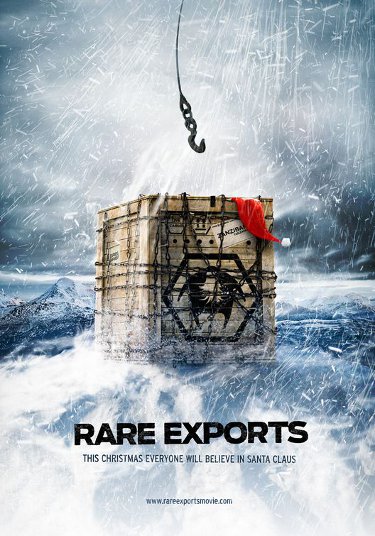
SandF Ep. 6.7 (Torture Cinema Meets Rare Exports) is Live!
The last episode of the year! That means alcohol, a supposedly bad movie, and good old Christmas fun.
Download it and take a listen!
Download it and take a listen!
Friday, December 23, 2011
The Reading Game #1: What are you reading now?
It's time for a new (and mostly random) feature on this blog: the reading game! Basically, I tell you what I'm currently reading and then hope everyone will do the same in the comments!
I am reading the following:
I am reading the following:
Thursday, December 22, 2011
Video Found: The Hobbit (Trailer) -- Thoughts?
We've all been waiting for this film like a dog waits for its master. And it is coming! From the bowels of Khazad-dûm...
Wednesday, December 21, 2011
Guest Post: Sword and Sorcery -- Why "Man vs Man" is less effective than "Man vs Supernatural" by S. E. Lindberg
Fantasy readers and movie-goers maintain an expectation that protagonists will battle supernatural forces. Those forces may manifest in humans (“bad guys”); however, when the supernatural element is diluted (or superficially offered in clichéd, familiar forms so that the protagonist literally battles a man) then expectations are not met. Consumers become disappointed. The lack luster reception of this year’s movie, Conan the Barbarian, is a good example of this expectation being unsatisfied.
Of course, Man vs. Supernatural conflict is ubiquitous across fantasy. Most recognizable of Supernatural antagonists may be Tolkien’s bodiless Sauron. Nearly three decades before Sauron stalked bookshelves and haunted rings, Conan creator Robert Ervin Howard originated the Sword & Sorcery genre by writing action-packed shorts exploring Man vs. Supernatural.
Sword & Sorcery was coined by author Fritz Leiber years after REH passed, but as he suggested the name he also clarified the role of the supernatural:
Of course, Man vs. Supernatural conflict is ubiquitous across fantasy. Most recognizable of Supernatural antagonists may be Tolkien’s bodiless Sauron. Nearly three decades before Sauron stalked bookshelves and haunted rings, Conan creator Robert Ervin Howard originated the Sword & Sorcery genre by writing action-packed shorts exploring Man vs. Supernatural.
Sword & Sorcery was coined by author Fritz Leiber years after REH passed, but as he suggested the name he also clarified the role of the supernatural:
Tuesday, December 20, 2011
Haul of Books 2012: Books Received Vol. 2
I haven't done one of these in a while, which means I'm really far behind on all the weird stuff that has arrived on my doorstep (for school, for review, for teaching, etc.).
So now you get to see the crazy stuff I've been looking at in the last few months.
Here goes:
So now you get to see the crazy stuff I've been looking at in the last few months.
Here goes:
Video Found: Whitley Strieber's "The Christmas Spirits" Trailer
No need to say anything about this. Just watch:
You can find Strieber's book on Amazon, in case you're interested. I'm sure it'll be an amusing read.
P.S.: I don't know if the book will be available elsewhere in the future; it didn't show up in my B&N search, though.
You can find Strieber's book on Amazon, in case you're interested. I'm sure it'll be an amusing read.
P.S.: I don't know if the book will be available elsewhere in the future; it didn't show up in my B&N search, though.
Book Review: Walking with the Comrades by Arundhati Roy
There's something stirring in India. A specter, if you will, of a dark time arisen and a dark time to come. Whether we call it capitalism, corporatism, or new (neo) Imperialism, the fact remains that those most affected by the shifting dynamics of contemporary industrialization will be the disenfranchised and the disinherited.
Arundhati Roy's (The God of Small Things, etc.) Walking with the Comrades waltzes straight into this new Indian world with passion and focus, chronicling her journey into the forests of India where Maoists and the few remaining indigenous people have dug in their heels. Each new day brings her closer to the heart of the movement that has set India's government on fire, spawning new counter-revolutionary police forces and new regulations and laws to strip people of their land for corporate profit. In the process, she crafts a disturbing narrative of the new Indian state, one
Guest Post: 1978 by Robert Louis Smith
I don't remember much about 1978; I was only in fifth grade. Much of what I do remember is spotty, like the fact that our TV set was a bulky piece of oak furniture with a bulbous gray screen in the middle. Back then, there were no remote controls, no cable or satellite television, and we got exactly three channels. We selected among them by turning a big silver dial on the front of the set, just above the shiny, gold fabric speaker covers. My dad always made one of the kids get up to turn the dial when he wanted to look for a different show. I remember other things from that long ago year, too. Like rotary-dial telephones, bell-bottom jeans (they always got caught in my bike chain), disco music, and my fifth grade library period with Mrs. Smith.
I really wasn't much of a student in those years, and, sadly, I made frequent trips to the principal's office. In 1978, there were few concerns about protecting a child's privacy. Whenever one's name was called for a trip to the office, the announcement came over the school's antiquated intercom system, and to the sadistic delight of virtually every child in the building. Those of us unlucky enough to have drawn the principal's ire were always called directly by name, for all to bear witness. These were somber affairs (I recognize it now as an effective form of intimidation). I remember these instances as utterly terrifying because, back then, a call to the principal's office meant only one thing: swats. And I must have gotten more than any kid in the whole school. I was such an unruly kid, in fact, that no one could ever figure out how Mrs. Smith, our withered, osteoporotic library teacher, always kept me so thoroughly leashed.
Mrs. Smith had curly, snow-white hair, pointy silver-rimmed spectacles, and shuffled along with a wooden cane. For a grade school librarian of the 1970's, she was straight out of central casting. She wore a different color polyester pantsuit every day of the week, and she rarely uttered a kind word. The walls of her library (which also doubled as the school cafeteria) were lined with children's books from ceiling to floor. Our job was to peruse the titles, choose one quickly, then shut up and read for an hour. For many of the children in my class, this was the longest, most miserable period of the day. For me, it was wonderful. The truth is that Mrs. Smith never had to say a word to me. I could've sat at that formica-covered table reading all day.
Many, many golden nuggets lay hidden among the collection of dusty spines on those public school shelves: Encyclopedia Brown, The Hardy Boys, and Johnny Tremaine are among the titles I remember consuming that year. But these were not destined to stay with me like another I spotted one rainy afternoon. Though I found the title and cover of this new discovery quite strange, it intrigued me. Soon, I found myself mesmerized by a book that I would read over and over throughout the years of my life, and one that I remain fond of more than three decades later. It was called The Lion, The Witch, and the Wardrobe, by C.S. Lewis, and it was the best introduction to the modern fantasy genre that a rambunctious, imaginative kid could ever hope for. For weeks, my mind danced with thoughts of fawns, Turkish delight, talking beavers, and creatures turned to stone by an evil white witch. A few years later, following the suggestion of a friend, I picked up a copy of the strange cousin to that Narnia tale, and began a new love affair with Tolkien's The Lord of the Rings. These are the books that shaped my impression of what a fantasy story should be. Quite a high watermark. Over the years, I strayed from these tales, experimenting with new authors and genres. I even tried to recapture some of the magic by reading countless other fantasy tales (many of which I now regard as knock-offs). But like any true love, my heart always led back to Narnia and Middle Earth.
Somewhere in the middle of all this -- perhaps around the age of twelve -- I decided the course my life would take. I was going to be a writer. I wrote my first story in junior high, completing most of it during my English class while the other, more disciplined students fastidiously worked on whatever assignment the teacher had given that day. My debut story was about an old woman who captures the boy living next door to her, locks him in a pit, terrifies him, and later reveals that his whole life has been a sham, and that she is his real mother. I've no doubt that the story was just awful, but for me, it seemed somehow powerful. I wanted to get really good at the writing thing and give it a shot.
In time, perhaps thankfully, cooler heads prevailed. I turned out to be a capable student, after all, and eventually followed a long path that led me to medical school, and then into cardiology. Even so, I never abandoned the notion that someday I would write. When the time for me came, it was with those impactful memories of Narnia and Middle Earth still swirling in my head, and with hopes that I could create something wonderful, but not just another knock-off of those great writers of yore. This is how Antiquitas Lost was born. Please understand that I have no illusions of greatness. For a variety of reasons, the writings of C.S. Lewis and J.R.R. Tolkien will not be -- cannot be -- duplicated. And I really am no different than thousands of other fantasy writers who have aspired to create something as big as those novels were. I realize this very well. I only hope that, if you have the opportunity to make your way into Pangrelor (the fantasy world in Antiquitas Lost), you might find some escape from the stresses of life, enjoy meeting the fresh cast of characters, and experience a fraction of the magic that I first experienced back in 1978.
Robert Louis Smith, author of Antiquitas Lost: The Last of the Shamalans, has numerous degrees, including psychology (B.A.), applied microbiology (B.S.), anaerobic microbiology (M.Sc.), and a Medical Doctorate (M.D.). He serves as an interventional cardiologist at the Oklahoma Heart Institute. He is married and the father of two young children. He began writing Antiquitas Lost in 2003 while studying at Tulane University in New Orleans.
For more information please visit http://www.antiquitaslost.com, and follow the author on Facebook and Twitter

I really wasn't much of a student in those years, and, sadly, I made frequent trips to the principal's office. In 1978, there were few concerns about protecting a child's privacy. Whenever one's name was called for a trip to the office, the announcement came over the school's antiquated intercom system, and to the sadistic delight of virtually every child in the building. Those of us unlucky enough to have drawn the principal's ire were always called directly by name, for all to bear witness. These were somber affairs (I recognize it now as an effective form of intimidation). I remember these instances as utterly terrifying because, back then, a call to the principal's office meant only one thing: swats. And I must have gotten more than any kid in the whole school. I was such an unruly kid, in fact, that no one could ever figure out how Mrs. Smith, our withered, osteoporotic library teacher, always kept me so thoroughly leashed.
Mrs. Smith had curly, snow-white hair, pointy silver-rimmed spectacles, and shuffled along with a wooden cane. For a grade school librarian of the 1970's, she was straight out of central casting. She wore a different color polyester pantsuit every day of the week, and she rarely uttered a kind word. The walls of her library (which also doubled as the school cafeteria) were lined with children's books from ceiling to floor. Our job was to peruse the titles, choose one quickly, then shut up and read for an hour. For many of the children in my class, this was the longest, most miserable period of the day. For me, it was wonderful. The truth is that Mrs. Smith never had to say a word to me. I could've sat at that formica-covered table reading all day.
Many, many golden nuggets lay hidden among the collection of dusty spines on those public school shelves: Encyclopedia Brown, The Hardy Boys, and Johnny Tremaine are among the titles I remember consuming that year. But these were not destined to stay with me like another I spotted one rainy afternoon. Though I found the title and cover of this new discovery quite strange, it intrigued me. Soon, I found myself mesmerized by a book that I would read over and over throughout the years of my life, and one that I remain fond of more than three decades later. It was called The Lion, The Witch, and the Wardrobe, by C.S. Lewis, and it was the best introduction to the modern fantasy genre that a rambunctious, imaginative kid could ever hope for. For weeks, my mind danced with thoughts of fawns, Turkish delight, talking beavers, and creatures turned to stone by an evil white witch. A few years later, following the suggestion of a friend, I picked up a copy of the strange cousin to that Narnia tale, and began a new love affair with Tolkien's The Lord of the Rings. These are the books that shaped my impression of what a fantasy story should be. Quite a high watermark. Over the years, I strayed from these tales, experimenting with new authors and genres. I even tried to recapture some of the magic by reading countless other fantasy tales (many of which I now regard as knock-offs). But like any true love, my heart always led back to Narnia and Middle Earth.
Somewhere in the middle of all this -- perhaps around the age of twelve -- I decided the course my life would take. I was going to be a writer. I wrote my first story in junior high, completing most of it during my English class while the other, more disciplined students fastidiously worked on whatever assignment the teacher had given that day. My debut story was about an old woman who captures the boy living next door to her, locks him in a pit, terrifies him, and later reveals that his whole life has been a sham, and that she is his real mother. I've no doubt that the story was just awful, but for me, it seemed somehow powerful. I wanted to get really good at the writing thing and give it a shot.
In time, perhaps thankfully, cooler heads prevailed. I turned out to be a capable student, after all, and eventually followed a long path that led me to medical school, and then into cardiology. Even so, I never abandoned the notion that someday I would write. When the time for me came, it was with those impactful memories of Narnia and Middle Earth still swirling in my head, and with hopes that I could create something wonderful, but not just another knock-off of those great writers of yore. This is how Antiquitas Lost was born. Please understand that I have no illusions of greatness. For a variety of reasons, the writings of C.S. Lewis and J.R.R. Tolkien will not be -- cannot be -- duplicated. And I really am no different than thousands of other fantasy writers who have aspired to create something as big as those novels were. I realize this very well. I only hope that, if you have the opportunity to make your way into Pangrelor (the fantasy world in Antiquitas Lost), you might find some escape from the stresses of life, enjoy meeting the fresh cast of characters, and experience a fraction of the magic that I first experienced back in 1978.
---------------------------------------------------------
Robert Louis Smith, author of Antiquitas Lost: The Last of the Shamalans, has numerous degrees, including psychology (B.A.), applied microbiology (B.S.), anaerobic microbiology (M.Sc.), and a Medical Doctorate (M.D.). He serves as an interventional cardiologist at the Oklahoma Heart Institute. He is married and the father of two young children. He began writing Antiquitas Lost in 2003 while studying at Tulane University in New Orleans.
For more information please visit http://www.antiquitaslost.com, and follow the author on Facebook and Twitter

Monday, December 19, 2011
SandF Episode 6.6 (Favoritism -- Our 2011 Besties) is Live!
I'll let the description on the episode page do the talking:
Our last non-interview, non-torture episode of the year is all about our favorite books, movies, TV shows, interviews, etc. for the 2011 year. You can see our lists below, but you'll want to listen to hear our reasons.
Plus: we spend a little time saying thank you to everyone who listened and appeared on the show. Why? Because we love you. Obviously. Show us a little love back by leaving a response to the following questions:
What books, movies, and TV shows were your favorites for 2011 (whether published this year or not)? Which interviews, roundtables, and Torture Media episodes did you most enjoy?Head on over and take a listen!
Wednesday, December 14, 2011
Haul of Books 2.0: Books Received Vol. 7
Another edition of things I've added to my collection. Some of these are research selections, as I bought them around the same time when I was putting together a syllabus on postcolonial fiction. As such, the books below are an eclectic bunch.
What I want to know is:
What I want to know is:
What have you purchased recently?Here's the list:
Which books below most interest you?
Monday, December 12, 2011
SandF Ep. #6.5 (Nihilism in Genre Fiction w/ Paul Genesse) is Live!
We're back with another roundtable discussion! Here's the description:
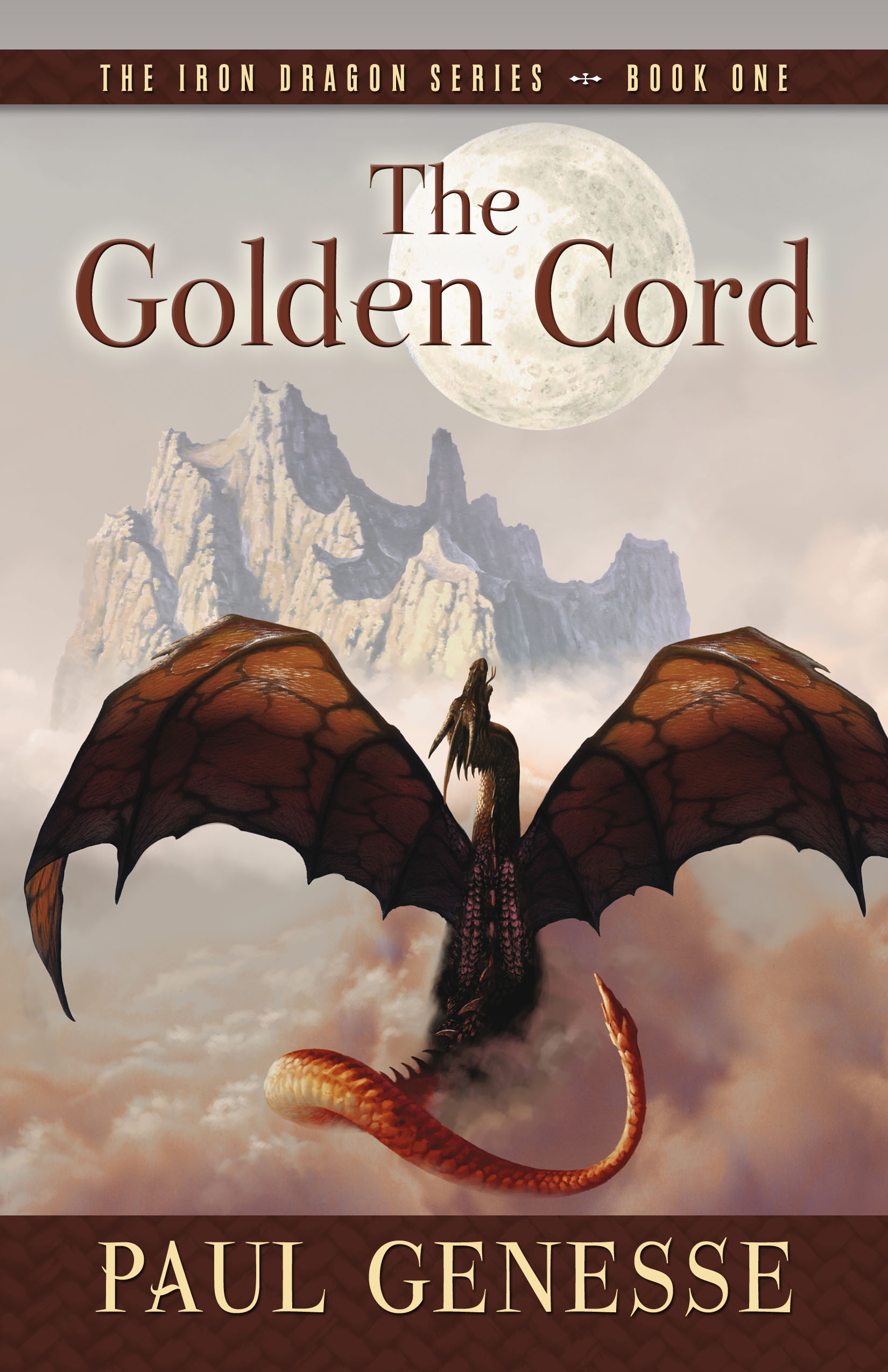
Fantasy author Paul Genesse joins us for a lively discussion about darkness and nihilism in science fiction and fantasy. We cover everything from the good vs. evil dichotomy, war, Game of Thrones, Steven Pinker, and much more!
Plus, Paul tells us a bit about his upcoming novel, the Crimson Pact series, and his deepest…darkest…secrets! Only two of those things are true…Download the episode and enjoy!
Haul of Books 2.0: Books Received Vol. 6
It's been a while for a Haul of Books feature, which means it's time for catching up! And that's what this post is all about.
What I want to know is:
What I want to know is:
What have you purchased recently?Here's the list:
Which books below most interest you?
Sunday, December 11, 2011
Giveaway Winners for David Chandler's Ancient Blades Trilogy!
And the winners for the first two books in the series are:
Edit: Kevin needs to contact me because I have no email address for him. arconna[at]yahoo[dot]com. Thanks!
Kevin and shadowflame1974.The winner for the full trilogy is:
booksandboston!Congratulations to everyone! You should get an email from me shortly for your addresses.
Edit: Kevin needs to contact me because I have no email address for him. arconna[at]yahoo[dot]com. Thanks!
Book Review: Crack'd Pot Trail by Steven Erikson
Steven Erikson's Malazan Book of the Fallen series took the fantasy world by storm when Gardens of the Moon was published in 1999, leading to a 10-novel epic fantasy series, several additional novels written by Ian Esslemont, and a number of novellas. Earlier this year, Crack'd Pot Trail, a tale of Bauchelain and Korbal Broach, hit the shelves, offering a strangely compelling narrative concept in an over-embellished, long-winded package.
Using the backdrop of the Bauchelain and Korbal Broach novellas, Crack'd Pot Trail follows the Nehemothanai and their artist/pilgrim companions as they continue their hunt of the infamous Bauchelain and Korbal Broach (a less-than-reputable pair, to say the least). Stuck traversing the wasteland of the Crack'd Pot Trail with dwindling resources, the artists are pitted against themselves in a feat of narrative prowess: whoever tells the worst tale may become the next meal.
Nihilism and Genre: Some Random Thoughts
I've been thinking a lot recently about the issue of nihilism/darkness in genre fiction. This post will come off as a kind of random exploration of things swimming around in my head.
Some seem to think that we live in a world that is far more nihilistic and dark than any other moment in the past. To some extent, that might be true, particularly if you pick and choose which years you use to make the comparison. But reality doesn't hold up well to pick-and-choose methods. While the present is certainly beset with death, destruction, and violent rhetoric, the same could be said of almost every other moment in our history. The difference, perhaps, has to do with where those elements are directed.
(Note: by nihilism, I am referring to the form I think most imagine when they say "nihilism." That is that morality is not innate to human beings, but a product of our cultural constructions. In other words, morality is artificial, not natural. There are plenty of other camps of nihilism, but I make the assumption that people who name "nihilism" do so with morality in mind.)
The 50s are often cited as the best years in America by cultural purists; but to make that argument, you have to ignore the rampant levels of sexism and racism, which permeated every level of contemporary 50s culture. Toss in a few wars, famines, McCarthyism, and other disturbing events and you end up with an era which looks nice for a select cast of individuals living in a select group of nations. (I make the assumption that few would say the 20s, 30s, and 40s were
Some seem to think that we live in a world that is far more nihilistic and dark than any other moment in the past. To some extent, that might be true, particularly if you pick and choose which years you use to make the comparison. But reality doesn't hold up well to pick-and-choose methods. While the present is certainly beset with death, destruction, and violent rhetoric, the same could be said of almost every other moment in our history. The difference, perhaps, has to do with where those elements are directed.
(Note: by nihilism, I am referring to the form I think most imagine when they say "nihilism." That is that morality is not innate to human beings, but a product of our cultural constructions. In other words, morality is artificial, not natural. There are plenty of other camps of nihilism, but I make the assumption that people who name "nihilism" do so with morality in mind.)
The 50s are often cited as the best years in America by cultural purists; but to make that argument, you have to ignore the rampant levels of sexism and racism, which permeated every level of contemporary 50s culture. Toss in a few wars, famines, McCarthyism, and other disturbing events and you end up with an era which looks nice for a select cast of individuals living in a select group of nations. (I make the assumption that few would say the 20s, 30s, and 40s were
Wednesday, December 07, 2011
Guest Post: The Polarization of Genre Fiction by David Chandler
(Don't forget to enter here for a chance to win one of three sets of David Chandler's books.)
When I was maybe ten years old I asked myself whether I preferred science fiction novels or fantasy novels. My eventual decision was that I should prefer SF, since some day I might live on the moon, while I knew I was never going to see a real dragon.
Don’t judge. It was the seventies, and we had a space program back then.
It was a weighty decision that took all of a lazy summer afternoon lying in a hammock in my back yard, listening to the swelling mechanical sound of the crickets all around me. When I’d made up my mind, I nodded quite seriously to myself, and got back to the important business of reading.
Books were everything to me back then (they still are, but in a different way). I read everything I could get my hands on, anything remotely related to genre. I tried for a couple of days to stick to
When I was maybe ten years old I asked myself whether I preferred science fiction novels or fantasy novels. My eventual decision was that I should prefer SF, since some day I might live on the moon, while I knew I was never going to see a real dragon.
Don’t judge. It was the seventies, and we had a space program back then.
It was a weighty decision that took all of a lazy summer afternoon lying in a hammock in my back yard, listening to the swelling mechanical sound of the crickets all around me. When I’d made up my mind, I nodded quite seriously to myself, and got back to the important business of reading.
Books were everything to me back then (they still are, but in a different way). I read everything I could get my hands on, anything remotely related to genre. I tried for a couple of days to stick to
Tuesday, December 06, 2011
Hello Readers (from places other than the U.S. and U.K.)
Once in a while, I check my audience statistics to see where people who read this blog are from. The usual four are always high on the list (U.S., U.K., Canada, and Germany), but sometimes there are a few new additions that make me giddy. Don't get me wrong: I love all you Americans, Brits, Canadians and Germans! You're truly wonderful and I thank you for reading. But sometimes it's wonderful to see people from elsewhere reading this weird project of mine.
With that in mind, I would like to say a hearty American hello to all the readers from the following countries:
With that in mind, I would like to say a hearty American hello to all the readers from the following countries:
- The Netherlands
- Brazil
- Russia
- Australia
- India
- France
- The Philippines
- Hong Kong
- Thailand
Hello! Feel free to come out of the shadows and introduce yourselves!
Monday, December 05, 2011
The Guardian Quoted Me!
That's all I've got. See for yourself.
Now if you'll excuse me, I'm going to go celebrate with something sugary and delicious. Yay!
P.S.: They also quoted Larry over at OF Blog, who gets quoted far more than I do...lucky bastard.
SandF Ep. 6.4 (LGBT SpecFic w/ JoSelle Vanderhooft) is Live!
I'll let the episode description do the talking for me:

This week's roundtable is a monster. JoSelle Vanderhooft, renowned editor of Steam Powered, Steam Powered 2, and many other fascinating collections, joins us for an extensive discussion about LGBT (lesbian, gay, bisexual, and transgender) speculative fiction, the reception of LGBT people in the community (and publishing), the political side of things, and, of course, JoSelle's work!What are you waiting for? Go listen!
Journeying Through Tablets: the Kindle Fire
(Thus begins an irregular column in which I talk about random experience I've had involving tablet PCs on display in stores.)
I had the chance to play with a Kindle Fire yesterday (my local Barnes and Noble didn't have a tablet in the store, which sucked).

- The design is sleek and clean.
- The interface is intuitive and fun to play with. There are probably flaws in the interface, but I didn't notice them at the time. Honestly, I figured out how to do everything almost immediately. Maybe that's just me...
- It's fast. It switched between reading (books, magazines, online stuff) and viewing (movies, apps, etc.) fairly smoothly. Other tablets might run faster, but I don't think most people will notice while using the Fire.
- I don't think it will be good as a reading device, with exception to magazines that are still in magazine format. The color and background options for the eReader were lacking. You could make things semi-okay for reading, but I think e-Ink still reigns supreme in this category.
An amusing fact:
There were a whole bunch of other devices on display (a Vizio something or other and two Acer devices). All but one of those was busted for one reason or another (or the interface was clunky for a touch pad, in comparison to the Fire).
Verdict:
I want to wait for my local B&N to bring in a tablet for me to play with before I make a decision. Right now, the $50 price difference gives the Fire a huge edge. But if the B&N has a better interface, better options, and better performance, it'll be worth throwing down the extra cash (one day -- I don't have the $ to buy anything like that right now).
To be continued...
Sunday, December 04, 2011
We're Not Your Bitches -- Signed, A Book Blogger
Dear Mr. Morrow and Publishers Thinking of Doing the Following:
 Book bloggers read and review books for the love. We are not paid. At best, some of us will sell a review here or there, or we might earn a little cash from advertising. But almost all of us do this because we love books, and we do it knowing the only form of compensation is the thrill of getting a new book in the mail.
But this is not a job. We are not employees on the tab or paid under the table. Free books does not equal compensation, in part because free books is an unequal relation of value. You give us a book, but we have to read and review it, which means the value of the book in relation to the time spent working on it averages out to less than minimum wage. Effectively, if free books constitute compensation, then those of us who blog about books are making less than someone who works at Taco Bell.
The point is: this is not a job. We do this for the love. Most of us will never have jobs at magazines as reviewers. Most of us will never get beyond sharing our love of books with people who share our interests. That's just the way it is.
In other words: we are not your bitches.
While you might think your new policies are about efficiency, what they tell the rest of us is that you do not value what we do. As @MotherReader has already pointed out: "Can you imagine them sending this to Horn Book or the NY Times?" Exactly. The language of the letter is a double bitch slap to the face: first, you tell us that what we do is a job, despite the fact that we are not paid for it, and then you treat us as less worthy of the kind of attention afforded to a place whose job it is to review books.
Don't get me wrong. I completely understand why publishers want to streamline the process, and I sympathize with it. But turning book blogging into a "play by the rules" game is far from streamlining anything.
Instead of treating us like review slaves, you might consider asking book bloggers for their opinions. Surveys are a wonderful thing, and book bloggers are usually quite happy to offer their thoughts on a range of topics related to -- you guessed it -- books.
Just don't treat us like we're your bitches. Because we're not. We're lovers of books who enjoy sharing our love with others. Slapping us in the face with these kinds of policies, written with such words, is not a great way to keep us interested in talking about your books.
As Larry of OF Blog says: "I ain't gonna work on Maggie's farm no more."
Signed,
A Book Blogger
Thoughts from others: Larry at OF Blog; LA Times Blogs.

But this is not a job. We are not employees on the tab or paid under the table. Free books does not equal compensation, in part because free books is an unequal relation of value. You give us a book, but we have to read and review it, which means the value of the book in relation to the time spent working on it averages out to less than minimum wage. Effectively, if free books constitute compensation, then those of us who blog about books are making less than someone who works at Taco Bell.
The point is: this is not a job. We do this for the love. Most of us will never have jobs at magazines as reviewers. Most of us will never get beyond sharing our love of books with people who share our interests. That's just the way it is.
In other words: we are not your bitches.
While you might think your new policies are about efficiency, what they tell the rest of us is that you do not value what we do. As @MotherReader has already pointed out: "Can you imagine them sending this to Horn Book or the NY Times?" Exactly. The language of the letter is a double bitch slap to the face: first, you tell us that what we do is a job, despite the fact that we are not paid for it, and then you treat us as less worthy of the kind of attention afforded to a place whose job it is to review books.
Don't get me wrong. I completely understand why publishers want to streamline the process, and I sympathize with it. But turning book blogging into a "play by the rules" game is far from streamlining anything.
Instead of treating us like review slaves, you might consider asking book bloggers for their opinions. Surveys are a wonderful thing, and book bloggers are usually quite happy to offer their thoughts on a range of topics related to -- you guessed it -- books.
Just don't treat us like we're your bitches. Because we're not. We're lovers of books who enjoy sharing our love with others. Slapping us in the face with these kinds of policies, written with such words, is not a great way to keep us interested in talking about your books.
As Larry of OF Blog says: "I ain't gonna work on Maggie's farm no more."
Signed,
A Book Blogger
--------------------------------------------------------
Thoughts from others: Larry at OF Blog; LA Times Blogs.
Saturday, December 03, 2011
How Barnes & Noble Can Lose Me as a Nook Customer
A long, long time ago (in a galaxy far away), I bought a B&N Nook. Why? Because I liked:
- the design (the first Nooks were beautiful)
- the touchscreen at the bottom, which makes navigating the device easy and searching for books more interesting than other eReaders (it lets you browse by the covers)
- having a physical bookstore to go to, since I still buy hard copies
- the various in-store bonuses (reading anything in the store for free, free food, etc.)
- freedom from Amazon (I'm not a fan of Amazon's attempt to strangle publishers, just as I am not a fan of publishers strangling writers)
- freedom from a single store (the ePub format lets me buy books from all over the place; that doesn't mean I go elsewhere to get them -- just that I can)
Most of these things are still true. I love my Nook and the freedom it grants me, and I still love going to an actual B&N store. And I also love reading on the Nook. It's a wonderful device and the reading options are fantastic (adjusting font, etc.).
So what have I got to bitch about? A few things, really:
Friday, December 02, 2011
Giveaway Update: The Ancient Blades Trilogy by David Chandler -- More Books!
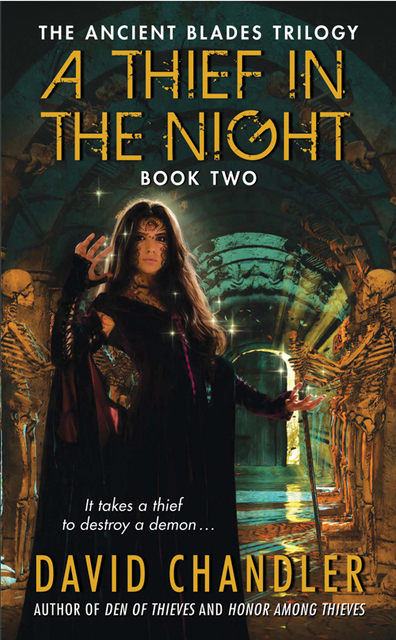
I've got some good news! I now have three sets of the first two books in David Chandler's trilogy up for grabs as a part of the Honor Among Thieves giveaway here. What do this mean?
So...enter!


- Two lucky winners will receive the first two books in the series: Den of Thieves and A Thief in the Night.
- One lucky winner will win the entire trilogy.
So...enter!

Subscribe to:
Posts (Atom)