What draws us to the doom yet to arrive? CNN, pre-tsunami (in Hawaii), donates its screen time not to the already devastated areas of Chile (and elsewhere), but to the image of Hawaii's beaches, from a distance, untouched, near-pristine. That's the image that stays on the screen, the reporters anticipating--and building anticipation for us--the disaster waiting to happen. There's a reason they show us this; if there wasn't, they'd move on to something else, like Chile, where the proverbial shit has already hit the fan, or even New Zealand, where tsunami conditions have already arrived (and gone by the time this post hits the Inter-waves--pun intended).
I suspect that our obsession with impending doom in the news is intricately linked with our love of dystopia in film and literature. The connection, I think, lies in our unwillingness to deal with reality--not in an absolute sense, but in a more immediate sense. Dystopias offer a way for us to see doom without facing it here on Earth, and without dealing with the immediacy of the doom that has already arrived. It is, perhaps, "safer" for our identities as human beings to imagine the end than to witness it firsthand. That's not to say that we aren't interested in the end, per se; we are, and, in fact, I imagine right now CNN is flooded with images of what may very well be the disaster of the week. But, our interest in disaster is not in the disaster itself, but in the leading up to it. The aftermath is an afterthought.
There's a hole in the argument, though. After all, we did focus so much attention on Haiti, where disaster had already struck before any focus was paid upon it. But this doesn't apply for two reasons:
1. The disaster had already struck; there was no possibility for anticipation.
2. The disaster has slowly become less about the disaster itself and more about how the disaster can/could be turned into salvation. The controversial statement made by the unrepentant racist Pat Robertson (that this is a blessing in disguise) is, perhaps, not terribly far from the truth. Prior to the disaster, the international community had, largely speaking, paid little attention to Haiti, at least not in the capacity that it deserved. Yes, Haiti's poverty was never a secret. Yes, there were organizations who put money and labor into helping Haiti prior to the disaster. But only after the disaster has Haiti received any considerable amount of attention and finances (and the promise thereof) to be used towards rebuilding the country. Yes, that very thought is a sick and disturbing one: that only after disaster do we provide legitimacy to the impoverished conditions of a nation that has been suffering the aftershocks of colonialism for centuries.
The obsession continues, though. Whether or not Hawaii will (has) witnessed disaster, we are (were) fixated on our screens, witnessing the anticipatory moment, and in our free time, when we are/were not fixated, we pour(ed) our souls into the dystopic (not necessarily science fiction, but certainly dystopia in its non-speculative forms--what we might call "depressing" fiction).
No wonder our ability to address the human issue at hand is deficient.

Saturday, February 27, 2010


Wednesday, February 24, 2010
How (Really) Thinking About Star Wars Can Make You Feel Uncomfortable (i.e. Terrorists!)
How do you feel about terrorism? You don't like it very much, do you? Most of us don't, and for good reason. It's bad, right? No matter what! Damn those evil terrorists!
On the opposite end of things, there's Star Wars. Most of us like that, right? Well, at least the originals. The prequels have really divided us Star Wars geeks...
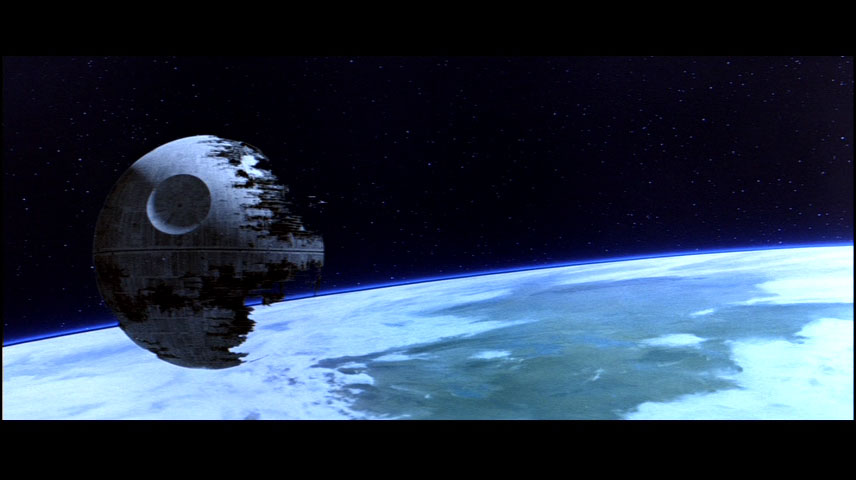 Now, what if I was to tell you that your hatred of terrorists is directly contradicted by your love of Star Wars? Stay with me. You see, Star Wars (the movies only) is basically a giant high five to domestic terrorism. You'd never know it if you didn't dig in and think deep (the show, after all, does such a fine job painting the Rebels as the good guys). Think of Star Wars in terms of its internal biases:
 While it is certainly relevant to recognize the impetus behind the Rebels' actions, it doesn't hide the fact that whatever good intentions there may be, they are still engaging in what we would call terrorism today. Think of it this way: to the people who support Al Qaeda, they are doing a good thing; likewise, to the people who support the Rebels, they are also doing a good thing. It comes down to perspective, and when you are on the outside, as we are, you can think objectively about the reality that Star Wars proposes. That reality is one where terrorism is something to root for, where good and evil are clearly defined, and where, inevitably, the folks we think are the good guys always win. While the Al Qaeda analogy might not hold up for most, it functions well enough to demonstrate how good and evil are defined by both context and perspective, both of which we cannot ignore here, even if the movies want us to for the sake of its internal logic.
But ask yourself this the next time you watch the original Star Wars movies: are the militaristic and "evil" elements of the Empire the only things severely damaged by the end of A New Hope and Return of the Jedi? Or is it possible that the collateral damage from everything the Rebels have done is in fact far more devastating than leaving the Empire in control in the first place?
On the opposite end of things, there's Star Wars. Most of us like that, right? Well, at least the originals. The prequels have really divided us Star Wars geeks...
Now, what if I was to tell you that your hatred of terrorists is directly contradicted by your love of Star Wars? Stay with me. You see, Star Wars (the movies only) is basically a giant high five to domestic terrorism. You'd never know it if you didn't dig in and think deep (the show, after all, does such a fine job painting the Rebels as the good guys). Think of Star Wars in terms of its internal biases:- The Rebels are the focus characters. With the exception of Darth Vader, there are few, if any, Imperial focal points throughout the series. Figures like Luke Skywalker, Han Solo, Princess Leia, etc. are our heroes, and unabashedly so -- watch the first movie again and tell me they're not unreserved heroes.
- The Light Side of the Force is pitted against the Dark Side, and, thus, the good side is pitted against the evil side.
- We're told that the Empire is evil. Sometimes we see it commit evil, but the assumption left to be made by us is that they are only capable of evil. What isn't shown is actually quite shocking: infrastructure, culture, etc. The Imperial culture is militaristic, with an Emperor at the head giving all the major orders. But what about the normal folks living in the Empire? Again, we're left with a biased view, because those planets we are shown tend to be outer world, low-resource, or near-inhospitable places where outlaws have lived pre- and post-Empire, and where we see the failures of colonialism most pronounced. What of the inner planets like Coruscant, etc.? In the prequels we have a good idea that these places are technologically advanced, culturally driven, and prosperous. If you really think about what is shown to us, you have to wonder how much of that is truly the mark of an evil "nation" or "empire," and how much of it is simply an "empire" gone somewhat awry, but still a few shades short of the extreme evil that we are told it represents.
- The Rebels are terrorists. They periodically infiltrate the Empire with spies, attack convoys, invade Imperial prisons to liberate criminals against the Empire (yes, Princess Leia is a criminal), etc. The fact that the Rebels almost immediately resort to violence (albeit in a seemingly toxic political environment) is rather telling here. Am I suggesting that violence against the Empire is inherently bad? No, but the problem is that the visual given to us doesn't provide context to understand the motivations, at least not on a comprehensive level (superficially we are conditioned to hate the Empire).
- As I mentioned above, and what is relevant to the point preceded this one, the complete lack of Imperial culture within the films essentially leaves an entire side of the coin unseen. This leads us to the following point.
- Because we only see the militaristic sides of both the Rebels and the Empire (the prequels only show us a pre-Empire galaxy), we have no idea how these two groups are seen in the context of society. Are the Rebels viewed as a good thing, even secretly, among the citizens of the Empire? What about the Empire?
While it is certainly relevant to recognize the impetus behind the Rebels' actions, it doesn't hide the fact that whatever good intentions there may be, they are still engaging in what we would call terrorism today. Think of it this way: to the people who support Al Qaeda, they are doing a good thing; likewise, to the people who support the Rebels, they are also doing a good thing. It comes down to perspective, and when you are on the outside, as we are, you can think objectively about the reality that Star Wars proposes. That reality is one where terrorism is something to root for, where good and evil are clearly defined, and where, inevitably, the folks we think are the good guys always win. While the Al Qaeda analogy might not hold up for most, it functions well enough to demonstrate how good and evil are defined by both context and perspective, both of which we cannot ignore here, even if the movies want us to for the sake of its internal logic.But ask yourself this the next time you watch the original Star Wars movies: are the militaristic and "evil" elements of the Empire the only things severely damaged by the end of A New Hope and Return of the Jedi? Or is it possible that the collateral damage from everything the Rebels have done is in fact far more devastating than leaving the Empire in control in the first place?
Sunday, February 21, 2010
Book Review Up: M Is For Magic by Neil Gaiman
I have another book review up over at SQT's blog. Check it out. Five more reviews on the way!
Have any of you read any of Gaiman's novels? Let me know in the comments!
Have any of you read any of Gaiman's novels? Let me know in the comments!
How to Fail At Podcasting: From a Listener’s Perspective
The great thing about podcasting is that just about anyone can do it. The bad thing about it is that a hell of a lot of people try it, but end up producing a product that is of low quality, even if top-quality equipment and top-notch audio editing skills are employed.
Some of the below has been mentioned before, but I’ve extended the list and updated it to be more relevant and more clearly defined. Regardless, below are a few new and expanded ways to fail at podcasting.
Podcrowding
Bringing all your friends into the podcasting world isn’t a bad idea, in principle. But, there is such a thing as too many damned people on a podcast at one time. For the listener, having any more than three people in the same podcast is basically like trying to listen to twelve people in real life without getting confused or disoriented when person #10 interrupts #3, who is then interrupted by #5, who comments on something #7 said, who originally had responded to #8’s question after #10 and #9 said something to #4 and #2 about something #1 had said to #Z…I mean #6. See what I mean?
Pull back. Three people is enough. It’s less confusing for you, less confusing for listeners, and certainly less confusing for any guests you might have. Podcrowding is a disaster waiting to happen. Listen to the podcasts that do this. Count how many minutes are wasted on things that have nothing to do with the actual podcast (i.e. the hosts being confused about who’s next to speak).
Poddroning
Not everyone has a voice for radio…err, podcasting. It’s not the kind of truth anyone wants to hear, but it’s the truth nonetheless. For me, one of the most annoying things any podcast can have is a host who is boring enough to put me to sleep. These hosts include people with monotone voices, people who take forever to say a simple sentence, people who are impossible to understand (possibly because they mumble), or people who simply have nothing interesting to say. Some of this can be fixed with practice; some of it can’t. Accept your limits, though. There’s nothing wrong with having a regular old blog. Sometimes your voice is best served by the written word. Don’t put your audience to sleep.
Podrepeating
One of my biggest beefs with the podcasting community is that it constantly repeats itself, particularly in the fiction aspect. I’ve stopped listening to a number of podcasts because they stopped being about fresh content and instead became devoted to being a platform for plugging other “big names” in the podcasting world. The thing is, most of what was a novelty about podcasting went out of fashion almost two years ago. It’s not “new” anymore, and anyone doing a podcast isn’t doing something that hasn’t been done before (unless you’re actually doing something new with the form, which is something to note). Podcasting has become, in some circles, a giant circlejerk. For some listeners, like myself, it’s a podkiller. Even if the repeat offenders have something new to plug, they often repeat some of the same things they said the last time. It makes for some rather dull content.
Podplugging
If a podcast is about you, then it should be clearly defined as such. Mur Lafferty, for example, makes it damn clear that her podcast is about her (though she has branched out to include interviews with authors and the like). Unless your podcast is actually about you, however, don’t use it as a secret way to plug yourself. Why? It’s frakking annoying. If you do interviews with authors, then make sure the interviews are about them. When you start trying to relate everything to yourself, it not only irritates, but makes you look like a self-centered jackass. If you want to talk about yourself, then make a podcast about yourself; otherwise, don’t waste the listener’s time.
Podologizing
When every single podcast you release begins or ends with you apologizing for something you failed to do in relation to the podcast, then there is a problem. Occasionally apologizing is perfectly acceptable; all of us have time constraints, personal problems, and the like that can get in the way with an extracurricular activity like podcasting. Still, if you’re going to promise something, and then never deliver, then you need to reassess your podcast model. Apologizing for some failure on your part every single time is both annoying and also drawing attention to the fact that you kind of suck. Either get with the program, or change the way you do things. Leave the apologizing to truly unexpected issues.
Now I want to know what you think is a quick way to fail miserably at podcasting. What has annoyed you in the past?
Some of the below has been mentioned before, but I’ve extended the list and updated it to be more relevant and more clearly defined. Regardless, below are a few new and expanded ways to fail at podcasting.
Podcrowding
Bringing all your friends into the podcasting world isn’t a bad idea, in principle. But, there is such a thing as too many damned people on a podcast at one time. For the listener, having any more than three people in the same podcast is basically like trying to listen to twelve people in real life without getting confused or disoriented when person #10 interrupts #3, who is then interrupted by #5, who comments on something #7 said, who originally had responded to #8’s question after #10 and #9 said something to #4 and #2 about something #1 had said to #Z…I mean #6. See what I mean?
Pull back. Three people is enough. It’s less confusing for you, less confusing for listeners, and certainly less confusing for any guests you might have. Podcrowding is a disaster waiting to happen. Listen to the podcasts that do this. Count how many minutes are wasted on things that have nothing to do with the actual podcast (i.e. the hosts being confused about who’s next to speak).
Poddroning
Not everyone has a voice for radio…err, podcasting. It’s not the kind of truth anyone wants to hear, but it’s the truth nonetheless. For me, one of the most annoying things any podcast can have is a host who is boring enough to put me to sleep. These hosts include people with monotone voices, people who take forever to say a simple sentence, people who are impossible to understand (possibly because they mumble), or people who simply have nothing interesting to say. Some of this can be fixed with practice; some of it can’t. Accept your limits, though. There’s nothing wrong with having a regular old blog. Sometimes your voice is best served by the written word. Don’t put your audience to sleep.
Podrepeating
One of my biggest beefs with the podcasting community is that it constantly repeats itself, particularly in the fiction aspect. I’ve stopped listening to a number of podcasts because they stopped being about fresh content and instead became devoted to being a platform for plugging other “big names” in the podcasting world. The thing is, most of what was a novelty about podcasting went out of fashion almost two years ago. It’s not “new” anymore, and anyone doing a podcast isn’t doing something that hasn’t been done before (unless you’re actually doing something new with the form, which is something to note). Podcasting has become, in some circles, a giant circlejerk. For some listeners, like myself, it’s a podkiller. Even if the repeat offenders have something new to plug, they often repeat some of the same things they said the last time. It makes for some rather dull content.
Podplugging
If a podcast is about you, then it should be clearly defined as such. Mur Lafferty, for example, makes it damn clear that her podcast is about her (though she has branched out to include interviews with authors and the like). Unless your podcast is actually about you, however, don’t use it as a secret way to plug yourself. Why? It’s frakking annoying. If you do interviews with authors, then make sure the interviews are about them. When you start trying to relate everything to yourself, it not only irritates, but makes you look like a self-centered jackass. If you want to talk about yourself, then make a podcast about yourself; otherwise, don’t waste the listener’s time.
Podologizing
When every single podcast you release begins or ends with you apologizing for something you failed to do in relation to the podcast, then there is a problem. Occasionally apologizing is perfectly acceptable; all of us have time constraints, personal problems, and the like that can get in the way with an extracurricular activity like podcasting. Still, if you’re going to promise something, and then never deliver, then you need to reassess your podcast model. Apologizing for some failure on your part every single time is both annoying and also drawing attention to the fact that you kind of suck. Either get with the program, or change the way you do things. Leave the apologizing to truly unexpected issues.
Now I want to know what you think is a quick way to fail miserably at podcasting. What has annoyed you in the past?
Friday, February 19, 2010
Survival By Storytelling: Win a Copy at LitDrift
This will be brief, because there's not much to say. If you'd like to win a free copy of the first issue of Survival By Storytelling, head on over to LitDrift. All you have to do is leave a comment! The giveaway closes fairly soon, I believe.
Anywho!
P.S.: I was going to add the cover image for SBS to this post, but apparently Blogger is having a fit today. So, if you don't remember what the image looks like, you can click here to see it. And yes, the image is freaking gorgeous. Thanks, Kaolin Fire!
Anywho!
P.S.: I was going to add the cover image for SBS to this post, but apparently Blogger is having a fit today. So, if you don't remember what the image looks like, you can click here to see it. And yes, the image is freaking gorgeous. Thanks, Kaolin Fire!

Thursday, February 18, 2010
The SWTXPCA Conference: Day Three (Conference Day Four)
The final day of the SWTXPCA conference. Sad? Yes, indeed so. But all good things must come to an end, right? Right?!
The final day of the conference proved to be slower than previous days. For one, the panels started later and ended sooner. Second, the conference folks apparently had planned some sort of trip to Sante Fe (another city in New Mexico I guess), which meant that some of the last panels were pretty much empty. I found that a bit irritating, especially since I was the only one to go see one of the panels mentioned below (and some jackass kept coming in and leaving in the middle, which is incredibly rude if you ask me). Still, the final day proved to be equally as stimulating as the two days preceding it. Below is a breakdown of the highlights.
Panels
--The day began with a fascinating panel on the atomic bomb. One of the presenters discussed the curious way in which history is defined by museums in America and Japan (the former tends to humanize the bomb, while ignoring the victims; the latter tends to focus entirely on the victims while ignoring the events that led up to the attacks).
--The second panel discussed representations of Native Americans in science fiction games and literature. The paper on the game Prey proved to be particularly interesting.
--The second to last panel of the last day of the conference placed a heavy focus on apocalyptic literature and film, particularly from Spanish and German locales. I found it interesting how the latter half of the panel discussed the problem of history and marginalized figures, something I have written about before.
--The last panel discussed myth and fairy tales. Probably the most interesting thing about the panel was the last paper presented, in which the presenter essentially ripped Disney's new film, The Princess and the Frog, to tiny little pieces. Fun indeed!
Things I Nabbed For Free
--Journal of Cultural Geography, Volume 36, Number 3, October 2009 (special thematic issue: "Twenty years after the Wall: geographical imaginaries of 'Europe' during European Union enlargement")
--Media History, Volume 15, Number 4, November 2009 (special issue: "Explorations in Modern Indian History and the Media")
--International Journal of Heritage Studies, Volume 15, Number 6, November 2009
--Wasafiri: International Contemporary Writing, Issue 60, Winter 2009
--Latino American Popular Culture (given to my friend, Afif)
Additions to the New Reading List
--White Noise by Don Delillo
--Libra by Don Delillo
--Underworld by Don Delillo
--Endzone by Don Delillo
--Barthes on consciousness
--Prey (play)
--Michael A. Sheyahshe (on Native Americans and gaming)
--Celluloid Indians by Kilpatrick
--"The Influence of Literature and Myth on Video Games"
--On the Beach by Chute
--Der Schwarm
--Kant on the power of judgment
--Horus on literature (it should please and educate)
--Hayden White on history and writers
--Dagon (watch)
--Coronos (watch)
--Walter Laird on the hijacking of culture
--Novela y Cine de ciencia ficcion espanola contemporanea: Una replexion sobre la humanidad by Cristina Sanchez-Conejero
The Plane Ride Back
I'll preface this entire discussion with the following: airlines suck bigger than the Titanic.
First things first, I called Expedia the night before my flight to confirm that no flights had been canceled; I was told everything was a go, and so I prepped myself for the long, nine hour flight that was to come, only to find out when I arrived in Denver, Colorado that my flight from Atlanta, Georgia to Gainesville, Florida had been canceled. That's right. I arrived in Denver at 8 PM only to be told that, hey, that two hour layover in Altanta was now seven, and there was nothing I could do about it (and this, of course, was compounded by the fact that I had a five hour layover in Denver, which left me flopping around like a fish out of water in an airport where everything was closed).
Perhaps worse than the above is the fact that my flight from Albuquerque to Denver was in a plane with propellers. Yes, you read that right. Pro-freaking-pellers. I didn't know they still had commercial flights in anything that didn't have two massive turbines. I was scared as hell. It's not like propellers are made of metal or anything...or are they? Well, whatever, at 400 miles per hour a flying Canadian goose can take out a steel girder.
I ended up missing my class on Monday because of this, and now I have caught the plague. Thanks, Delta Airlines!
And that's all I've got. I look forward to the next SWTXPCA. I definitely plan to attend when they are in San Antonio next year. For now, I'll have to live with some fond memories and the awesome contacts I made.
The final day of the conference proved to be slower than previous days. For one, the panels started later and ended sooner. Second, the conference folks apparently had planned some sort of trip to Sante Fe (another city in New Mexico I guess), which meant that some of the last panels were pretty much empty. I found that a bit irritating, especially since I was the only one to go see one of the panels mentioned below (and some jackass kept coming in and leaving in the middle, which is incredibly rude if you ask me). Still, the final day proved to be equally as stimulating as the two days preceding it. Below is a breakdown of the highlights.
Panels
--The day began with a fascinating panel on the atomic bomb. One of the presenters discussed the curious way in which history is defined by museums in America and Japan (the former tends to humanize the bomb, while ignoring the victims; the latter tends to focus entirely on the victims while ignoring the events that led up to the attacks).
--The second panel discussed representations of Native Americans in science fiction games and literature. The paper on the game Prey proved to be particularly interesting.
--The second to last panel of the last day of the conference placed a heavy focus on apocalyptic literature and film, particularly from Spanish and German locales. I found it interesting how the latter half of the panel discussed the problem of history and marginalized figures, something I have written about before.
--The last panel discussed myth and fairy tales. Probably the most interesting thing about the panel was the last paper presented, in which the presenter essentially ripped Disney's new film, The Princess and the Frog, to tiny little pieces. Fun indeed!
Things I Nabbed For Free
--Journal of Cultural Geography, Volume 36, Number 3, October 2009 (special thematic issue: "Twenty years after the Wall: geographical imaginaries of 'Europe' during European Union enlargement")
--Media History, Volume 15, Number 4, November 2009 (special issue: "Explorations in Modern Indian History and the Media")
--International Journal of Heritage Studies, Volume 15, Number 6, November 2009
--Wasafiri: International Contemporary Writing, Issue 60, Winter 2009
--Latino American Popular Culture (given to my friend, Afif)
Additions to the New Reading List
--White Noise by Don Delillo
--Libra by Don Delillo
--Underworld by Don Delillo
--Endzone by Don Delillo
--Barthes on consciousness
--Prey (play)
--Michael A. Sheyahshe (on Native Americans and gaming)
--Celluloid Indians by Kilpatrick
--"The Influence of Literature and Myth on Video Games"
--On the Beach by Chute
--Der Schwarm
--Kant on the power of judgment
--Horus on literature (it should please and educate)
--Hayden White on history and writers
--Dagon (watch)
--Coronos (watch)
--Walter Laird on the hijacking of culture
--Novela y Cine de ciencia ficcion espanola contemporanea: Una replexion sobre la humanidad by Cristina Sanchez-Conejero
The Plane Ride Back
I'll preface this entire discussion with the following: airlines suck bigger than the Titanic.
First things first, I called Expedia the night before my flight to confirm that no flights had been canceled; I was told everything was a go, and so I prepped myself for the long, nine hour flight that was to come, only to find out when I arrived in Denver, Colorado that my flight from Atlanta, Georgia to Gainesville, Florida had been canceled. That's right. I arrived in Denver at 8 PM only to be told that, hey, that two hour layover in Altanta was now seven, and there was nothing I could do about it (and this, of course, was compounded by the fact that I had a five hour layover in Denver, which left me flopping around like a fish out of water in an airport where everything was closed).
Perhaps worse than the above is the fact that my flight from Albuquerque to Denver was in a plane with propellers. Yes, you read that right. Pro-freaking-pellers. I didn't know they still had commercial flights in anything that didn't have two massive turbines. I was scared as hell. It's not like propellers are made of metal or anything...or are they? Well, whatever, at 400 miles per hour a flying Canadian goose can take out a steel girder.
I ended up missing my class on Monday because of this, and now I have caught the plague. Thanks, Delta Airlines!
And that's all I've got. I look forward to the next SWTXPCA. I definitely plan to attend when they are in San Antonio next year. For now, I'll have to live with some fond memories and the awesome contacts I made.
Wednesday, February 17, 2010
The Cyborg Returns: Regular Programming and a Musical
I have finally settled back in from my trip to the SWTXPCA conference. If you've been following along, you'll know that I had a blast at the conference and expect I will attend it again in the future. There's one more post about the SWTXPCA coming, by the way.
Having returned, I will be resuming regular programming here at WISB. I have no idea what that will mean, but I assure you there will be a post about my existential crisis brought on by Star Wars and some other curious things.
Perhaps the most important and interesting bit of news, however, is that I have begun work on an urban fantasy musical comedy tentatively titled "The Last Temptation of Susan B." The main character, Susan B., lives in a world dominated by fantastic creatures and people with fantastic powers, but has no such fantastic elements herself. She's essentially useless. So far, I can only provide sparse details about the narrative (since that's all I have at this point). The musical will contain:
--A vampiric Texan named Ted
--A shirtless, muscular werewolf name Pistachio
--A song cleverly titled "Fang Envy"
--A talking goose named Colonel Gander
More details will come as I come up with them. You're welcome to leave a comment with your opinions.
Now, having said all of the above, I think it's time to get back to normalcy. Cyborg out...or something less dorky...
Having returned, I will be resuming regular programming here at WISB. I have no idea what that will mean, but I assure you there will be a post about my existential crisis brought on by Star Wars and some other curious things.
Perhaps the most important and interesting bit of news, however, is that I have begun work on an urban fantasy musical comedy tentatively titled "The Last Temptation of Susan B." The main character, Susan B., lives in a world dominated by fantastic creatures and people with fantastic powers, but has no such fantastic elements herself. She's essentially useless. So far, I can only provide sparse details about the narrative (since that's all I have at this point). The musical will contain:
--A vampiric Texan named Ted
--A shirtless, muscular werewolf name Pistachio
--A song cleverly titled "Fang Envy"
--A talking goose named Colonel Gander
More details will come as I come up with them. You're welcome to leave a comment with your opinions.
Now, having said all of the above, I think it's time to get back to normalcy. Cyborg out...or something less dorky...
Sunday, February 14, 2010
The SWTXPCA Conference: Day Two (Conference Day Three)(Updated)
The second day at the SWTXPCA proved to be one hell of a long day. I'm going to split it all up by sections, since a lot happened.
Panels
Another big day for panels; I spent most of the day visiting the science fiction folks, rather than doing what a true academic does by filling his head with things from various other departments. Here are some highlights:
--Witnessed a curious paper on the issues of balance and eco-feminism in LeGuin's A Wizard of Earthsea, with a particular focus on what you might call an "Eastern influence" (yin/yang). There was some talk about the destruction of the self ego, too, but I didn't press further on that.
--Had the pleasure of hearing a short version of the history of Steampunk and its rise to popularity. I knew most of what was discussed before, but it was nice to hear a little deeper discussion about it. I asked the author how she would situate the figure of the "punk" in her assessment of Steampunk, but she seemed to agree with most that the punk postfix is primarilyy meaningless.
--I saw a really fantastic presentation that analyzed various forms of imagery within the movie A.I. I would have liked to see the paper taken further, but I really enjoyed how the presenter incorporated video into his presentation. It worked very well and was quite beautiful.
--I also attended a panel on Darwinism, which included a lot of discussion of Dr. Jekyl and Mr. Hyde. One of the panelists showed some hilarious clips from old adaptations of the book; we had a good laugh.
--The keynote speaker was a fellow named Adilifu Nama from the University of California, Riverside. He's the author of an interesting book called Black Space: Imagining Race in Science Fiction Film. His speech wasn't so much about his book than about how academics in the field of popular culture can go about reaching out to the general public to bring them into the discussion and put academic work more into the public sphere. It was a very interesting argument. I plan to purchase his book soon.
--The day came to a close shortly after I attended a really interesting panel about science fiction and history. One particularly curious panel involved a critique of the belief that Tolkien's The Lord of the Rings is racist and, thus, an indicator of the author's racism. I wasn't aware that such things were being said, but I guess the world is a strange place, right?
Evening Movie Showing: Once More, With Feeling (Buffy) and Dr. Horrible's Sing Along Blog
I had never seen either of the aforementioned musicals. Everyone tells me Dr. Horrible is amazing, and, to be honest, I think that's an understatement. The Buffy episode aside (equally as entertaining, I think), Dr. Horrible is all kinds of brilliant. The cast is amazingly perfect, the music is memorable and fantastic, the singing is actually on par with most Broadway musicals I have seen/heard, and the story is both funny and tragic, in all the right ways. If you haven't seen it, do...please. I feel like it changed my life.
That said, "Once More, With Feeling" is also quite fantastic, although I think it works more as a gimmick episode than as a legitimate musical. The music is sometimes so-so, and obviously the actors are not always particularly strong singers. It's more a "fan" thing than anything else. Don't get me wrong; I loved the musical episode and will continue to do so for years to come.
Probably the most entertaining aspect of seeing these two films back-to-back is having the pleasure of being a part of an audience that is deeply connected to what is being displayed. Pretty much everyone sang along; it was like going to the Rocky Horror Picture Show, but without transvestites.
Additions to the New Reading List
--A Wizard of Earthsea by Ursula K. LeGuin
--Phenomenology of the Mind by Hegel
--Barrow (on machines/humans/etc.)
--R.U.R.
--Crashing the Gates of Insight
--Kelheffer (on Steampunk)
--Leviathan by Scott Westerfeld
--Aviator/Aviatrix (concept)
--Astrofuturism by Kilgore
--A.I. (watch)
--Moon Watchers (watch/read)
--Travels in Hyperreality by Umberto Eco
--Contact (watch)
--Cocoon 2 (watch)
--John Moffet (on extraterrestrials)
--Close Encounters of the Third Kind (watch)
--Valis by Philip K. Dick
--Solaris by Stanislaw Lem
--Pearl White
--Child Loving by James Kincaid
--Black Space: Imagining Race in Science Fiction Film by Adilifu Nama
--Necronomicon (H. R. Giger)
--Pushing Daisies (watch)
And that's it. Hope you all had a good day!
Panels
Another big day for panels; I spent most of the day visiting the science fiction folks, rather than doing what a true academic does by filling his head with things from various other departments. Here are some highlights:
--Witnessed a curious paper on the issues of balance and eco-feminism in LeGuin's A Wizard of Earthsea, with a particular focus on what you might call an "Eastern influence" (yin/yang). There was some talk about the destruction of the self ego, too, but I didn't press further on that.
--Had the pleasure of hearing a short version of the history of Steampunk and its rise to popularity. I knew most of what was discussed before, but it was nice to hear a little deeper discussion about it. I asked the author how she would situate the figure of the "punk" in her assessment of Steampunk, but she seemed to agree with most that the punk postfix is primarilyy meaningless.
--I saw a really fantastic presentation that analyzed various forms of imagery within the movie A.I. I would have liked to see the paper taken further, but I really enjoyed how the presenter incorporated video into his presentation. It worked very well and was quite beautiful.
--I also attended a panel on Darwinism, which included a lot of discussion of Dr. Jekyl and Mr. Hyde. One of the panelists showed some hilarious clips from old adaptations of the book; we had a good laugh.
--The keynote speaker was a fellow named Adilifu Nama from the University of California, Riverside. He's the author of an interesting book called Black Space: Imagining Race in Science Fiction Film. His speech wasn't so much about his book than about how academics in the field of popular culture can go about reaching out to the general public to bring them into the discussion and put academic work more into the public sphere. It was a very interesting argument. I plan to purchase his book soon.
--The day came to a close shortly after I attended a really interesting panel about science fiction and history. One particularly curious panel involved a critique of the belief that Tolkien's The Lord of the Rings is racist and, thus, an indicator of the author's racism. I wasn't aware that such things were being said, but I guess the world is a strange place, right?
Evening Movie Showing: Once More, With Feeling (Buffy) and Dr. Horrible's Sing Along Blog
I had never seen either of the aforementioned musicals. Everyone tells me Dr. Horrible is amazing, and, to be honest, I think that's an understatement. The Buffy episode aside (equally as entertaining, I think), Dr. Horrible is all kinds of brilliant. The cast is amazingly perfect, the music is memorable and fantastic, the singing is actually on par with most Broadway musicals I have seen/heard, and the story is both funny and tragic, in all the right ways. If you haven't seen it, do...please. I feel like it changed my life.
That said, "Once More, With Feeling" is also quite fantastic, although I think it works more as a gimmick episode than as a legitimate musical. The music is sometimes so-so, and obviously the actors are not always particularly strong singers. It's more a "fan" thing than anything else. Don't get me wrong; I loved the musical episode and will continue to do so for years to come.
Probably the most entertaining aspect of seeing these two films back-to-back is having the pleasure of being a part of an audience that is deeply connected to what is being displayed. Pretty much everyone sang along; it was like going to the Rocky Horror Picture Show, but without transvestites.
Additions to the New Reading List
--A Wizard of Earthsea by Ursula K. LeGuin
--Phenomenology of the Mind by Hegel
--Barrow (on machines/humans/etc.)
--R.U.R.
--Crashing the Gates of Insight
--Kelheffer (on Steampunk)
--Leviathan by Scott Westerfeld
--Aviator/Aviatrix (concept)
--Astrofuturism by Kilgore
--A.I. (watch)
--Moon Watchers (watch/read)
--Travels in Hyperreality by Umberto Eco
--Contact (watch)
--Cocoon 2 (watch)
--John Moffet (on extraterrestrials)
--Close Encounters of the Third Kind (watch)
--Valis by Philip K. Dick
--Solaris by Stanislaw Lem
--Pearl White
--Child Loving by James Kincaid
--Black Space: Imagining Race in Science Fiction Film by Adilifu Nama
--Necronomicon (H. R. Giger)
--Pushing Daisies (watch)
And that's it. Hope you all had a good day!
Saturday, February 13, 2010
The SWTXPCA Conference: Day One (Addendum)
I forgot to mention that I had the opportunity to see the most excellent Mexican science fiction film called Sleep Dealer. If you haven't seen it, you should. It's certainly not a perfect movie (the ending is kind of silly), but I think it is one of the best foreign SF films currently in existence, and it definitely questions a lot of the problems of the world we live in today, as all SF should.
And that's all I have to say on that. More updates to come!
And that's all I have to say on that. More updates to come!
The SWTXPCA Conference: Day One (Conference Day Two)
What a great way to begin a conference. The SWTXPCA Conference (31st Annual) began on Wednesday, but, due to my school schedule and other obligations, I couldn’t leave for Albuquerque until the first day of the conference. Silly me for thinking that airline travel would go smoothly.
To start things off, my flight was canceled and nobody at U.S. Airways told me until I arrived to check my bags at the lovely Gainesville airport. Thankfully, they shoved me onto a different flight, which had one less change, and no airline switching. That meant that my professional early arrival (two hours before my flight) ended up being an extra two hours.
But, I made it to Albuquerque at around midnight and proceeded to put the finishing touches on my paper, since I had to present it at 8 in the morning (apparently it’s a great idea to put Battlestar Galactica at the ass-end of the morning).
The presentation, however, went well. There were four of us, and when all was done and over with, there were a lot of questions and folks seemed generally receptive to my argument. Mixing Philip K. Dick with Battlestar Galactica really opens the discussion and I received some excellent suggests for how to take the research further (such as looking deeper into the cosmopolitan or rhizomatic figure--for non-academics, that means a person who is kind of between spaces/worlds, such as Helo from BSG).
After that, I attended several other panels and had the pleasure of hearing some amazing papers. One in particular by a student from Lakehead University up in Canada dealt with how Futurama's future representation is, in the end, still a reaffirmation of (American) patriarchy--a fascinating paper indeed. Pretty much every panel I attended had something fascinating going on, from discussing the problems of race in Battlestar Galactica (now I can't think of Duala as removed from the "magical negro" trope), to a humorous, but serious look at the apparent rules to surviving the apocalypse (post-event), to representations of religion and homosexuality in 20th century young adult literature and the idea of "girly culture," to a very fun look at Whedon's various universes, which included an interesting discussion of the frontier "myth" in Firefly and Serenity.
Needless to say, I learned a lot the first day, and feel very much like I'm at the equivalent of an academic version of a science fiction convention (with the exception being that not everything being discussed is science fiction). The only thing I wish they had more of was academic booksellers; there were several fairly important sellers at the convention, but it would have been nice to see it extended to other companies (like Routledge or Wesleyan) and to wider subjects (much of what was available focused entirely upon popular culture things; I would have liked to see some inclusion of theory that has been used in popular culture, though). I did purchase two interesting books, however:
--Twain and Freud on the Human Race: Parallels on Personality, Politics, and Religion by Abraham Kupersmith
--The Cinema of Mamoru Oshii: Fantasy, Technology, and Politics by Dani Cavallaro
In closing out this discussion of the first day, I'll leave you with my new reading/watching list:
--Foucault and Gramsci (on the hegemonic principle)
--John Locke and Schumaker (on personal identity)
--Peter Singer (on suffering, which I've read before)
--Crip Theory (or Crypt Theory)
--Slave of the Thirst by Tom Holland
--Herland
--Jericho
--Jeremiah
--Zombieland
--Third Space Feminism
--The Cyborg Manifesto by Donna Haraway
--Sandoval (on cyber-identity)
--Newly Born Women by Helene Cixous
--Futurama
--Strange Days
--The History of Sexuality by Michel Foucault
--The Fatal Environment
And that's it from me for today!
To start things off, my flight was canceled and nobody at U.S. Airways told me until I arrived to check my bags at the lovely Gainesville airport. Thankfully, they shoved me onto a different flight, which had one less change, and no airline switching. That meant that my professional early arrival (two hours before my flight) ended up being an extra two hours.
But, I made it to Albuquerque at around midnight and proceeded to put the finishing touches on my paper, since I had to present it at 8 in the morning (apparently it’s a great idea to put Battlestar Galactica at the ass-end of the morning).
The presentation, however, went well. There were four of us, and when all was done and over with, there were a lot of questions and folks seemed generally receptive to my argument. Mixing Philip K. Dick with Battlestar Galactica really opens the discussion and I received some excellent suggests for how to take the research further (such as looking deeper into the cosmopolitan or rhizomatic figure--for non-academics, that means a person who is kind of between spaces/worlds, such as Helo from BSG).
After that, I attended several other panels and had the pleasure of hearing some amazing papers. One in particular by a student from Lakehead University up in Canada dealt with how Futurama's future representation is, in the end, still a reaffirmation of (American) patriarchy--a fascinating paper indeed. Pretty much every panel I attended had something fascinating going on, from discussing the problems of race in Battlestar Galactica (now I can't think of Duala as removed from the "magical negro" trope), to a humorous, but serious look at the apparent rules to surviving the apocalypse (post-event), to representations of religion and homosexuality in 20th century young adult literature and the idea of "girly culture," to a very fun look at Whedon's various universes, which included an interesting discussion of the frontier "myth" in Firefly and Serenity.
Needless to say, I learned a lot the first day, and feel very much like I'm at the equivalent of an academic version of a science fiction convention (with the exception being that not everything being discussed is science fiction). The only thing I wish they had more of was academic booksellers; there were several fairly important sellers at the convention, but it would have been nice to see it extended to other companies (like Routledge or Wesleyan) and to wider subjects (much of what was available focused entirely upon popular culture things; I would have liked to see some inclusion of theory that has been used in popular culture, though). I did purchase two interesting books, however:
--Twain and Freud on the Human Race: Parallels on Personality, Politics, and Religion by Abraham Kupersmith
--The Cinema of Mamoru Oshii: Fantasy, Technology, and Politics by Dani Cavallaro
In closing out this discussion of the first day, I'll leave you with my new reading/watching list:
--Foucault and Gramsci (on the hegemonic principle)
--John Locke and Schumaker (on personal identity)
--Peter Singer (on suffering, which I've read before)
--Crip Theory (or Crypt Theory)
--Slave of the Thirst by Tom Holland
--Herland
--Jericho
--Jeremiah
--Zombieland
--Third Space Feminism
--The Cyborg Manifesto by Donna Haraway
--Sandoval (on cyber-identity)
--Newly Born Women by Helene Cixous
--Futurama
--Strange Days
--The History of Sexuality by Michel Foucault
--The Fatal Environment
And that's it from me for today!
Monday, February 08, 2010
Book Magnet Project #4: Alex Detail's Revolution by Darren Campo
The fourth entry for the Book Magnet Project is in, and it's for a rather curious little book: Alex Detail's Revolution.
Here goes:
About the Book
17 year old Alex Detail has been kidnapped and sent off to fight in a hopeless war against The Harvesters, an alien force that is trying to extinguish Earth's Sun.
Unfortunately for Alex's kidnappers (and the world) he has lost the mega IQ that allowed him to win the last war with The Harvesters ten years ago when he was just 7 years old.
But now the House of Nations is out of options. The end of life is imminent.
Alex must save his ship, fight his evil clone and survive the war long enough to make it to Pluto, where, underneath the planets frozen surface lies the only force in the solar system that can stop The Harvesters.
 About the Author
Darren Campo is a television executive who has overseen the production of hundreds of shows in a variety of genres. At the heart of all his stories, Campo employs Jungian archetypes for characters and Joseph Campbell's hero's journey themes for story, which culminated in the writing of "Alex Detail's Revolution".
Campo is currently head of programming for truTV. Just prior to the launch of truTV, Multichannel News named Darren Campo one of "40 Under 40" to watch. He graduated from the NYU's Stern School of Business and lives in New York City.
You can learn more about Darren Campo at his website.
----------------------------------------------------------
There you have it. If you have a promotional magnet for your sf/f (or related) book and want to take part in this project, send an email to arconna[at]yahoo[dot]com with the subject "Book Magnet Project." Help me cover my fridge!
Here goes:
About the Book
17 year old Alex Detail has been kidnapped and sent off to fight in a hopeless war against The Harvesters, an alien force that is trying to extinguish Earth's Sun.
Unfortunately for Alex's kidnappers (and the world) he has lost the mega IQ that allowed him to win the last war with The Harvesters ten years ago when he was just 7 years old.
But now the House of Nations is out of options. The end of life is imminent.
Alex must save his ship, fight his evil clone and survive the war long enough to make it to Pluto, where, underneath the planets frozen surface lies the only force in the solar system that can stop The Harvesters.
About the AuthorDarren Campo is a television executive who has overseen the production of hundreds of shows in a variety of genres. At the heart of all his stories, Campo employs Jungian archetypes for characters and Joseph Campbell's hero's journey themes for story, which culminated in the writing of "Alex Detail's Revolution".
Campo is currently head of programming for truTV. Just prior to the launch of truTV, Multichannel News named Darren Campo one of "40 Under 40" to watch. He graduated from the NYU's Stern School of Business and lives in New York City.
You can learn more about Darren Campo at his website.
----------------------------------------------------------
There you have it. If you have a promotional magnet for your sf/f (or related) book and want to take part in this project, send an email to arconna[at]yahoo[dot]com with the subject "Book Magnet Project." Help me cover my fridge!
Sunday, February 07, 2010
Step One For Making Friends With English: Punctuation and Pronunciation
We all like English, right? Okay, so maybe most people don't, but if you do, then it would only seem logical that you'd do your best to follow the very basic rules of the language, right? And wouldn't you expect that the people who take the language seriously enough to try to make a living writing in it would do the same?
I did too. I used to think that authors, of all people, had a vested interest in getting their written language right. They have to! They're authors! But, apparently that's not always the case. And don't get me started on college students (commas and semicolons must have fallen out of the teaching curriculum decades ago).
Hope is not lost, though. No, the world can be saved. So, I give you step one for Making Friends With English: punctuation and pronunciation. What better a place to start than there? Here goes:
Punctuation
The Semicolon
A semicolon is a piece of punctuation that splits two independent clauses; an independent clause is a statement like this one which does not require additional punctuation or words to stand on its own. (Everyone gets this wrong; you should know that for every time you misuse a semicolon, a baby is strangled to death by a comma.)
The Comma
There are many uses for commas. First, you use them to connect two independent clauses, but with a coordinating conjunction, such as the one I used in this sentence (but). You also must use them after introductory phrases (such as "While I was at the doctor's office buying a year's supply of hamster tranquilizers (comma)"). However, it would take a month to tell you all the myriad ways to use a comma. So, I'll send you to OWL instead. Thanks, Purdue!
The Period
You use a period to end a sentence. See? Was that so hard? It was? Razor blades are on sale for $0.10 at Walmart. Hurry, there's still time.
The Question Mark
You do realize that a question mark implies that a question is being asked, right? Right?!
The Dash
Dashes are sort of like really impressive commas--or so they say. They serve a similar purpose as commas or semicolons, but they are specifically used to add emphasis on whatever is being discussed.
The Hyphen
Hyphens are used to connect words that form the same adjective, which is then followed by a noun ("I am a chocolate-loving ninja"). Or, you use them in numbers, such as the famous forty-two. There are a couple more rules, so I will send you to OWL, again.
The Apostrophe
Apostrophes are for possessives and a few other things. Don't forget to use apostrophes for contractions, and you certainly shouldn't ignore OWL's discussion of possessives. If you don't learn how to use the apostrophe correctly, you'll die twenty years earlier than you were supposed to. I know. I'm Death's English consultant.
A few things you should know:
--Commas are not semicolons. No matter how hard you try to make it true, a comma will never be a semicolon. It's impossible. They don't get along. Check your horoscopes.
--Sentences do have to have periods. The reason is complicated, and I won't bother trying to explain it here, because if I did, you'd be stuck reading for a month. Just know that the reasons involve a few dead guys, a rubber band, and a bottle of Kahlua.
--Commas shouldn't be thrown around willy nilly. They have a logic to them. If you can't play nice with commas, then the English language will get you. Trust me. I've been on the Internet for a while. Everything comes to bite you in the ass later.
--"It's" is not the possessive form of it. "Its" is the possessive form. Learn it.
Pronunciation
Only a few things need to be said:
--If you don't know how to pronounce a word, then look it up or ask someone. In this day and age, it should be fairly easy to find a pronunciation guide. Hell, dictionaries (you know, those really old book things with lots of words in them, or is that not specific enough?) have pronunciation guides in them.
--Yes, making up your own pronunciation, whether on purpose or because you don't know any better, makes you look like an illiterate jackass. I don't care if you have published a dozen books. Don't do it.
--People in other countries do say things wrong. Don't mimic them, especially if they say "I'm right." You should especially distrust anyone who drives on the wrong side of the road. There's a reason why Americans drive on the right side of the road: because it's right.
Any questions?
I did too. I used to think that authors, of all people, had a vested interest in getting their written language right. They have to! They're authors! But, apparently that's not always the case. And don't get me started on college students (commas and semicolons must have fallen out of the teaching curriculum decades ago).
Hope is not lost, though. No, the world can be saved. So, I give you step one for Making Friends With English: punctuation and pronunciation. What better a place to start than there? Here goes:
Punctuation
The Semicolon
A semicolon is a piece of punctuation that splits two independent clauses; an independent clause is a statement like this one which does not require additional punctuation or words to stand on its own. (Everyone gets this wrong; you should know that for every time you misuse a semicolon, a baby is strangled to death by a comma.)
The Comma
There are many uses for commas. First, you use them to connect two independent clauses, but with a coordinating conjunction, such as the one I used in this sentence (but). You also must use them after introductory phrases (such as "While I was at the doctor's office buying a year's supply of hamster tranquilizers (comma)"). However, it would take a month to tell you all the myriad ways to use a comma. So, I'll send you to OWL instead. Thanks, Purdue!
The Period
You use a period to end a sentence. See? Was that so hard? It was? Razor blades are on sale for $0.10 at Walmart. Hurry, there's still time.
The Question Mark
You do realize that a question mark implies that a question is being asked, right? Right?!
The Dash
Dashes are sort of like really impressive commas--or so they say. They serve a similar purpose as commas or semicolons, but they are specifically used to add emphasis on whatever is being discussed.
The Hyphen
Hyphens are used to connect words that form the same adjective, which is then followed by a noun ("I am a chocolate-loving ninja"). Or, you use them in numbers, such as the famous forty-two. There are a couple more rules, so I will send you to OWL, again.
The Apostrophe
Apostrophes are for possessives and a few other things. Don't forget to use apostrophes for contractions, and you certainly shouldn't ignore OWL's discussion of possessives. If you don't learn how to use the apostrophe correctly, you'll die twenty years earlier than you were supposed to. I know. I'm Death's English consultant.
A few things you should know:
--Commas are not semicolons. No matter how hard you try to make it true, a comma will never be a semicolon. It's impossible. They don't get along. Check your horoscopes.
--Sentences do have to have periods. The reason is complicated, and I won't bother trying to explain it here, because if I did, you'd be stuck reading for a month. Just know that the reasons involve a few dead guys, a rubber band, and a bottle of Kahlua.
--Commas shouldn't be thrown around willy nilly. They have a logic to them. If you can't play nice with commas, then the English language will get you. Trust me. I've been on the Internet for a while. Everything comes to bite you in the ass later.
--"It's" is not the possessive form of it. "Its" is the possessive form. Learn it.
Pronunciation
Only a few things need to be said:
--If you don't know how to pronounce a word, then look it up or ask someone. In this day and age, it should be fairly easy to find a pronunciation guide. Hell, dictionaries (you know, those really old book things with lots of words in them, or is that not specific enough?) have pronunciation guides in them.
--Yes, making up your own pronunciation, whether on purpose or because you don't know any better, makes you look like an illiterate jackass. I don't care if you have published a dozen books. Don't do it.
--People in other countries do say things wrong. Don't mimic them, especially if they say "I'm right." You should especially distrust anyone who drives on the wrong side of the road. There's a reason why Americans drive on the right side of the road: because it's right.
Any questions?
Saturday, February 06, 2010
Responding to the Stackpole: Amazon/Macmillan vs. Not-So-Stupid Authors
Michael A. Stackpole made an interesting point the other day. He seems to think that the call for support by Macmillan authors whose books had been removed from Amazon is a stupid thing to do (not because support for authors is bad, but it presumes that authors will suffer). He disagrees because of the following:
Thankfully, it's all over and only lasted a week. Imagine if this had gone one for a month!
This is how the economics of the industry works. If you buy a book today, right this very second, from any retail outlet, the author will get, on average, 10% of that cover price.To which I respond: so? How exactly does this make an author stupid for asking for support during the Amazon/Macmillan fiasco? Whether or not the damage is tomorrow or eight months from now, it's still damage to an author's career. That's money a debut author won't be getting in October. They may not starve, but that's not the point. The point is that Amazon's move is significantly reducing the availability of the author's books, and, thus, reducing their sales. Whether they "starve" now or "starve" in eight months, the sales are still lost.
In October.
Yep, eight months from now.
Thankfully, it's all over and only lasted a week. Imagine if this had gone one for a month!
Book Review Up (Sorta): An Idle King by J. W. Benford
I've finished another review of a book I couldn't finish. At least this time the sentences were coherent. If you want to know what killed this book for me, then head on over to read the review.
Have you read anything interesting lately?
Have you read anything interesting lately?
Friday, February 05, 2010
Quickie Movie Reviews (2010): Volume One
I love having a library that lets me borrow movies for free, especially when they carry some really interesting titles.
Such as the following:
 Torturing Democracy
Possibly one of the most important, and sadly relatively unknown, documentaries ever made on the U.S./War On Terror torture issue. It follows, moment by moment, the beginning of the programs that authorized torture in Guantanamo and provides witnesses and expert testimony to show how the U.S. essentially got away with some of the worst human rights violations in this country’s history. And, to echo what one of the interviewees said: our military men and women will suffer for years as a result of this, because we have now officially told the rest of the world that all of this is okay.
Pros: Absolutely shocking. I knew about the whole torture thing already, but this documentary takes things to new heights. All the witnesses are credible ones, not just random people disconnected from the subject; they are either victims or part of the resistance to the movement towards torture. You have got to see this documentary. If you think for a second that the torture thing was right, or that the people who did it didn’t know what they were doing, this will set the record straight. It’s just…astonishing. Well crafted, well informed, and a must see.
Cons: It’s narrated in fairly typical documentary style, which can make it a little dull at times, but I think the shock of the information is enough to keep anyone interested in this topic regardless of the narration style.
Rating: 4.75/5
Value: $10.00
Deadly Enemies (Documentary)
This short documentary offers insight into the U.S. and Soviet bio-weapons programs during the Cold War, told through the eyes of those who were actually there, doing the work or fighting against it.
Pros: This is another of those documentaries I think everyone should see to get a clear picture of what was really going on during a time of when propaganda was normal (on both the U.S. and Soviet sides). The inclusion of actual Soviet doctors who worked in the Soviet bio-weapons programs (and on the U.S. side too) is a nice touch. Overall, this is an effective documentary.
Cons: There’s a subtle pro-American slant here. While I think it’s likely that the U.S. may have shut down most of its bio-weapons programs after their support for the U.N. resolution that banned such weapons, I honestly doubt that all of them were shut down. I think some investigation into this would have helped, because this film does lean too much against the Soviets, who were just as terrified of us as we were of them during the Cold War.
Rating: 4/5
Value: $9.75
 Life After People (Documentary/History Channel)
Probably one of the most fascinating of the History Channel’s documentaries, Life After People strings together the thoughts of scientists and writers on what the world would be like if our species were to simply disappear.
Pros: Great ideas, decent visuals, and a lot of fun. Not much more needs to be said.
Cons: Some parts are a little dull and sometimes the visuals are kind of lame. It’s good, but it could have been better.
Rating: 3.75/5
Value: $9.25
 Life of Brian (Monty Python)
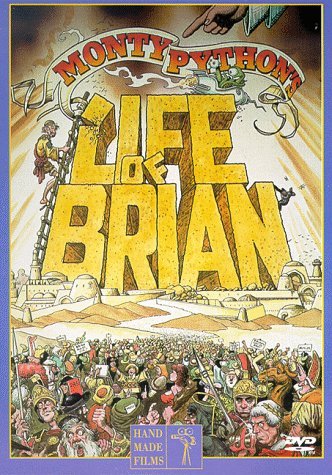
A crazy retelling of biblical legend in which a young fellow named Brian is born on the same day as Jesus Christ. Crazy antics ensue.
Pros: There are a few moments of brilliance here, and overall the story is entertaining.
Cons: Not as good as The Holy Grail. Sometimes the comedy is too juvenile for its own good. I enjoyed it, but it could have been better.
Rating: 2.5/5
Value: $4.75
And there you go. Have you seen any good movies in the last few months, old or new? Let me know in the comments!
Such as the following:
Torturing DemocracyPossibly one of the most important, and sadly relatively unknown, documentaries ever made on the U.S./War On Terror torture issue. It follows, moment by moment, the beginning of the programs that authorized torture in Guantanamo and provides witnesses and expert testimony to show how the U.S. essentially got away with some of the worst human rights violations in this country’s history. And, to echo what one of the interviewees said: our military men and women will suffer for years as a result of this, because we have now officially told the rest of the world that all of this is okay.
Pros: Absolutely shocking. I knew about the whole torture thing already, but this documentary takes things to new heights. All the witnesses are credible ones, not just random people disconnected from the subject; they are either victims or part of the resistance to the movement towards torture. You have got to see this documentary. If you think for a second that the torture thing was right, or that the people who did it didn’t know what they were doing, this will set the record straight. It’s just…astonishing. Well crafted, well informed, and a must see.
Cons: It’s narrated in fairly typical documentary style, which can make it a little dull at times, but I think the shock of the information is enough to keep anyone interested in this topic regardless of the narration style.
Rating: 4.75/5
Value: $10.00
Deadly Enemies (Documentary)
This short documentary offers insight into the U.S. and Soviet bio-weapons programs during the Cold War, told through the eyes of those who were actually there, doing the work or fighting against it.
Pros: This is another of those documentaries I think everyone should see to get a clear picture of what was really going on during a time of when propaganda was normal (on both the U.S. and Soviet sides). The inclusion of actual Soviet doctors who worked in the Soviet bio-weapons programs (and on the U.S. side too) is a nice touch. Overall, this is an effective documentary.
Cons: There’s a subtle pro-American slant here. While I think it’s likely that the U.S. may have shut down most of its bio-weapons programs after their support for the U.N. resolution that banned such weapons, I honestly doubt that all of them were shut down. I think some investigation into this would have helped, because this film does lean too much against the Soviets, who were just as terrified of us as we were of them during the Cold War.
Rating: 4/5
Value: $9.75
Life After People (Documentary/History Channel)Probably one of the most fascinating of the History Channel’s documentaries, Life After People strings together the thoughts of scientists and writers on what the world would be like if our species were to simply disappear.
Pros: Great ideas, decent visuals, and a lot of fun. Not much more needs to be said.
Cons: Some parts are a little dull and sometimes the visuals are kind of lame. It’s good, but it could have been better.
Rating: 3.75/5
Value: $9.25
Life of Brian (Monty Python)A crazy retelling of biblical legend in which a young fellow named Brian is born on the same day as Jesus Christ. Crazy antics ensue.
Pros: There are a few moments of brilliance here, and overall the story is entertaining.
Cons: Not as good as The Holy Grail. Sometimes the comedy is too juvenile for its own good. I enjoyed it, but it could have been better.
Rating: 2.5/5
Value: $4.75
And there you go. Have you seen any good movies in the last few months, old or new? Let me know in the comments!
Monday, February 01, 2010
The Primate Paradox: An Analytical Thought
When you look at the passage in the image below, I want you to think of one thing: this is a primate (Robert Anton Wilson) writing about the philosophical limitations of primate logic; in doing so, however, the primate has proven that what is written is, in fact, demonstrating a different limitation of primate logic--that primate logic not limited to the whims of singular causality, but instead limited by selling the primate species short.
See for yourself:
 Now discuss...
See for yourself:
Now discuss...
Quick Note: Catnip Pete and Survival By Storytelling Open to Submissions
I have a big announcement at the end of this post. Stick around!
First, to "Catnip Pete and the Suricata Symbol":
I am working on the final piece to the story. My apologies it has taken so long, but I have been inundated with an inordinate amount of work, both in the actual sense, and for my education. Being a graduate student who teaches means I don't have nearly as much free time as I would like for writing, and this is a particularly difficult story because of how the pieces need to come together so the ending makes sense. If you have no idea what I'm talking about--either because you're new or you simply missed it--you can learn a bit more about this here and here. It's a story I'm working on, the first parts of which I put up to help raise funds for Haiti (the third part will be for that project as well. I hope to have part three finished and posted by this weekend, but I am working on a paper that I am presenting next week, so we'll see.
Now the big announcement! Survival By Storytelling is open for submissions! The magazine is officially theme-based and our current theme is Steampunk!
You can learn more about our theme here and our guidelines are here. We'll take submissions until we fill the issue!
So, if you have something steampunk-ish, whether it is on the adventurous/pulpy end or the literary end, or even a poem or article, consider submitting it to SBS!
The first issue of Survival By Storytelling Magazine is still available for purchase if you haven't already added it to your collection. You can learn more about that here.
First, to "Catnip Pete and the Suricata Symbol":
I am working on the final piece to the story. My apologies it has taken so long, but I have been inundated with an inordinate amount of work, both in the actual sense, and for my education. Being a graduate student who teaches means I don't have nearly as much free time as I would like for writing, and this is a particularly difficult story because of how the pieces need to come together so the ending makes sense. If you have no idea what I'm talking about--either because you're new or you simply missed it--you can learn a bit more about this here and here. It's a story I'm working on, the first parts of which I put up to help raise funds for Haiti (the third part will be for that project as well. I hope to have part three finished and posted by this weekend, but I am working on a paper that I am presenting next week, so we'll see.
Now the big announcement! Survival By Storytelling is open for submissions! The magazine is officially theme-based and our current theme is Steampunk!
You can learn more about our theme here and our guidelines are here. We'll take submissions until we fill the issue!
So, if you have something steampunk-ish, whether it is on the adventurous/pulpy end or the literary end, or even a poem or article, consider submitting it to SBS!
The first issue of Survival By Storytelling Magazine is still available for purchase if you haven't already added it to your collection. You can learn more about that here.
Subscribe to:
Posts (Atom)