Another review up! Trying to play catchup at the moment. So, here's the review. Beyond that, I'm still breathing and working my way cross country!
Anywho!

Thursday, July 30, 2009


Book Review Up: The House of the Stag by Kage Baker
I've finished a review for another book. Not to ruin the review, but the book is absolutely amazing. Buy it now while there are still copies left on the shelf. And if they have run out, demand more! One of the best fantasy novels I've read in years!
You can find my review here.
Anywho!
You can find my review here.
Anywho!
Tuesday, July 28, 2009
I believe in Unicorns - Hagelrat
Hi, I am really hoping that my legendary lack of sense of time hasn't cropped up again and I am doing this in y'know the right month. Shaun has kindly offered me the chance to guest blog here over the next few days.
My permanent home if you don't know is Un:Bound which I am neglecting a little this week due to my involvement in the Special Olympics in my city, fortunately I have others to hold the fort for me there as I am attempting to help with here.
Anyway, my post for today:
I joined a local book club six months ago. I wanted to read outside my comfort zone and meet other people in the village who read. It's worked in that respect. We have read The Clockwork O range, The Forgotten Garden, Cloud Atlas, The Gargoyle , Coraline & The life of Pi. Coraline was one I pushed for. The other books were all standard book club fair and there was nothing I adored so I made them read this spooky childrens book. They didn't get it. They couldn't see why button's for eyes, the characters weren't deep enough, they'd have liked to see the other father developed more. Umm the other father was a construct, he was supposed to be paper thin, that's the whole point. Buttons for eyes because it's abnormal and scary, y'know, creepy like a gingerbread cottage.
The problem was I simply couldn't understand why they didn't get it. Do they not still enjoy fairy tales? Would they want Hansel and Gretel's father to be a more complex character? Did they just accept that a wolf could get in, eat granny, don her clothes and then hold a conversation with Red? As children did these very lovely and intelligent women accept that it is possible to climb a tower using hair as a rope or to bring someone back with a kiss (well ok but even in my day fairy tales were a bit sanitised even if they weren't full on disneyed)? Presumably they did. So why don't they anymore?
My book group don't really do fantasy, they don't really get Coraline. My conclusion? They are too grown up and just can't believe in unicorns anymore. I think that's kind of sad. How must the world look if you never see dragons? So having now experienced this problem I started looking at it more widely. Obviously some people are just literary snobs and unredeemable, but what of the others, the grown ups whose inner child has given up? I really think that not being able to believe like a twelve year old hiding under the duvet with a torch, is what is keeping these people from enjoying genre fiction. I don't know how to fix them, they probably don't realise they are broken. They think comics are just for kids and LARP'ing is for the socially inept (seriously, they have no clue how hard it is to exist in their world 9-5 then fully take on a whole other set of social norms and acceptable behaviour when you escape for a few days).
So next time someone gets that expression on their face (the one that says ok you read at least 3 times more books in a month than I do, but it doesn't count because you only read SFF, y'know the one) remember, it's not their fault, there are no fairies at the bottom of their garden and we should be more tolerant and sympathetic. After all what could bring more pleasure than allowing yourself to believe in magic?
My permanent home if you don't know is Un:Bound which I am neglecting a little this week due to my involvement in the Special Olympics in my city, fortunately I have others to hold the fort for me there as I am attempting to help with here.
Anyway, my post for today:
I joined a local book club six months ago. I wanted to read outside my comfort zone and meet other people in the village who read. It's worked in that respect. We have read The Clockwork O
 range, The Forgotten Garden, Cloud Atlas, The Gargoyle , Coraline & The life of Pi. Coraline was one I pushed for. The other books were all standard book club fair and there was nothing I adored so I made them read this spooky childrens book. They didn't get it. They couldn't see why button's for eyes, the characters weren't deep enough, they'd have liked to see the other father developed more. Umm the other father was a construct, he was supposed to be paper thin, that's the whole point. Buttons for eyes because it's abnormal and scary, y'know, creepy like a gingerbread cottage.
The problem was I simply couldn't understand why they didn't get it. Do they not still enjoy fairy tales? Would they want Hansel and Gretel's father to be a more complex character? Did they just accept that a wolf could get in, eat granny, don her clothes and then hold a conversation with Red? As children did these very lovely and intelligent women accept that it is possible to climb a tower using hair as a rope or to bring someone back with a kiss (well ok but even in my day fairy tales were a bit sanitised even if they weren't full on disneyed)? Presumably they did. So why don't they anymore?
My book group don't really do fantasy, they don't really get Coraline. My conclusion? They are too grown up and just can't believe in unicorns anymore. I think that's kind of sad. How must the world look if you never see dragons? So having now experienced this problem I started looking at it more widely. Obviously some people are just literary snobs and unredeemable, but what of the others, the grown ups whose inner child has given up? I really think that not being able to believe like a twelve year old hiding under the duvet with a torch, is what is keeping these people from enjoying genre fiction. I don't know how to fix them, they probably don't realise they are broken. They think comics are just for kids and LARP'ing is for the socially inept (seriously, they have no clue how hard it is to exist in their world 9-5 then fully take on a whole other set of social norms and acceptable behaviour when you escape for a few days).
So next time someone gets that expression on their face (the one that says ok you read at least 3 times more books in a month than I do, but it doesn't count because you only read SFF, y'know the one) remember, it's not their fault, there are no fairies at the bottom of their garden and we should be more tolerant and sympathetic. After all what could bring more pleasure than allowing yourself to believe in magic?
Monday, July 27, 2009
Top 5 Science Fiction Leading Ladies
In fashioning this list I decided to set some ground rules. When I say leading ladies, I mean leading ladies, not sidekicks, or other characters who are overshadowed, even slightly, by male characters. Considering that means drastically minimizing my options, since instant favorites, such as Princess Leia, can no longer be included.
Narrowing things down in this way makes this list fairly difficult to create. Unfortunately, there aren't a lot of great female leads in science fiction, something I hope will be remedied in the coming years (girls are awesome too, you know). So, without further delay, here are my top ten leading ladies in science fiction:
 Ellen Ripley / Sigourney Weaver (The Alien Series)
What list could be complete without Ripley? She is the quintessential science fiction leading lady. If you don't believe me, then you need to see the ending for Aliens. Taking on the Queen Alien in a mechanized loading vehicle is pretty ballsy. But I'm sure the Queen got what she deserved.
 Sarah Connor / Linda Hamilton (The Terminator)
She becomes a stronger character, physically, later in the series, but her first appearance is a memorable one. After all, she falls in love with a man who technically doesn't exist yet and manages to defeat the Terminator in the nick of time! And don't forget that her character grows into a bit of a badass later on.
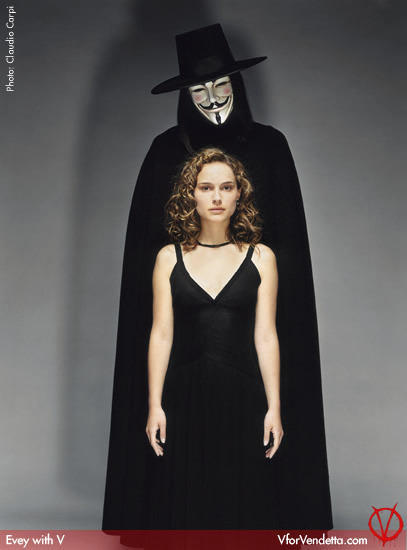 Evey / Natalie Portman (V For Vendetta)
I think Evey's psychological progression in the movie (and the comic) is a powerful and relatively unique portrayal in science fiction. It's not often that we see movies that are well aware of the mental states of the characters. V For Vendetta does a fine job turning Evey into a complex female figure worth remembering.
 Captain Kathryn Janeway / Kate Mulgrew (Star Trek: Voyager)
I've always been a fan of Voyager. My love for this Star Trek derivation comes from its unique characters. From Seven of Nine to Captain Janeway, Voyager is one of the few Star Trek series that, I think, really tries to push the envelope. Maybe I'm wrong, but Janeway is one of the top captains in Star Trek, only rivaled, in my opinion by the two biggest names in Star Trek (Picard and Kirk). It would be interesting to see Janeway make an appearance in a movie somewhere, because her character deserves more than just a television show.
 Laura Roslin / Mary McDonnell (Battlestar Galactica)
You'd have to be a fan of BSG to know why Roslin is on this list. For a character who became President by a string of seemingly random deaths, Roslin is pretty much the ultimate of badasses. She's not afraid to chuck someone out of an airlock for pissing her off and she tends to get what she wants, even if nobody else wants it. That, and Mary McDonnell managed to turn this character into one of the most astonishingly complex figures in science fiction history. More so than any other. But that's BSG for you: a show that is about characters, that knows it's a good show and isn't afraid to show it.
And that's that. Unfortunately I couldn't think of any good female figures in literature, so it seems this list will be primarily about film and television. But if you know any awesome female leads in science fiction literature, let me know in the comments. The same goes for anyone I might have missed that deserves to be here!
Narrowing things down in this way makes this list fairly difficult to create. Unfortunately, there aren't a lot of great female leads in science fiction, something I hope will be remedied in the coming years (girls are awesome too, you know). So, without further delay, here are my top ten leading ladies in science fiction:
Ellen Ripley / Sigourney Weaver (The Alien Series)What list could be complete without Ripley? She is the quintessential science fiction leading lady. If you don't believe me, then you need to see the ending for Aliens. Taking on the Queen Alien in a mechanized loading vehicle is pretty ballsy. But I'm sure the Queen got what she deserved.
Sarah Connor / Linda Hamilton (The Terminator)She becomes a stronger character, physically, later in the series, but her first appearance is a memorable one. After all, she falls in love with a man who technically doesn't exist yet and manages to defeat the Terminator in the nick of time! And don't forget that her character grows into a bit of a badass later on.
Evey / Natalie Portman (V For Vendetta)I think Evey's psychological progression in the movie (and the comic) is a powerful and relatively unique portrayal in science fiction. It's not often that we see movies that are well aware of the mental states of the characters. V For Vendetta does a fine job turning Evey into a complex female figure worth remembering.
Captain Kathryn Janeway / Kate Mulgrew (Star Trek: Voyager)I've always been a fan of Voyager. My love for this Star Trek derivation comes from its unique characters. From Seven of Nine to Captain Janeway, Voyager is one of the few Star Trek series that, I think, really tries to push the envelope. Maybe I'm wrong, but Janeway is one of the top captains in Star Trek, only rivaled, in my opinion by the two biggest names in Star Trek (Picard and Kirk). It would be interesting to see Janeway make an appearance in a movie somewhere, because her character deserves more than just a television show.
Laura Roslin / Mary McDonnell (Battlestar Galactica)You'd have to be a fan of BSG to know why Roslin is on this list. For a character who became President by a string of seemingly random deaths, Roslin is pretty much the ultimate of badasses. She's not afraid to chuck someone out of an airlock for pissing her off and she tends to get what she wants, even if nobody else wants it. That, and Mary McDonnell managed to turn this character into one of the most astonishingly complex figures in science fiction history. More so than any other. But that's BSG for you: a show that is about characters, that knows it's a good show and isn't afraid to show it.
And that's that. Unfortunately I couldn't think of any good female figures in literature, so it seems this list will be primarily about film and television. But if you know any awesome female leads in science fiction literature, let me know in the comments. The same goes for anyone I might have missed that deserves to be here!
Sunday, July 26, 2009
Or Maybe Don't Pay the Writer
It seems that my post yesterday stirred a tad bit of understandable “negativity.” Perhaps I am naïve to think that simply expressing irritation on a blog about an issue I consider to be not only important to discuss, but important to resolve, will produce any sort of change in the writing industry.
But, at the same time, I cannot possibly keep silent about this. More of us, whether amateur or professional, should be upset about the state of the industry. Why we have bent over and taken such lousy pay and treatment for so long without open revolt is astonishing. We’ve put up with it for decades. This is not an issue that began with the invention of Craigslist or the Internet; it has existed, in some capacity, since the dawn of modern publishing. The Internet has only created a fast-paced, flooded market that has little interest in what is good for writers—it is understandable that employers are interested in their bottom line and not in the ability of a writer to be able to eat. The endlessness of this issue, however, means that writers have not done enough to demand better, and perhaps now it is too late. True, there have been recent upsets in the industry, most notably the screenwriter’s strike that involved Harlan Ellison himself, a man who, while certainly angry and difficult to deal with, has earned his place as both a fantastic writer and a spokesman for writers everywhere. We should be so bold as to take up his mantle in all aspects of the industry.
But, we’re not that bold. A handful of us will do what I am doing here: complain on blogs, websites, or even podcasts. That handful cannot possibly change things on their own. It requires greater action from movers and shakers in the industry.
Don’t misunderstand me. I am not calling for a drastic adjustment of payment levels in the writing and editing world. I know this is impossible. The industry and writers themselves have developed a system that openly exploits writers who either don’t know any better or have subjected themselves to the mindset that doing a bit of “charity” work is what it takes to get anywhere in the industry. That mindset exists because it is now true. John Scalzi has waxed lyrical about the changes in publishing internships to highlight this mindset: the publisher isn’t going to pay if the writer/worker/editor/etc. is willing to take next to nothing for hard work.
And yet, writing this, I get the sense that anything I say on this topic is pointless, just as anything Harlan Ellison might say, however articulate and true, will amount to nothing whatsoever—except, perhaps, resentment or hatred against him, wholly unearned. Writers and editors, it seems, must accept their fates. We have to scrounge at the bottom, some of us because we actually like it there (after all, sometimes there are jobs that you simply do because you like them, not because you want to be paid), and some of us because we have no other choice. We can’t possibly demand what we have not rightfully “earned.” Never mind that someone wanting to be a manager at any business, with rare exception, at least makes minimum wage by working at the bottom. I suppose “freelance” translates to “above the purview of the Federal Government.”
I see a problem with that. Do you?
But, at the same time, I cannot possibly keep silent about this. More of us, whether amateur or professional, should be upset about the state of the industry. Why we have bent over and taken such lousy pay and treatment for so long without open revolt is astonishing. We’ve put up with it for decades. This is not an issue that began with the invention of Craigslist or the Internet; it has existed, in some capacity, since the dawn of modern publishing. The Internet has only created a fast-paced, flooded market that has little interest in what is good for writers—it is understandable that employers are interested in their bottom line and not in the ability of a writer to be able to eat. The endlessness of this issue, however, means that writers have not done enough to demand better, and perhaps now it is too late. True, there have been recent upsets in the industry, most notably the screenwriter’s strike that involved Harlan Ellison himself, a man who, while certainly angry and difficult to deal with, has earned his place as both a fantastic writer and a spokesman for writers everywhere. We should be so bold as to take up his mantle in all aspects of the industry.
But, we’re not that bold. A handful of us will do what I am doing here: complain on blogs, websites, or even podcasts. That handful cannot possibly change things on their own. It requires greater action from movers and shakers in the industry.
Don’t misunderstand me. I am not calling for a drastic adjustment of payment levels in the writing and editing world. I know this is impossible. The industry and writers themselves have developed a system that openly exploits writers who either don’t know any better or have subjected themselves to the mindset that doing a bit of “charity” work is what it takes to get anywhere in the industry. That mindset exists because it is now true. John Scalzi has waxed lyrical about the changes in publishing internships to highlight this mindset: the publisher isn’t going to pay if the writer/worker/editor/etc. is willing to take next to nothing for hard work.
And yet, writing this, I get the sense that anything I say on this topic is pointless, just as anything Harlan Ellison might say, however articulate and true, will amount to nothing whatsoever—except, perhaps, resentment or hatred against him, wholly unearned. Writers and editors, it seems, must accept their fates. We have to scrounge at the bottom, some of us because we actually like it there (after all, sometimes there are jobs that you simply do because you like them, not because you want to be paid), and some of us because we have no other choice. We can’t possibly demand what we have not rightfully “earned.” Never mind that someone wanting to be a manager at any business, with rare exception, at least makes minimum wage by working at the bottom. I suppose “freelance” translates to “above the purview of the Federal Government.”
I see a problem with that. Do you?
Friday, July 24, 2009
Pay the Frakking Writer
I'm one to agree with Harlan Ellison when he angrily complains about the state of professional writing. While I myself am not technically a professional writer, I do loathe the level of whoring oneself out present within the freelance and general writing communities. An entire generation of people have come to believe that they don't deserve to get paid at a reasonable rate for the writing and editing work they do, a fact that continues to baffle me. Perhaps this has a lot to do with how the Internet functions, and how desperate amateur writers are to get a leg up in a fairly brutal industry. Whatever the reason, Harlan Ellison is right: pay the frakking writer. And not just that, but pay the frakking writer well. Professional quality deserves professional rates.
There aren't that many instances in which it is okay to not be paid for writing or editing work:
--You're doing it for charity. I can't argue against writing a story to help raise money for cancer research.
--You have a personal blog or website. Hard to hire yourself to write for your own blog.
--Aliens have invaded your brain and forced you to write for free. Certainly a bad thing, and a good excuse, I think.
There are probably other good instances, but, let's face it, writers deserve to be paid, and well. The amount of money authors make for what amounts to a hell of a lot of work has been declining for decades. It used to be that one short story sale could pay your rent. Now? You'd be lucky if it paid your grocery bill. Novel sales aren't any better, with an average advance making up a fourth of the income you'd need to be right on the poverty line. That's not a lot of money at all, and I don't fully understand why. Aren't writers important members of society? Don't they provide a valuable service?
Or maybe I'm just an angry, bitter curmudgeon like Ellison, looking back to the glory days with longing. Maybe I want to see a world where writers demand and earn what they're worth. But I doubt that will happen; not now, and not in the future. There are too many people willing to work for almost nothing thinking they'll be like Stephen King if they just trudge at the bottom for a while, getting paid fifty cents for a 500-word article, or some other ridiculously low paying avenue. And now, with these folks, some not worth even the paltry sum they currently earn, flooding the market and selling themselves short, those who think writers should get more are put in a horrible position. We can join the ranks, or take fewer jobs.
But, maybe the glory days never happened and any desire for a writer's utopia is nothing short of a delusional fantasy. Give it a few years and we might be proclaiming the slow and agonizing death of the professional writer. And the world will suffer for it.
There aren't that many instances in which it is okay to not be paid for writing or editing work:
--You're doing it for charity. I can't argue against writing a story to help raise money for cancer research.
--You have a personal blog or website. Hard to hire yourself to write for your own blog.
--Aliens have invaded your brain and forced you to write for free. Certainly a bad thing, and a good excuse, I think.
There are probably other good instances, but, let's face it, writers deserve to be paid, and well. The amount of money authors make for what amounts to a hell of a lot of work has been declining for decades. It used to be that one short story sale could pay your rent. Now? You'd be lucky if it paid your grocery bill. Novel sales aren't any better, with an average advance making up a fourth of the income you'd need to be right on the poverty line. That's not a lot of money at all, and I don't fully understand why. Aren't writers important members of society? Don't they provide a valuable service?
Or maybe I'm just an angry, bitter curmudgeon like Ellison, looking back to the glory days with longing. Maybe I want to see a world where writers demand and earn what they're worth. But I doubt that will happen; not now, and not in the future. There are too many people willing to work for almost nothing thinking they'll be like Stephen King if they just trudge at the bottom for a while, getting paid fifty cents for a 500-word article, or some other ridiculously low paying avenue. And now, with these folks, some not worth even the paltry sum they currently earn, flooding the market and selling themselves short, those who think writers should get more are put in a horrible position. We can join the ranks, or take fewer jobs.
But, maybe the glory days never happened and any desire for a writer's utopia is nothing short of a delusional fantasy. Give it a few years and we might be proclaiming the slow and agonizing death of the professional writer. And the world will suffer for it.
Thursday, July 23, 2009
Reader Question: Unexpected Expansions and Expectations
My dear friend Carraka recently asked me the following question:
There's a fundamental difference between how fantasy and science fiction novels are sold. Due to an obsessive need for long, epic trilogies, stand alone fantasy novels are relatively rare in comparison to series--in the eyes of the public, at least. There are, of course, authors who thrive on stand alone books, but the series is the name of the game. Typically fantasy authors write a duology, trilogy, quintet, etc. and sell it to the publisher either one piece at a time (such as Patrick Rothfuss seems to have done) or in bulk. Some of them succeed and are published in full, and others do not.
Science fiction, however, is a lonely road. Few science fiction authors get published based on the proposition of a series. But where did all those sequels and what not come from? Some are the result of the publisher's request, some due to fans, and others due to perceived unfinished business by the author. Most sequels aren't planned. They might be lingering in the back of the author's mind, but it's not often that a science fiction author actually sits down and plans out a series of science fiction books (a few have, of course, and there are several science fiction series out there, from David Weber to Isaac Asimov).
The differences between the two is important to note, because while fantasy is intensely series-based, it is not expansionary in nature. Science fiction, however, is. It is rather uncommon to hear of a fantasy author deciding to expand a series that was planned to stop at three books. Christopher Paolini is perhaps the highest profile example of a fantasy series expansion, but science fiction is littered with examples of stand alone books expanded either by sequels or longer series--a good example would be the recent addition of C. J. Cherryh's Regenesis, the long-awaited sequel to Cyteen.
Fantasy will continue to be dominated by series, though, and people will typically recognize it for its long, drawn-out epics rather than for its stand alone gems. Science fiction, however, will be the exact opposite, and every so often we'll get an outstanding series to drive a little of that epic feel into the science fiction landscape.
But I'm just one person with one perspective. If you have something to add, or a different opinion, let me know in the comments!
-------------------------------------------------
If you have a question about science fiction, fantasy, writing, or anything related you'd like answered here, whether silly or serious, feel free to send it via email to arconna[at]yahoo[dot]com, tweet it via Twitter to @shaunduke, or leave it in the comments here. Questions are always welcome! If you liked this post, consider stumbling, digging, or linking to it!
Are fantasy series more likely to expand, unplanned, than science fiction?Actually, you'd be surprised to know that science fiction is the more likely genre to have unplanned expansions. Unlike fantasy, science fiction is not as readily susceptible to series-itis. This has quite a lot to do with the kinds of stories being told, the history of the genre, and loads of other factors which won't be uttered here due to space constraints. But I'll talk about some of the important bits here.
There's a fundamental difference between how fantasy and science fiction novels are sold. Due to an obsessive need for long, epic trilogies, stand alone fantasy novels are relatively rare in comparison to series--in the eyes of the public, at least. There are, of course, authors who thrive on stand alone books, but the series is the name of the game. Typically fantasy authors write a duology, trilogy, quintet, etc. and sell it to the publisher either one piece at a time (such as Patrick Rothfuss seems to have done) or in bulk. Some of them succeed and are published in full, and others do not.
Science fiction, however, is a lonely road. Few science fiction authors get published based on the proposition of a series. But where did all those sequels and what not come from? Some are the result of the publisher's request, some due to fans, and others due to perceived unfinished business by the author. Most sequels aren't planned. They might be lingering in the back of the author's mind, but it's not often that a science fiction author actually sits down and plans out a series of science fiction books (a few have, of course, and there are several science fiction series out there, from David Weber to Isaac Asimov).
The differences between the two is important to note, because while fantasy is intensely series-based, it is not expansionary in nature. Science fiction, however, is. It is rather uncommon to hear of a fantasy author deciding to expand a series that was planned to stop at three books. Christopher Paolini is perhaps the highest profile example of a fantasy series expansion, but science fiction is littered with examples of stand alone books expanded either by sequels or longer series--a good example would be the recent addition of C. J. Cherryh's Regenesis, the long-awaited sequel to Cyteen.
Fantasy will continue to be dominated by series, though, and people will typically recognize it for its long, drawn-out epics rather than for its stand alone gems. Science fiction, however, will be the exact opposite, and every so often we'll get an outstanding series to drive a little of that epic feel into the science fiction landscape.
But I'm just one person with one perspective. If you have something to add, or a different opinion, let me know in the comments!
-------------------------------------------------
If you have a question about science fiction, fantasy, writing, or anything related you'd like answered here, whether silly or serious, feel free to send it via email to arconna[at]yahoo[dot]com, tweet it via Twitter to @shaunduke, or leave it in the comments here. Questions are always welcome! If you liked this post, consider stumbling, digging, or linking to it!
Wednesday, July 22, 2009
Eight Guilty Pleasures in Science Fiction and Fantasy
There are some things we all read and watch that we feel guilty for loving. It can't be helped. As terrible as 80s music is, hearing it on the radio sparks a ridiculously happy feeling within me. Science fiction and fantasy can sometimes have this effect too. And here is my list of what I consider to be my science fiction and fantasy guilty pleasures:
Eragon/Eldest by Christopher Paolini (Books)
I've heard the arguments for while Paolini is terrible, and I have to admit that he's not exactly the greatest of writers, but I can't help loving these two books. The movie was terrible, but the books have always been entertaining for me. Maybe it has to do with listening to the audiobook for Eragon before actually reading it, but whatever the reason, I love these books even if I shouldn't.
Total Recall (Film)
This movie has, perhaps, gained some traction in the science fiction community in recent years due to its somewhat pulpy, if not campy, feel. True, the film is ridiculous (primarily in its science) and features the Governator doing his generally poor attempt at actual acting, but yet the film is strangely enjoyable for me. It could be because of the violence, or the lady with a certain extra body part, but maybe the reason doesn't matter, because so many other people enjoy Total Recall too, and feel just as guilty about it.
Hackers (Film)
Talk about campy and outdated. Hackers is one of those ridiculous computer hacker movies that is both ridiculous and incapable of keeping up with the real world. But, to be fair, it has a cult following, so perhaps it's not such a guilty pleasure after all. Oh, and it has a young Angelina Jolie in it, which some people think is a good thing.
The Notebook by Nicholas Sparks (Book)
Though not technically fantasy, this romance novel is both incredibly sappy and strangely enjoyable for me. Considering I tend to avoid romance like the plague, liking The Notebook is certainly uncharacteristic for me. I suppose if you've read the book you'd understand, but if not, don't make fun of me for putting this Sparks novel on this list.
Left Behind by Tim LaHaye and Jerry B. Jenkins (Book)
I'm not sure why I like the first book of this Bible-inspired fantasy series (yes, it's fantasy, deal with it). I tend to avoid religious mumbo jumbo like the plague due to my tendency to light on fire when exposed to Biblical teachings. Regardless, I read the first book on a whim and loved it. I guess that makes me a bad person, right?
The Chronicles of Riddick (Movie)
I suppose The Chronicles of Riddick isn't nearly as much of a guilty pleasure as Eragon or some of the other things on this list. Still, I thought the movie was great and always have, despite what others have said. It's not every day that someone can take an already pretty cool character and turn them into an epic grey hero. Riddick is pretty much the most badass figure in science fiction film next to Boba Fett; hence why The Chronicles of Riddick is awesome.
Tim Burton's Planet of the Apes (Movie)
Don't get me wrong, the remake of Planet of the Apes is quite terrible, but it's also quite enjoyable. The makeup and stunts are phenomenal in this movie. I also love Paul Giamatti, who has a great part as an orangutan-man. I still re-watch this movie from time to time, because I think it's good. Sue me.
Signs (Movie)
It seems like everyone hates this movie. I've always thought that nobody understood Signs, but I suppose arguments for or against this movie are relatively pointless. Signs is one of those movies that I think is cute and re-watchable. I might be the only one, though.
And that's it! What about you? What are your guilty pleasures in science fiction and fantasy? Let me know in the comments!
Eragon/Eldest by Christopher Paolini (Books)
I've heard the arguments for while Paolini is terrible, and I have to admit that he's not exactly the greatest of writers, but I can't help loving these two books. The movie was terrible, but the books have always been entertaining for me. Maybe it has to do with listening to the audiobook for Eragon before actually reading it, but whatever the reason, I love these books even if I shouldn't.
Total Recall (Film)
This movie has, perhaps, gained some traction in the science fiction community in recent years due to its somewhat pulpy, if not campy, feel. True, the film is ridiculous (primarily in its science) and features the Governator doing his generally poor attempt at actual acting, but yet the film is strangely enjoyable for me. It could be because of the violence, or the lady with a certain extra body part, but maybe the reason doesn't matter, because so many other people enjoy Total Recall too, and feel just as guilty about it.
Hackers (Film)
Talk about campy and outdated. Hackers is one of those ridiculous computer hacker movies that is both ridiculous and incapable of keeping up with the real world. But, to be fair, it has a cult following, so perhaps it's not such a guilty pleasure after all. Oh, and it has a young Angelina Jolie in it, which some people think is a good thing.
The Notebook by Nicholas Sparks (Book)
Though not technically fantasy, this romance novel is both incredibly sappy and strangely enjoyable for me. Considering I tend to avoid romance like the plague, liking The Notebook is certainly uncharacteristic for me. I suppose if you've read the book you'd understand, but if not, don't make fun of me for putting this Sparks novel on this list.
Left Behind by Tim LaHaye and Jerry B. Jenkins (Book)
I'm not sure why I like the first book of this Bible-inspired fantasy series (yes, it's fantasy, deal with it). I tend to avoid religious mumbo jumbo like the plague due to my tendency to light on fire when exposed to Biblical teachings. Regardless, I read the first book on a whim and loved it. I guess that makes me a bad person, right?
The Chronicles of Riddick (Movie)
I suppose The Chronicles of Riddick isn't nearly as much of a guilty pleasure as Eragon or some of the other things on this list. Still, I thought the movie was great and always have, despite what others have said. It's not every day that someone can take an already pretty cool character and turn them into an epic grey hero. Riddick is pretty much the most badass figure in science fiction film next to Boba Fett; hence why The Chronicles of Riddick is awesome.
Tim Burton's Planet of the Apes (Movie)
Don't get me wrong, the remake of Planet of the Apes is quite terrible, but it's also quite enjoyable. The makeup and stunts are phenomenal in this movie. I also love Paul Giamatti, who has a great part as an orangutan-man. I still re-watch this movie from time to time, because I think it's good. Sue me.
Signs (Movie)
It seems like everyone hates this movie. I've always thought that nobody understood Signs, but I suppose arguments for or against this movie are relatively pointless. Signs is one of those movies that I think is cute and re-watchable. I might be the only one, though.
And that's it! What about you? What are your guilty pleasures in science fiction and fantasy? Let me know in the comments!
Tuesday, July 21, 2009
Reader Question: Vampires and Elves and Dwarves, Oh My!
(Yet again I have forgotten to write down who asked this question. If the person who asked sees this, let us know who you are in the comments.)
Cliches in fantasy (and science fiction) seem to be a hot topic these days, what with urban fantasy paving the way towards over-saturation of the market, and science fiction apparently losing some of its appeal amongst certain groups of readers (though claims that science fiction is dying are premature at best). The question that has prompted this post asks a very important question:
But kneejerk reactions are rarely efficient or proper. As in politics, immediately reacting to something without considering the larger picture is not only a bad idea, but dangerous. If you spend your days worrying yourself over whether or not you're using a cliche, you'll end up getting little done whatsoever. Writers should spend time writing, not considering the implications of using such-and-such creature or such-and-such trope. It's quite impossible to avoid the cliches of the genre with any efficiency. Some may argue against this, but this is true of all fiction. No matter how hard you might try to write a truly original novel, you will most certainly fail. Cliches are a part of the human brain, and have been for a while.
Certainly being aware of the cliches you're using is important, but fretting over them is counterproductive. Instead, pay attention to how the cliches are used. Are you using elves in exactly the same way as Tolkien? Why? Injecting difference into the mix can help alleviate obvious repetition. Twist Tolkien's elves on their head and see where it goes. Or, there's always the more adequate method of dealing with cliches: write well. Nobody with any sense reads a well-written fantasy novel and says, "That is the most cliche thing I have ever read." Good writing can, and does, completely change how a reader perceives a cliche. If you can tell a good story, then it is irrelevant how many cliches populate your fiction, because ultimately what the reader wants is a good reading experience--obviously.
What do you think? Should writers avoid cliches? Why or why not? Feel free to leave a comment!
-------------------------------------------------
If you have a question about science fiction, fantasy, writing, or anything related you'd like answered here, whether silly or serious, feel free to send it via email to arconna[at]yahoo[dot]com, tweet it via Twitter to @shaunduke, or leave it in the comments here. Questions are always welcome! If you liked this post, consider stumbling, digging, or linking to it!
Cliches in fantasy (and science fiction) seem to be a hot topic these days, what with urban fantasy paving the way towards over-saturation of the market, and science fiction apparently losing some of its appeal amongst certain groups of readers (though claims that science fiction is dying are premature at best). The question that has prompted this post asks a very important question:
Should writers stay away from the cliches of fantasy?The kneejerk reaction should, for anyone, be "yes." The problem with fantasy as a genre has always been its tendency to repeat itself to excess, with writers of talent essentially spouting rehashed Tolkien-esque stories and continuously mining Tolkien and the select few "original" authors that followed him for those staple creatures we have come to identity as clearly "fantasy"--elves, dwarves, dragons, etc. Urban fantasy has, unfortunately, been saturated with similar levels of repetition; vampires used to be fairly powerful creatures to insert into fantasy novels, but these days they are, for the most part, little more than furniture items without substance--if you want a better vampire, read the original Dracula.
But kneejerk reactions are rarely efficient or proper. As in politics, immediately reacting to something without considering the larger picture is not only a bad idea, but dangerous. If you spend your days worrying yourself over whether or not you're using a cliche, you'll end up getting little done whatsoever. Writers should spend time writing, not considering the implications of using such-and-such creature or such-and-such trope. It's quite impossible to avoid the cliches of the genre with any efficiency. Some may argue against this, but this is true of all fiction. No matter how hard you might try to write a truly original novel, you will most certainly fail. Cliches are a part of the human brain, and have been for a while.
Certainly being aware of the cliches you're using is important, but fretting over them is counterproductive. Instead, pay attention to how the cliches are used. Are you using elves in exactly the same way as Tolkien? Why? Injecting difference into the mix can help alleviate obvious repetition. Twist Tolkien's elves on their head and see where it goes. Or, there's always the more adequate method of dealing with cliches: write well. Nobody with any sense reads a well-written fantasy novel and says, "That is the most cliche thing I have ever read." Good writing can, and does, completely change how a reader perceives a cliche. If you can tell a good story, then it is irrelevant how many cliches populate your fiction, because ultimately what the reader wants is a good reading experience--obviously.
What do you think? Should writers avoid cliches? Why or why not? Feel free to leave a comment!
-------------------------------------------------
If you have a question about science fiction, fantasy, writing, or anything related you'd like answered here, whether silly or serious, feel free to send it via email to arconna[at]yahoo[dot]com, tweet it via Twitter to @shaunduke, or leave it in the comments here. Questions are always welcome! If you liked this post, consider stumbling, digging, or linking to it!
Monday, July 20, 2009
40th Anniversary of the Moon Landing
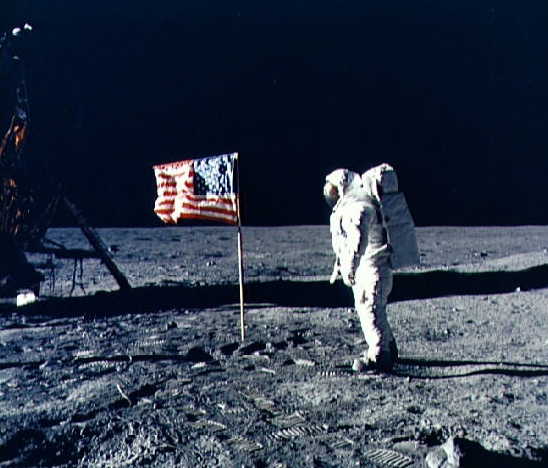
Today is apparently the 40th anniversary of the Apollo 11 moon landing. If that isn't something worthy of mentioning on this blog, then I don't know what is.
Obviously I was not alive when this event occurred, but I have fond memories of watching live broadcasts of the shuttles heading off into space when I was a kid, and thus have the utmost respect for the fine folks who set foot, for the first time in human history, on the surface of our little moon. If you have forgotten their names, they are: Neil Armstrong, Buzz Aldrin, and Michael Collins. Each had a part to play in getting mankind to the Moon and back, and thank goodness it was a success. As Armstrong said:
 So, remember the day we put someone on the moon. It's important. And to the fine men and women of NASA, I salute you!
If you're interested in learning more about this historic event, check out NASA's webpage for the 40th anniversary. There are all sorts of goodies there.
Obviously I was not alive when this event occurred, but I have fond memories of watching live broadcasts of the shuttles heading off into space when I was a kid, and thus have the utmost respect for the fine folks who set foot, for the first time in human history, on the surface of our little moon. If you have forgotten their names, they are: Neil Armstrong, Buzz Aldrin, and Michael Collins. Each had a part to play in getting mankind to the Moon and back, and thank goodness it was a success. As Armstrong said:
That's one small step for a man, one giant leap for mankind.The whole thing is pretty amazing, if you ask me. We might look back now and think of it as relatively trivial compared to our ridiculously technology-oriented lives, but Apollo 11 is to space and flight as the printing press is to books. NASA and Apollo 11 have played a crucial role in changing the United States and much of the world for the better. That's something to acknowledge and be proud of.
So, remember the day we put someone on the moon. It's important. And to the fine men and women of NASA, I salute you!If you're interested in learning more about this historic event, check out NASA's webpage for the 40th anniversary. There are all sorts of goodies there.
Guest Posts Wanted (Again)
I'm moving to Florida in a couple weeks and am looking for a whole load of guest posts to keep things interesting around here while I'm on the road. What am I looking for? Anything discussing science fiction, fantasy, writing, or related subjects, whether it be a top 10 list or a rant about something happening in publishing. I'm not overly picky about subject matter.
If you'd like to contribute a post or two, let me know here, via a Twitter message to @shaunduke, or via email at arconna[at]yahoo[dot]com.
Thanks,
Shaun
If you'd like to contribute a post or two, let me know here, via a Twitter message to @shaunduke, or via email at arconna[at]yahoo[dot]com.
Thanks,
Shaun
Sunday, July 19, 2009
SF/F Links: Mid-July Links
Here we go:
- Futurismic has a really elaborate image that maps out the various scientific disciplines based on published papers, etc. It's astonishing and hard to describe. Also at Futurismic is news that humans are naturally optimistic. Apparently a lot of people think things will get better. Dystopias are out! (Well, not really, but it's fun to say, I suppose.)
- Wired lists 10 strange species discovered in 2008. And by strange, I really do mean strange. Ideas are already swimming in my head from this list.
- io9 lists 10 eco-catastrophes from early science fiction. Lots of stuff I've never read, and all interesting.
- I'm not sure I linked to this edition of Grasping For the Wind's Inside the Blogosphere about relatively unknown SF/F authors. Good stuff there.
- NextRead asks: How do you choose what NOT to read next?
- SF Signal wonders what the dream price for eBooks is. Me too, actually. Personally, I think under $5 for new "mass market" editions (or at least 40% off cover price). That would make them appealing, I think.
- Theological Scribes asks why there are hardly any Christian science fiction tales. I think the better question is why there are hardly any Biblic retellings in science fiction format, because there are a heck of a lot of books that look at the future without necessarily violating a "Christian" worldview.
- Christopher Morris makes some interesting observations of NYT Bestseller's lists from today and way back when. Funny how so much of what sells is genre fiction...
- Metaphysical Fantasy lists some subgenres of the fantasy genre with decent descriptions. A good list to acknowledge.
- Publetariat offers a pros/cons discussion of royalty-based indie publishing. Good stuff!
- John C. Wright wonders which science fiction and fantasy books we would read to our children. He goes into a great discussion of the various books he's considered and tried, and even talks about Harry Potter in some detail. Great post.
- Jesse's Blog makes some interesting observations about how we perceive the Other. Definitely worth reading if you're interested in such discussions.
- The Launch Pad asks whether kids are reading enough science fiction these days. Good observations here and certainly a question that needs to be asked.
- Incredible Things has a list of twenty incredible bookcases. Simply stunning.
Top 7 Science Fiction "Sidekicks" (in Film)
Comic books may have the sidekick thing down, but science fiction has had a fair share of excellent sidekicks. This list is primarily focused on clear science fiction (in a loose sense and not based on my definitions here and here), so you won't see any comic books or fantasy titles represented.
Without further delay, here are what I consider to be the top seven:
 Chewbacca (Star Wars)
I would argue that Chewbacca is the greatest science fiction sidekick in film history, but I'm sure those reading this will disagree. But, given that he's a walking carpet with fangs, speaks in a bizarre grunting language that only Han Solo and Yoda seem to understand, and can pop the head off a grown man with his pinkie finger, I think he deserves to be here. Chewbacca is kind of like what a wolf would be like if it walked on two legs. Awesome? I think so.
 Spock (Star Trek)
The only true rival to Chewbacca, in my opinion, Spock is sort of like the science fiction version of Legolas, only not nearly as cute. It would be hard to imagine Star Trek without Spock. What would Captain Kirk do without his half-human, half-vulcan, logic-spouting machine? He'd probably be dead and we wouldn't be talking about the guy as if he were real. Spock is like Kirk's exact opposite, and that seems to be why he functions so well as a character.
 Zoe (Firefly)
There's something astonishing about Zoe as a character. While some have criticized Whedon for making her a subservient woman, I see a strong, loyal female figure who follows Reynolds not because he's a man, but because he is and always has been her superior in military rank. And she seems to know exactly how to put up with Reynold's crap, like all good sidekicks should. Smart, witty, and damn good with a gun, Zoe is one of the best female sidekicks in science fiction history.
 Professor Arturo (Sliders)
John Rhys Davies is amazing. If that isn't enough to put Professor Arturo on this list, then consider that Arturo was, by far, the best character on the show, so much so that his death drove the quality of Sliders right into the garbage bin. Arturo was smart, opinionated, and yet strangely lovable. His death was a shock for a damned good reason.
 Starbuck (Battlestar Galactica, the new version)
Some may argue with me about whether Starbuck qualifies as a sidekick, but she needs to be on this list due to how awesome of a character she was in the re-imagined Battlestar Galactica. Not only is she a hell of a pilot and a bit of a badass, but Starbuck also has a remarkable fate that leads her on an emotional roller coaster to discover Earth. Watch the show and you'll understand why she's awesome.
 Al Calavicci (Quantum Leap)
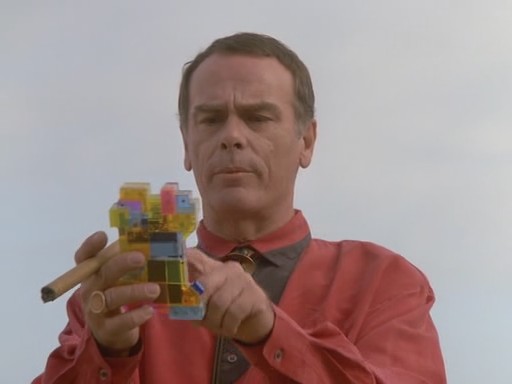
I wonder what it would be like to have a holographic projection of my best friend following me around as I'm thrust through time into other people's bodies. Would it be fun? Maybe. If Al were following me, though, I suspect it would be an interesting journey. This show is one of my Grandmother's favorites, and I can see why. Al is a fun character played by and equally fun actor (Dean Stockwell, who actually plays Caval on Battlestar Galactica).
 Dana Scully (X-Files)
Last of this list is another character who might not be considered to be a sidekick. Scully has a remarkable independent attitude in the series, but makes it on this list primarily because she does act as a logic machine for Mulder--sort of like Spock does for Kirk. She knows how to deal with dead bodies, gets abducted by aliens, and sees a heck of a lot of strange stuff, but still manages to be a disbeliever right up until two steps from the end. That takes guts.
And there you have it. Anyone you disagree with? Who would you replace and why? Let me know in the comments!
Without further delay, here are what I consider to be the top seven:
Chewbacca (Star Wars)I would argue that Chewbacca is the greatest science fiction sidekick in film history, but I'm sure those reading this will disagree. But, given that he's a walking carpet with fangs, speaks in a bizarre grunting language that only Han Solo and Yoda seem to understand, and can pop the head off a grown man with his pinkie finger, I think he deserves to be here. Chewbacca is kind of like what a wolf would be like if it walked on two legs. Awesome? I think so.
Spock (Star Trek)The only true rival to Chewbacca, in my opinion, Spock is sort of like the science fiction version of Legolas, only not nearly as cute. It would be hard to imagine Star Trek without Spock. What would Captain Kirk do without his half-human, half-vulcan, logic-spouting machine? He'd probably be dead and we wouldn't be talking about the guy as if he were real. Spock is like Kirk's exact opposite, and that seems to be why he functions so well as a character.
Zoe (Firefly)There's something astonishing about Zoe as a character. While some have criticized Whedon for making her a subservient woman, I see a strong, loyal female figure who follows Reynolds not because he's a man, but because he is and always has been her superior in military rank. And she seems to know exactly how to put up with Reynold's crap, like all good sidekicks should. Smart, witty, and damn good with a gun, Zoe is one of the best female sidekicks in science fiction history.
Professor Arturo (Sliders)John Rhys Davies is amazing. If that isn't enough to put Professor Arturo on this list, then consider that Arturo was, by far, the best character on the show, so much so that his death drove the quality of Sliders right into the garbage bin. Arturo was smart, opinionated, and yet strangely lovable. His death was a shock for a damned good reason.
Starbuck (Battlestar Galactica, the new version)Some may argue with me about whether Starbuck qualifies as a sidekick, but she needs to be on this list due to how awesome of a character she was in the re-imagined Battlestar Galactica. Not only is she a hell of a pilot and a bit of a badass, but Starbuck also has a remarkable fate that leads her on an emotional roller coaster to discover Earth. Watch the show and you'll understand why she's awesome.
Al Calavicci (Quantum Leap)I wonder what it would be like to have a holographic projection of my best friend following me around as I'm thrust through time into other people's bodies. Would it be fun? Maybe. If Al were following me, though, I suspect it would be an interesting journey. This show is one of my Grandmother's favorites, and I can see why. Al is a fun character played by and equally fun actor (Dean Stockwell, who actually plays Caval on Battlestar Galactica).
Dana Scully (X-Files)Last of this list is another character who might not be considered to be a sidekick. Scully has a remarkable independent attitude in the series, but makes it on this list primarily because she does act as a logic machine for Mulder--sort of like Spock does for Kirk. She knows how to deal with dead bodies, gets abducted by aliens, and sees a heck of a lot of strange stuff, but still manages to be a disbeliever right up until two steps from the end. That takes guts.
And there you have it. Anyone you disagree with? Who would you replace and why? Let me know in the comments!
Saturday, July 18, 2009
Science Fiction Withdrawals (or How to Survive When Your Favorite Series Ends)
Battlestar Galactica is over, and it's not the first of its kind--i.e. a great show--that has come to a grinding halt, leaving fans with nothing to fill the void. Oh, sure, when BSG ended we had loads of science fiction shows: Dollhouse, Fringe, Knight Rider, Life On Mars, Kings, Primeval, and a whole bunch of other shows either debuting or continuing in 2009. Hell, half of the shows mentioned were cancelled this year, leaving slim pickings in the science fiction department (and I use that term quite loosely to talk about television). Often the same thing happens within literature, with great series coming to an end, and few good replacements left in the mix (of course, this is far more common in fantasy than in science fiction--think Harry Potter and the void it left).
What are we science fiction fans supposed to do? An even greater question is: What are we picky science fiction fans supposed to do? I never liked Dollhouse, and most of the other shows either lacked that spine-tingling anticipation garnering effect that BSG so easily produced or were downright terrible, which explains why a lot of them are no longer on the air. Do we just wait for the next big thing? And how are we to survive in the interim?
I've found that a great way to survive is to start watching reruns. After all, sometimes it's a good idea to go back to a show you liked so many years ago as a refresher. A truly good show is re-watchable, and if said show is particularly amazing, re-watching will create a whole new experience. Of course, if you're as picky as I am, that means you'll re-watch the same show over and over and over again, because it can sometimes take five or six years for something worthwhile to come along. The last time I religiously watched television was during the fourth season of BSG (because I got into the series quite late). Still, watching reruns is a great way to keep your brain entertained while searching for something new to replace the void. I don't know how well this works for books, though. I have reread 1984 a handful of times, but that was more for my own curiosity than anything else.
But reruns are a temporary fix for science fiction withdrawals. Inevitably science fiction fans have to find something to truly fill that void. Personally, this is a problem for me primarily because I am too picky. I don't like most television shows, and getting my science fiction fix, especially in the ridiculous market we have now where channels that are supposed to play science fiction play something else, is next to impossible. Perhaps BSG is a fluke, or perhaps brilliant shows only come along once every few years. I find that the only way I can survive is to go on a science fiction movie binge; I fill my brain with Total Recall and I, Robot, and Sliders too. Sometimes I have to go outside of the genre to get the storytelling that I so desire--Band of Brothers, for example, is particularly good. Survival, it seems, depends on trying to keep yourself occupied with things you already love until such time as something new can come along to fill the space with shiny things.
How do you survive? What do you do to fill the void? Do you have a few tricks up your sleeve? Let me know in the comments!
What are we science fiction fans supposed to do? An even greater question is: What are we picky science fiction fans supposed to do? I never liked Dollhouse, and most of the other shows either lacked that spine-tingling anticipation garnering effect that BSG so easily produced or were downright terrible, which explains why a lot of them are no longer on the air. Do we just wait for the next big thing? And how are we to survive in the interim?
I've found that a great way to survive is to start watching reruns. After all, sometimes it's a good idea to go back to a show you liked so many years ago as a refresher. A truly good show is re-watchable, and if said show is particularly amazing, re-watching will create a whole new experience. Of course, if you're as picky as I am, that means you'll re-watch the same show over and over and over again, because it can sometimes take five or six years for something worthwhile to come along. The last time I religiously watched television was during the fourth season of BSG (because I got into the series quite late). Still, watching reruns is a great way to keep your brain entertained while searching for something new to replace the void. I don't know how well this works for books, though. I have reread 1984 a handful of times, but that was more for my own curiosity than anything else.
But reruns are a temporary fix for science fiction withdrawals. Inevitably science fiction fans have to find something to truly fill that void. Personally, this is a problem for me primarily because I am too picky. I don't like most television shows, and getting my science fiction fix, especially in the ridiculous market we have now where channels that are supposed to play science fiction play something else, is next to impossible. Perhaps BSG is a fluke, or perhaps brilliant shows only come along once every few years. I find that the only way I can survive is to go on a science fiction movie binge; I fill my brain with Total Recall and I, Robot, and Sliders too. Sometimes I have to go outside of the genre to get the storytelling that I so desire--Band of Brothers, for example, is particularly good. Survival, it seems, depends on trying to keep yourself occupied with things you already love until such time as something new can come along to fill the space with shiny things.
How do you survive? What do you do to fill the void? Do you have a few tricks up your sleeve? Let me know in the comments!
Friday, July 17, 2009
Should Unpublished Writers Blog (or Social Network)
It seems somewhat strange that I am writing about and answering this question when I myself am an unpublished author (although, technically I have been published, but I refuse to count it because the editors cut the last four pages off of my story without asking, which is unacceptable to me). Published and unpublished authors differ in opinion on this issue, and perhaps for good reasons. The way we do publishing as writers is far different from the way it was done a decade ago. Social media has played a particularly crucial role in promoting authors and ideas. While it's likely that social media will take control of all aspects of marketing and promotion in the near future, currently we live in a time where it is just as possible to succeed without an active Internet presence as it is to succeed with an active Internet presence.
But should unpublished authors blog or network? Sure, why not? There's no reason not to. Blogging is a fairly personal thing, even if you're talking about subjects that aren't necessarily "personal" in nature (such as this blog, which, for the most part, steers clear of my personal life and focuses, more or less, on external subjects; having a passionate interest in these subjects makes them somewhat personal). There's no reason not to blog if you want to do it. If you have something to say, say it; it shouldn't matter whether you're an unpublished author or not--if you want to do it, do it.
Social networking is somewhat of a different beast, though. While blogging can be done as an unintentional way of promoting yourself (since you can blog about taking care of hamsters and never mention your writing and still develop and audience), social networking tends to have a separate purpose. How you use social networks is a delicate process. I would argue that unpublished writers should be careful what they do with social networking; it's fairly easy to damage your reputation by being annoying with promoting your writing. Editors and publishers do notice when someone has flooded the market with amateur nonsense, and while most of them won't admit to carrying a "blacklist," they do remember names and the experiences attached to them. Unpublished writers should use social networking less as a promotional tool and more as a way to legitimately meet new people. Don't treat it as a "foot in the door" type service, because that's a surefire way of getting yourself into trouble.
The arguments against unpublished authors blogging and social networking seem to revolve around issues of time: you should be spending that time writing. While I agree, I also understand that assuming that all writers write the same--both in quality and quantity--is an unfortunately faulty way of thinking. No two writers are the same. Some writers are capable of writing for hours and hours, and others are not. For those that find themselves in a non-fiction-writing mood, or at least a non-writing mood, blogging or communicating with people online can be a welcome reprieve.
And, of course, never do something if you don't want to. If blogging or social networking isn't your thing, then don't do it. While some publishers place importance on these elements, they are far from absolutely necessary.
Now I open the discussion to all of you. Do you think unpublished writers should blog or social network? Why or why not?
But should unpublished authors blog or network? Sure, why not? There's no reason not to. Blogging is a fairly personal thing, even if you're talking about subjects that aren't necessarily "personal" in nature (such as this blog, which, for the most part, steers clear of my personal life and focuses, more or less, on external subjects; having a passionate interest in these subjects makes them somewhat personal). There's no reason not to blog if you want to do it. If you have something to say, say it; it shouldn't matter whether you're an unpublished author or not--if you want to do it, do it.
Social networking is somewhat of a different beast, though. While blogging can be done as an unintentional way of promoting yourself (since you can blog about taking care of hamsters and never mention your writing and still develop and audience), social networking tends to have a separate purpose. How you use social networks is a delicate process. I would argue that unpublished writers should be careful what they do with social networking; it's fairly easy to damage your reputation by being annoying with promoting your writing. Editors and publishers do notice when someone has flooded the market with amateur nonsense, and while most of them won't admit to carrying a "blacklist," they do remember names and the experiences attached to them. Unpublished writers should use social networking less as a promotional tool and more as a way to legitimately meet new people. Don't treat it as a "foot in the door" type service, because that's a surefire way of getting yourself into trouble.
The arguments against unpublished authors blogging and social networking seem to revolve around issues of time: you should be spending that time writing. While I agree, I also understand that assuming that all writers write the same--both in quality and quantity--is an unfortunately faulty way of thinking. No two writers are the same. Some writers are capable of writing for hours and hours, and others are not. For those that find themselves in a non-fiction-writing mood, or at least a non-writing mood, blogging or communicating with people online can be a welcome reprieve.
And, of course, never do something if you don't want to. If blogging or social networking isn't your thing, then don't do it. While some publishers place importance on these elements, they are far from absolutely necessary.
Now I open the discussion to all of you. Do you think unpublished writers should blog or social network? Why or why not?
Wednesday, July 15, 2009
Top 10 Cats in Science Fiction and Fantasy
It's interesting to write lists like this, because often times you don't remember certain characters or animals in the various novels and movies you've seen, and when it comes time to dig up those memories, you end up recalling next to nothing. I've seen very few films and read very few books in which cats have played a prominent enough role to be memorable. Even worse is trying to remember all the house cats that have played some significant role in SF/F--hence why this list will not limit itself to house cats.
Without further delay, here is my list of the top ten cats in science fiction and fantasy (in no particular order):
Without further delay, here is my list of the top ten cats in science fiction and fantasy (in no particular order):
Tuesday, July 14, 2009
Top 6 Lesser Known or Forgotten Fantasy Series
The sad thing about this list is that it is wholly incomplete. It cannot possibly touch upon the hundreds of fantasy series that have been written, because I have not read all of them--and neither have you. There are too many books to properly write this list, but I'm going to try nonetheless.
The following are six lesser known or forgotten fantasy series that I consider to be particularly noteworthy (in no particular order):
Anywho!
The following are six lesser known or forgotten fantasy series that I consider to be particularly noteworthy (in no particular order):
- The DragonRealm Series by Richard A. Knaak
Knaak was one of the first writers to get me into fantasy. I started reading fantasy with his Dragonlance books and, some years later, discovered he had his own fantasy series. After reading the first book, I was hooked. It's been a while since I've read the books, but I remember them being quite entertaining, with a mage who changes from good to evil (and vice versa) every time he dies (and is resurrected) and a complex dragon society. - The Duncton Wood Series by William Horwood
I suspect this is one of those lesser known fantasy series. Horwood's fantasy series is a mixture of Richard Adams' Watership Down and Brian Jacque's animal fantasies, only a million times more elaborate and epic. Each novel follows a series of moles in an enormous mole society, richly developed and conceived as if it actually existed today, with mythology and more interweaved into the storylines. Truly the cream of the crop as far as animal fantasies are concerned. Even if you don't like books with animals as the central characters, you should try Horwood's books. They're amazing. - The Iron Dragon Series by Paul Genesse
I don't know if you would say that Genesse's Iron Dragon series is forgotten, but it is certainly lesser known. Part of this is due to Genesse's publisher, Five Star, being particularly small. Regardless, Genesse has written an intense, action-packed series that will continue to be developed ever the next three books. His work is relatively new, too, so get into them while you still can! - The Godslayer Chronicles by James Clemens
The series is apparently incomplete, but the Godslayer Chronicles, beginning with Shadowfall, is one of the my favorite fantasy series in existence. I wish he would write the third book already, but as it is, Shadowfall is richly developed and uses gods and magic in a fairly unique way--to my knowledge. Even the main character has one heck of a special ability! Definitely worth reading. - The Remin Chronicles by Nick Ruth
One of two young adult fantasy series on this list, The Remin Chronicles, starting with The Dark Dreamweaver, is a fantastic quirky series in the vein of Leven Thumps. One of the main characters is a magic-weilding caterpillar! I'm fond of quirky fantasy, and if you are too, then check out the first book. - The Young Wizards Series by Diane Duane
I'm not sure if Duane's young adult fantasy series is lesser known or forgotten, but I'm assuming it's the former as I don't hear much about it these days. Her Young Wizards books follow a duo of, well, young wizards as they learn and use their newfound magic abilities to combat various foes within the wizarding world. Her novels came well before Harry Potter flooded the market, and one should not compare her work to Rowling's. The Young Wizards series is intricate, well written, and fascinating.
Anywho!
Monday, July 13, 2009
Reader Question: Science Fiction Definition (and Other Rhyming Goodness)(Part Two)
(Read Part One)
The more I study and understand science fiction, the more I realize that the genre is simultaneously limitless and limited. While most consumers of popular fiction and films are quick to say "science fiction is spaceships and aliens," I find such gross determinations to be overly simplistic and impossible to equate with a standard definition of the genre. Anyone familiar with science fiction would understand that spaceships and aliens are not universals of the genre. True, much of early science fiction literature and the vast majority of science fiction film have dealt quite exclusively with what are considered to be the "tropes" (and cliches) of the genre, but science fiction is, undoubtedly, about so much more.
In getting to the end of this post, I have to indicate that I probably have shifted my position from earlier discussions of what science fiction is. I still hold to certain idealistic perceptions of the genre, and while Darko Suvin, Samuel R. Delany, and even Istvan Csicsery-Ronay, Jr. have all used relatively isolated definitions of the genre, we must define science fiction by what it is universally; there cannot, in my opinion, be exceptions to the rule. What defines science fiction, to me, are these elements, placed together and never separate:
But, since this is in response to a question give to me by a reader, I should indicate that my definition/conception of science fiction is by far not the most readily accepted one. Typically, one looks to the genre for its cliches, and those happen to be spaceships, lasers, and other flashy things. Even serious science fiction uses these things, from time to time.
To close this discussion, I'll leave you with a word of advice: don't worry too much about what science fiction actually is. Because the genre is not so easily defined, by anyone, it doesn't really matter whether you use elements that are not necessarily science fiction by my account or anyone else's. Star Wars will probably always be known as science fiction, no matter how hard anyone tries to push it into the science fantasy category.
What are you thoughts on defining science fiction? Let me know in the comments.
-------------------------------------------------
If you have a question about science fiction, fantasy, writing, or anything related you'd like answered here, whether silly or serious, feel free to send it via email to arconna[at]yahoo[dot]com, tweet it via Twitter to @shaunduke, or leave it in the comments here. Questions are always welcome! If you liked this post, consider stumbling, digging, or linking to it!
The more I study and understand science fiction, the more I realize that the genre is simultaneously limitless and limited. While most consumers of popular fiction and films are quick to say "science fiction is spaceships and aliens," I find such gross determinations to be overly simplistic and impossible to equate with a standard definition of the genre. Anyone familiar with science fiction would understand that spaceships and aliens are not universals of the genre. True, much of early science fiction literature and the vast majority of science fiction film have dealt quite exclusively with what are considered to be the "tropes" (and cliches) of the genre, but science fiction is, undoubtedly, about so much more.
In getting to the end of this post, I have to indicate that I probably have shifted my position from earlier discussions of what science fiction is. I still hold to certain idealistic perceptions of the genre, and while Darko Suvin, Samuel R. Delany, and even Istvan Csicsery-Ronay, Jr. have all used relatively isolated definitions of the genre, we must define science fiction by what it is universally; there cannot, in my opinion, be exceptions to the rule. What defines science fiction, to me, are these elements, placed together and never separate:
- The presence of the future, whether it be tomorrow or a thousand years distant, or, at least a progression into the future within the narrative itself. The future is absolutely essential to any proper definition of science fiction. Some have argued with me, in the past, that this would inevitably create a paradoxical relationship with narratives dealing with the past, but I would argue that only those narratives which contain primary characters from a future point can be up for true consideration in the genre. Alternate history, thus, is not science fiction, but The Time Machine and Back to the Future are, up to this point.
- A general reflection or speculation upon aspects of the technological or social, in their most broadest contexts. Science fiction contains the word "science" for a reason. It is not necessary, per se, for a science fiction narrative to get the science absolutely correct, but it is necessary for the narrative to speculate upon the possibilities of technologies, social structures, etc. Most any field of science is applicable to science fiction, and you could certainly write a science fiction narrative that questions issues of archaeology or paleontology, etc. It should be noted, too, that the science, whatever field it may be, does not necessarily have to be central to the story itself; hence why many science fiction stories may set themselves up in universes or worlds vastly different from our own, but yet are more concerned with issues of character or plot. Having said this, though, I want to be clear that a scientific approach (or cognitive estrangement, if you will) to envisioning science fiction is essential; you might not make a laser pistol a significant concern for the characters (such as by asking how the laser pistol has changed the face of the world), but it still must be there (and you can, of course, supplement the laser pistol for any scientific subject, so long as it is sufficiently estranged from the present to speak upon Suvin's "cognitive estrangement" concept).
Additional qualifiers for this subject include: - The acknowledgement of temporal placement of the narrative from the author's perspective (i.e. when it was written). While the science should, for all intensive purposes, be correct, even theoretically, some leeway must be given to texts which precede current science. Hence why The Time Machine is still considered a work of science fiction despite new scientific research which has largely proven the subject of time travel, at least via H. G. Wells' vision.
- A general displacement of Clarke's Third Law (i.e. that any sufficiently advanced technology is indistinguishable from magic). If it's indistinguishable from magic, it is magic, and any discussion otherwise is fairly pointless.
- A discussion, whether directly or otherwise, of the human condition. This is not to say that every science fiction narrative must be aware or obsessed with humanity, but such narratives must be aware of a human, or even inhuman, concern with the wider world/universe/etc.
But, since this is in response to a question give to me by a reader, I should indicate that my definition/conception of science fiction is by far not the most readily accepted one. Typically, one looks to the genre for its cliches, and those happen to be spaceships, lasers, and other flashy things. Even serious science fiction uses these things, from time to time.
To close this discussion, I'll leave you with a word of advice: don't worry too much about what science fiction actually is. Because the genre is not so easily defined, by anyone, it doesn't really matter whether you use elements that are not necessarily science fiction by my account or anyone else's. Star Wars will probably always be known as science fiction, no matter how hard anyone tries to push it into the science fantasy category.
What are you thoughts on defining science fiction? Let me know in the comments.
-------------------------------------------------
If you have a question about science fiction, fantasy, writing, or anything related you'd like answered here, whether silly or serious, feel free to send it via email to arconna[at]yahoo[dot]com, tweet it via Twitter to @shaunduke, or leave it in the comments here. Questions are always welcome! If you liked this post, consider stumbling, digging, or linking to it!
Sunday, July 12, 2009
Reader Question: Science Fiction Definition (and Other Rhyming Goodness)(Part One)
Kelsey, a friend from Facebook and Young Writers Online, recently asked me the following question:
Defining science fiction has been and continues to be one of the most challenging issues for writers and fans of the genre. Many have argued for various versions of definition, but no single definition, at least one that has been specifically defined, has been accepted or held firm by the public, writers, or the publishing industry. We run into a huge problem with defining science fiction due to absurd debates about what is and is not science fiction. Some argue that science fiction is not serious, that it is a genre fashioned entirely for entertainment, and anything that happens to use the furniture of science fiction, but is "serious" or "literary," must not be debased by the term "science fiction." Thus, high literary critics argue that 1984 and other classic examples of science fiction (Brave New World, Utopia, We, etc.) are literary endeavors and above the purview of the "pulpy nonsense" that has typically made up science fiction as a genre.
But these sorts of arguments miss the point: that science fiction is like any other genre of literature and contains within itself the markings of good and bad, serious and juvenile, great and mediocre. With that in mind, how do we define such a genre if it is, at any point in time, a collage of elements equally as vast as its sister genre, fantasy?
Here we have to look to two of the most recognized literary theorists who have, at one point or another, focused their attention onto a genre that has largely been ridiculed and treated with derision: Samuel R. Delany and Darko Suvin.
Delany, to my understanding, argues for a verbal or lingual understanding of science fiction. While this is made far more complex and limiting in his various critical approaches to this theoretical model, the basic premise of science fiction as a linguistically designated genre delves into the "how" of the reading process (in science fiction). You do not read a science fiction novel the same way you read a romance novel, because what may be seemingly mundane in romance will be quite the opposite in science fiction. I am, unfortunately, not nearly as familiar with his theories as I would like to be, but it is still interesting to note this approach to understanding what science fiction is.
Suvin, however, makes the argument that science fiction is "cognitive estrangement." Broken down, this means that science fiction is about taking a cognitive element and twisting it so that it drags the reader to a different space--a space that is occupied by both the estranged (unreal, perhaps) and the cognitive (understood to be true at a particular time, or to at least be based on a cognitive element). Specifically, this takes into account the two elements of the term "science fiction" (i.e. science and fiction). Since one is, by default, a product of the imagined, to varying degrees, and the former is a product of human understanding of the natural world, these terms converge together to form a world view that is not only aware of what is or probably is true, but is also aware of the fictive reality that exists in the realm of speculation. This concept, perhaps, explains the initial creation of the term "speculative fiction" to mean, roughly, the same as "science fiction," because ultimately what science fiction does is speculate upon possibilities, on potential realities broken from the temporal and spacial plane of reality. Hence, cognitive estrangement: since cognition is a process/perception of understanding based on learning and reason, to estrange that perception is to take it to a stage above current reality into one of the possible reality (i.e. where much of the "what if" questions arise from within early and middle-age science fiction).
I tend to agree with Suvin, but because most who are familiar with his theoretical approach to science fiction only know it at its most basic, it tends to hold a limited view. Suvin, of course, discusses at length in various essays how he envisions the genre and where to draw the line.
Due to the length of this post, I'm going to have to cut this short here. In the second part to this, I'd like to draw my own line. For now, feel free to open the discussion on what you think science fiction is. A good debate would do us some good, I think.
Read Part Two
-------------------------------------------------
If you have a question about science fiction, fantasy, writing, or anything related you'd like answered here, whether silly or serious, feel free to send it via email to arconna[at]yahoo[dot]com, tweet it via Twitter to @shaunduke, or leave it in the comments here. Questions are always welcome! If you liked this post, consider stumbling, digging, or linking to it!
This might be a stupid question, but what exactly defines SciFi, or what are the characteristics? Most people think (like my pitiful self) of space-ships, but I've also heard 1984 and other such books being called SciFi.Firstly, I want to make it clear that I am not going to get into the debate over the differences between the terms "science fiction" and "scifi." Kelsey is specifically talking about the genre as a whole, and any discussions over the subtle nuances that separate the "serious" genre from its "entertainment-oriented" brother/sister will distract from the issue at hand. Secondly, my answer to this question is a personal one, and while I may consider it to be the right one, others will obviously disagree. This post should then become more of an open forum to discuss what may be the defining elements of science fiction as a genre, as in those elements which most easily define it without getting into a sempiternal dispersion of "or"s and "unless"s.
Defining science fiction has been and continues to be one of the most challenging issues for writers and fans of the genre. Many have argued for various versions of definition, but no single definition, at least one that has been specifically defined, has been accepted or held firm by the public, writers, or the publishing industry. We run into a huge problem with defining science fiction due to absurd debates about what is and is not science fiction. Some argue that science fiction is not serious, that it is a genre fashioned entirely for entertainment, and anything that happens to use the furniture of science fiction, but is "serious" or "literary," must not be debased by the term "science fiction." Thus, high literary critics argue that 1984 and other classic examples of science fiction (Brave New World, Utopia, We, etc.) are literary endeavors and above the purview of the "pulpy nonsense" that has typically made up science fiction as a genre.
But these sorts of arguments miss the point: that science fiction is like any other genre of literature and contains within itself the markings of good and bad, serious and juvenile, great and mediocre. With that in mind, how do we define such a genre if it is, at any point in time, a collage of elements equally as vast as its sister genre, fantasy?
Here we have to look to two of the most recognized literary theorists who have, at one point or another, focused their attention onto a genre that has largely been ridiculed and treated with derision: Samuel R. Delany and Darko Suvin.
Delany, to my understanding, argues for a verbal or lingual understanding of science fiction. While this is made far more complex and limiting in his various critical approaches to this theoretical model, the basic premise of science fiction as a linguistically designated genre delves into the "how" of the reading process (in science fiction). You do not read a science fiction novel the same way you read a romance novel, because what may be seemingly mundane in romance will be quite the opposite in science fiction. I am, unfortunately, not nearly as familiar with his theories as I would like to be, but it is still interesting to note this approach to understanding what science fiction is.
Suvin, however, makes the argument that science fiction is "cognitive estrangement." Broken down, this means that science fiction is about taking a cognitive element and twisting it so that it drags the reader to a different space--a space that is occupied by both the estranged (unreal, perhaps) and the cognitive (understood to be true at a particular time, or to at least be based on a cognitive element). Specifically, this takes into account the two elements of the term "science fiction" (i.e. science and fiction). Since one is, by default, a product of the imagined, to varying degrees, and the former is a product of human understanding of the natural world, these terms converge together to form a world view that is not only aware of what is or probably is true, but is also aware of the fictive reality that exists in the realm of speculation. This concept, perhaps, explains the initial creation of the term "speculative fiction" to mean, roughly, the same as "science fiction," because ultimately what science fiction does is speculate upon possibilities, on potential realities broken from the temporal and spacial plane of reality. Hence, cognitive estrangement: since cognition is a process/perception of understanding based on learning and reason, to estrange that perception is to take it to a stage above current reality into one of the possible reality (i.e. where much of the "what if" questions arise from within early and middle-age science fiction).
I tend to agree with Suvin, but because most who are familiar with his theoretical approach to science fiction only know it at its most basic, it tends to hold a limited view. Suvin, of course, discusses at length in various essays how he envisions the genre and where to draw the line.
Due to the length of this post, I'm going to have to cut this short here. In the second part to this, I'd like to draw my own line. For now, feel free to open the discussion on what you think science fiction is. A good debate would do us some good, I think.
Read Part Two
-------------------------------------------------
If you have a question about science fiction, fantasy, writing, or anything related you'd like answered here, whether silly or serious, feel free to send it via email to arconna[at]yahoo[dot]com, tweet it via Twitter to @shaunduke, or leave it in the comments here. Questions are always welcome! If you liked this post, consider stumbling, digging, or linking to it!
Friday, July 10, 2009
Book Review Up: Waltz With Bashir by Ari Folman and David Polonsky (Graphic Novel)
Another graphic review is up. This is the last of them, actually, as I have no more graphic novels to review. It's an interesting piece that I think you all should piece up, by the way. Here is the review.
Thursday, July 09, 2009
Book Review Up: Welcome to the Jungle by Jim Butcher and Ardian Syaf (Graphic Novel)
I have me another review of a graphic novel up over at Theresa's blog. Been too long since I reviewed something, and I have a long list of books I've finished that I need to review. In any case, you can click the link above for my review.
Thanks and enjoy!
Thanks and enjoy!
Wednesday, July 08, 2009
SF/F Links: July Link Pie
No, there will not be any more clever rhymes, but there will be some good links. Special thanks goes to Charles Tan, Matt Staggs, and SF Signal for pointing me to a few of these. Here goes:
- The Daily Scott Brown calls for some more realism in vampire fiction, particularly in relation to vampire strength.
- io9 digs through literature, movies, and television to see how science fiction imagines the future of the U.S. government. Some interesting selections here.
- Fandomania gives us ten fantasy summer reading recommendations. Some good books and some iffy ones, but a good list overall.
- The Dream Cafe wants suggestions for dark fantasy books. Head on over and leave a few comments!
- Andrew Wheeler tells us that science fiction does, in fact, involve characters, contrary to what some literary critics believe. Eat it.
- Alma Alexander talks about reviewing as a writer, and whether it's okay to do so. Yes, it is, just so my opinion gets out there.
- The Atlantic has one hell of an article on geo-engineering the Earth. Fascinating stuff.
- Here's a list of YA fantasy novels by people of color. A damn good list, and still growing, it seems. There's also an addendum to this list.
- Scott Edelman reminds us how to take criticism by telling us a very personal story.
- Scientists have apparently discovered that a single ant colony as colonized the world. It's wild and awesome!
- Here is a rather long-winded, multi-author discussion of whether to self publish or not. Interesting opinions there.
- Oh, and Gawker gives us the nitty gritty of that whole Alice Hoffman scandal. You know, the one where Hoffman got pissed at a critic, then provided her fans with the critic's phone number and email and told them to harass said critic? Yeah.
- Sheila Finch discusses fantastic voyages, in space and otherwise. Interesting stuff!
- The Mumpsimus talks about mimetic fiction and SF. Interesting post.
- B&N has an interesting article on the death of science fiction and its continued existence. Read it, because I can't break it into a single sentence without sounding confusing.
- How about some cross genre fiction? Here's a massive list of them!
- And, because I feel like being helpful, here's a page of medieval demographics made simple. Should be useful to you fantasy writers out there.
Movie Review: Transformers (Rise of the Fallen)
One of the more anticipated of movies this year, Transformers 2 is a sequel that knows it's a sequel. What it lacks in narrative cohesiveness it makes up for in what I'm going to call OCCAD, or obsessive compulsive computer animating disorder.
Transformers 2 occurs some two years or so after the first movie ended. The Autobots now work with mankind to hunt down and destroy the remaining Decepticons, while Samuel Witwicky, our hero from the first movie, prepares to head off for college--apparently on the taxpayer's bill. But the Decepticons are not finished with ruling the Earth. They've been here before, so many thousands of years ago, back before any of these enormous living machines could transform. These machines need Energon, a special form of energy that allows them to live and exist, and to do that they have to harvest suns. The rules, it seems, are to harvest only those suns orbited by lifeless planets. But when they find Earth, some of them don't agree and a civil war breaks out. And now, thousands of years later, the Fallen--the bad guys who were defeated so long ago--are attempting to return. It's up to Sam, Mikaela, and a few familiar friends to put a stop to it.
 That's the short description. The problem with Transformers 2 is that it suffers horribly from sequelitis. The first half hour of the movie is essentially wasted space, explaining to us where everyone has gone, what they're up to, why they're where they are, etc., when, in reality, all that matters to the story is setting up Sam and the basic conflict. Great, wonderful, the Autobots, led by Optimus Prime, are off hunting their evil brethren, but we don't really care, particularly because it's wasted space when what matters isn't so much that they're doing what seems like a good idea, but that the Fallen have/has returned and Sam is caught in the middle of it. Why didn't Bay start right in the middle of Sam's move to college?
Oh, but there's a good reason. See, apparently they didn't destroy all the Decepticons way back when. Oh yeah. They're still around. No idea how the Autobots magically missed them all those years ago, nor why said Decepticons didn't get into the fight, nor where all these new Autobots came from. We're supposed to assume that they just magically took up Optimus Prime's offer and flew over at sublight speed through space to Earth (which, let's face it, makes about as much sense as trying to fly an apple through a ten-foot thick steel wall). But we get no explanation for that whatsoever, even though thirty minutes of the film are wasted explaining everything else.
Unfortunately, the science in this film is abyssmal. I get it. The movie is ridiculous in and of itself, what with robots that transform, etc., but Bay could have at least tried to play things a little closer to home. A matter of days, maybe weeks occur in this one movie, yet somehow we're supposed to accept that Decepticons can move at obviously slower-than-light speed from a planet not in our solar system to Earth in less than twenty-four hours? Bullcrap. Leave the ridiculous concept to its ridiculousness and leave everything else to reality, please.
And then we have to deal with some of the more overwhelming parts of Transformers 2: the characters. There are far too many of them. The X-men franchise was at least smart enough to realize that it couldn't possibly shove every single Marvel superhero into the mix; some had to be left as little more than side notes. But Transformers 2 is flooded with new and old characters. There are too many Decepticons and Autobots to keep straight in your head and I still have no clue who most of them are. It's almost as if Bay wanted to keep the CG boys as busy as humanly possible, so any and all Transformers that might have appeared decades ago have now been sprung up from the depths and chucked into the fray. It's confusing and overwhelming.
And here's where we get into the biggest criticism of the film: the computer graphics. Michael Bay has been accused of using CG as an ends to the mean, rather than as a tool, and that fact is made crystal clear here. There are so many battle scenes (with their accompanying transforming) that practically every inch of Transformers 2 is dripping with CG. And half the time these battles are extraneous. The first half hour is essentially an enormous turd of explosions and giant robots, and the rest of the movie is an on-and-off display of fights, destruction, and general mayhem, as if the movie's concept wasn't entertaining enough and Bay had to inject every minute of the film with something flashy and fiery. The film would have been just as entertaining with half the battle scenes. Truly. The only good thing to say about the CG is that it is quite good and cleverly crafted so it becomes difficult to see the lines between real and fake beyond one's suspension of belief.
The only thing that saves Transformers 2, though, happens to be one if its flaws: the characters. While I have already remarked that there are too many of them, those that have stuck into my head were definitely worth remembering. Not only are we gifted with familiar faces (Sam, Optimus, Bumblebee, the parents, and a few surprises), we are also introduced to a couple of other characters that drive the comedic quality of this film upwards. If not for the comedy, this film would be a waste of space. Chuckling in the theater has a way of making you forget, at that moment, all the problems with what is happening before you.
Overall, I would say that Transformers 2 is a tremendously flawed piece, but it will likely entertain most audiences. If you're thinking of taking your kids to this one, you might reconsider, if you're concerned about bad language and suggestive content. Transformers 2 is clearly an adult film, but one with action and explosions and likely enough necessary tidbits to be worth seeing at matinee prices.
Direction: 2/5
Cast: 3.25/5
Writing: 3.5/5
Visuals: 2/5
Adaptation: N/A
Overall: 2.7/5
Value: $6.00
Transformers 2 occurs some two years or so after the first movie ended. The Autobots now work with mankind to hunt down and destroy the remaining Decepticons, while Samuel Witwicky, our hero from the first movie, prepares to head off for college--apparently on the taxpayer's bill. But the Decepticons are not finished with ruling the Earth. They've been here before, so many thousands of years ago, back before any of these enormous living machines could transform. These machines need Energon, a special form of energy that allows them to live and exist, and to do that they have to harvest suns. The rules, it seems, are to harvest only those suns orbited by lifeless planets. But when they find Earth, some of them don't agree and a civil war breaks out. And now, thousands of years later, the Fallen--the bad guys who were defeated so long ago--are attempting to return. It's up to Sam, Mikaela, and a few familiar friends to put a stop to it.
That's the short description. The problem with Transformers 2 is that it suffers horribly from sequelitis. The first half hour of the movie is essentially wasted space, explaining to us where everyone has gone, what they're up to, why they're where they are, etc., when, in reality, all that matters to the story is setting up Sam and the basic conflict. Great, wonderful, the Autobots, led by Optimus Prime, are off hunting their evil brethren, but we don't really care, particularly because it's wasted space when what matters isn't so much that they're doing what seems like a good idea, but that the Fallen have/has returned and Sam is caught in the middle of it. Why didn't Bay start right in the middle of Sam's move to college?Oh, but there's a good reason. See, apparently they didn't destroy all the Decepticons way back when. Oh yeah. They're still around. No idea how the Autobots magically missed them all those years ago, nor why said Decepticons didn't get into the fight, nor where all these new Autobots came from. We're supposed to assume that they just magically took up Optimus Prime's offer and flew over at sublight speed through space to Earth (which, let's face it, makes about as much sense as trying to fly an apple through a ten-foot thick steel wall). But we get no explanation for that whatsoever, even though thirty minutes of the film are wasted explaining everything else.
Unfortunately, the science in this film is abyssmal. I get it. The movie is ridiculous in and of itself, what with robots that transform, etc., but Bay could have at least tried to play things a little closer to home. A matter of days, maybe weeks occur in this one movie, yet somehow we're supposed to accept that Decepticons can move at obviously slower-than-light speed from a planet not in our solar system to Earth in less than twenty-four hours? Bullcrap. Leave the ridiculous concept to its ridiculousness and leave everything else to reality, please.
And then we have to deal with some of the more overwhelming parts of Transformers 2: the characters. There are far too many of them. The X-men franchise was at least smart enough to realize that it couldn't possibly shove every single Marvel superhero into the mix; some had to be left as little more than side notes. But Transformers 2 is flooded with new and old characters. There are too many Decepticons and Autobots to keep straight in your head and I still have no clue who most of them are. It's almost as if Bay wanted to keep the CG boys as busy as humanly possible, so any and all Transformers that might have appeared decades ago have now been sprung up from the depths and chucked into the fray. It's confusing and overwhelming.
And here's where we get into the biggest criticism of the film: the computer graphics. Michael Bay has been accused of using CG as an ends to the mean, rather than as a tool, and that fact is made crystal clear here. There are so many battle scenes (with their accompanying transforming) that practically every inch of Transformers 2 is dripping with CG. And half the time these battles are extraneous. The first half hour is essentially an enormous turd of explosions and giant robots, and the rest of the movie is an on-and-off display of fights, destruction, and general mayhem, as if the movie's concept wasn't entertaining enough and Bay had to inject every minute of the film with something flashy and fiery. The film would have been just as entertaining with half the battle scenes. Truly. The only good thing to say about the CG is that it is quite good and cleverly crafted so it becomes difficult to see the lines between real and fake beyond one's suspension of belief.
The only thing that saves Transformers 2, though, happens to be one if its flaws: the characters. While I have already remarked that there are too many of them, those that have stuck into my head were definitely worth remembering. Not only are we gifted with familiar faces (Sam, Optimus, Bumblebee, the parents, and a few surprises), we are also introduced to a couple of other characters that drive the comedic quality of this film upwards. If not for the comedy, this film would be a waste of space. Chuckling in the theater has a way of making you forget, at that moment, all the problems with what is happening before you.
Overall, I would say that Transformers 2 is a tremendously flawed piece, but it will likely entertain most audiences. If you're thinking of taking your kids to this one, you might reconsider, if you're concerned about bad language and suggestive content. Transformers 2 is clearly an adult film, but one with action and explosions and likely enough necessary tidbits to be worth seeing at matinee prices.
Direction: 2/5
Cast: 3.25/5
Writing: 3.5/5
Visuals: 2/5
Adaptation: N/A
Overall: 2.7/5
Value: $6.00
Tuesday, July 07, 2009
SF/F Links: Starting Off July
No need for introductions. Special thanks goes to Charles Tan, Matt Staggs, and SF Signal for pointing me to a few of these. Here goes:
- Help Orbit Books create the ugliest SF/F book cover ever. Seriously. This could be fun.
- Jonathan Strahan chimes in on the electronic vs. print submissions argument. You can see Scalzi's thoughts here, and oldcharliebrown has a few things to say too. Oh, and Cheryl Morgan rants here, remarking on problems with standard manuscript format.
- The Galaxy Express tells us how to take a negative review. Good stuff.
- Jonathan Cowie makes an argument for the greatness of science fiction as a response to the question: Is it possible to be negative about SF? Quite long, but interesting.
- Rants & Ramblings talks about whether to write what's hot. I agree with Rachelle on this one: write what you're good at.
- The Elegant Variation wants us to discuss whether we're writing more now than we were in previous generations. Yes, we are, but your thoughts are welcome too!
- io9 discusses Michael A. Stackpole and how online publishing will and currently is changing the methods of breaking into to the business. Read the article, because it's impossible to break this damned thing down into a single sentence without making it sound weird. Good stuff.
- And here's a list from io9 of fifteen science fiction movie sequels that don't suck. Good list.
- Beyond Identity makes a fine argument for why scientific accuracy, and other things, are not the end-all-be-all for categorizing books as science fiction. I sort of agree. There are certain limits to what makes something science fiction, in my opinion, but the arguments made at Beyond Identity are interesting ones.
- My Five Best lists five best fantasy series. Mostly typical stuff, but I mention it because there's one in there I've never heard of by a fellow named Joel Rosenberg.
- Unsearchable Riches asks "Why Fantasy?" It turns into a rant about why fantasy in almost any vein is perfectly safe for Christians, but don't let that turn you off--it's interesting.
- Smashing Magazine lists fifty resources to help you with your writing.
- Elizabeth Bear, one of my favorite authors, has a few good bits of writing advice.
- And last on this list is a WTF moment provided by Nnedi Okorafor. Apparently Penguin (the publisher) is offering up a new fiction prize for African writers, but it directly excludes science fiction and fantasy. Nnedi calls them out, as should we all. This is retarded. A lot of great African writers are not eligible.
Electronic Submissions: The New Blogosphere Rant Topic
The blogosphere is ripe with rants about electronic submissions and the credibility of short fiction publications that don't use them. Scalzi has talked about it and so has Jonathan Strahan. With such big names (in the SF/F world, at least) speaking on this issue, it seems rather pointless for me to remark here. But, this is my blog, so I am going to do just that.
I stopped submitting my fiction to the big three and any other publication that refuses (or refused, for a time) to take electronic submissions about a year and a half ago. I think that was around the time when Tobias S. Buckell remarked in an audio interview that he refuses to submit by mail now for various reasons (some of which have been spoken to by Scalzi and Strahan). I'm not sure if Buckell still feels that way, or if I'm taking it out of context, but it truly made me reconsider my priorities in getting published. The result of that reconsideration, obviously, was my complete seizure of mail submissions, with exception to the Writers of the Future Contest--an exception I won't bother explaining.
Print submissions make little sense in the 21st century. Some of the valid reasons why are:
And, like Scalzi, I question the credibility of any magazine that refuses to accept e-subs. Seriously, the excuses are just that: excuses. I get it. I understand the reasons for not taking e-subs, but they're really ridiculous. We live in the 21st century, not 1925. It's about time the publishing world caught on.
I stopped submitting my fiction to the big three and any other publication that refuses (or refused, for a time) to take electronic submissions about a year and a half ago. I think that was around the time when Tobias S. Buckell remarked in an audio interview that he refuses to submit by mail now for various reasons (some of which have been spoken to by Scalzi and Strahan). I'm not sure if Buckell still feels that way, or if I'm taking it out of context, but it truly made me reconsider my priorities in getting published. The result of that reconsideration, obviously, was my complete seizure of mail submissions, with exception to the Writers of the Future Contest--an exception I won't bother explaining.
Print submissions make little sense in the 21st century. Some of the valid reasons why are:
- Electronic submissions are easier to track. As mentioned elsewhere, it's difficult to lose an electronic submission if you're not a moron. Move them to a magic email folder than everyone can access and you're set.
- Electronic submissions are easier to submit, which means more writers who do write good stories will likely submit to you. Yeah, some crappy writers will submit too, but so what? It should be pretty damn obvious from the first paragraph that a story isn't worth reading.
- Electronic submissions are easier to reject and deal with. Editors only have to click reply, past in a form rejection, and be done with it. No postage, no mail men, no nothing.
- There's almost no difference between reading a print submission and an electronic submission. Obviously a printed manuscript is easier to read, but, to be fair, if a story is good enough to get published, that fact will make itself clear just as readily in an electronic submission.
- There are plenty of magazines (online and otherwise) that not only accept electronic submissions, but also pay at or above the rates of those publications that don't take electronic submissions. Even the freaking New Yorker takes e-subs. Get with the program. If a magazine that has been around for over 80 years can figure it out, well, there's really no excuse, right?
- Writers make next to nothing as it is, especially in the short fiction world (and especially in the SF/F world). Print submissions cost a pretty penny for postage. The cost might seem nominal in the short run, but imagine the cost when you have twenty or thirty stories out there. There's never a valid reason for a writer to have to pay to submit something. You pay the writer, not take money away from them.
And, like Scalzi, I question the credibility of any magazine that refuses to accept e-subs. Seriously, the excuses are just that: excuses. I get it. I understand the reasons for not taking e-subs, but they're really ridiculous. We live in the 21st century, not 1925. It's about time the publishing world caught on.
Sunday, July 05, 2009
Calling New Readers and Lurkers
I watch my subscriber number fairly closely--an obsessive habit, for sure. So when I notice my subscriber numbers jumping up by quite a bit, I have to wonder who all these new people are.
That's where this post comes in. I know there are about sixty new readers out there, plus a whole bunch of others who have never commented here before. Now's the time to come out of the woodworks!
If you're a fairly new subscriber, or someone that's been around for a while, let me know in the comments who you are, where you discovered my blog (if you remember), what you like, or don't like, etc. Just let me know you're alive and tell me something about yourself.
Don't be shy. I don't bite!
That's where this post comes in. I know there are about sixty new readers out there, plus a whole bunch of others who have never commented here before. Now's the time to come out of the woodworks!
If you're a fairly new subscriber, or someone that's been around for a while, let me know in the comments who you are, where you discovered my blog (if you remember), what you like, or don't like, etc. Just let me know you're alive and tell me something about yourself.
Don't be shy. I don't bite!
Writing Prompt #3 (July 2009): 2,000 Word Challenge
I thought everyone would find a less restrictive challenge more interesting. Most of the ones I've posted have been for exceptionally short pieces, so this one is a bit more open. There is still a theme, though, but I'm making that more simplistic as well. I think these prompts will be monthly and we'll see how many people decide to join in.
This month's theme is:
Have fun!
This month's theme is:
ReverberationsUse that however you see fit, whether metaphorically are literally. Doesn't matter, just write something! Let me know in the comments if you're participating, and if you want to post your story here, go for it!
Have fun!
Saturday, July 04, 2009
Rejection: Artemis
Another rejection, as if the title weren't clear enough on that. Not much to say. There was a note, but nothing too detailed. So I'm sending it somewhere else.
Anywho!
Anywho!
Happy 4th of July
Today is a big day in U.S. history. Most people probably have no clue why it's such a big day except through vague remembrances from school. Still, this is probably the only day that truly matters in the U.S. as it marks our independence from those evil Brits, who have since become our good buddies.
In any case, hopefully everyone has a great 4th. Make sure to give your respects to our troops, alive, retired, and dead, for without them we would not be here.
 And don't forget to explode something, because that's sort of what this day is about, if you break it down into its simplest form.
Anywho!
In any case, hopefully everyone has a great 4th. Make sure to give your respects to our troops, alive, retired, and dead, for without them we would not be here.
And don't forget to explode something, because that's sort of what this day is about, if you break it down into its simplest form.Anywho!
When is description too much?
Words For Writers asked a damned good question a couple months back and I've been meaning to address it here. When is description too much?
The simple answer: when it goes on for more than a page. But we're not here for simple answers.
Some fiction writers deem it necessary to babble endlessly about one piece of scenery, or a character, or a piece of furniture, and doing so is, quite frankly, annoying and boring. No matter how good your description is, if it detracts from the story, it's too much. That's not to say that a good chunk of description can't work; it can, but only if it is good, and if it keeps the story interesting. Most likely your readers are not going to sit through a page of prose describing a chair.
Here are some good ways to know when description is too much:
--------------------------------
Other opinions welcome. Feel free to leave a comment!
The simple answer: when it goes on for more than a page. But we're not here for simple answers.
Some fiction writers deem it necessary to babble endlessly about one piece of scenery, or a character, or a piece of furniture, and doing so is, quite frankly, annoying and boring. No matter how good your description is, if it detracts from the story, it's too much. That's not to say that a good chunk of description can't work; it can, but only if it is good, and if it keeps the story interesting. Most likely your readers are not going to sit through a page of prose describing a chair.
Here are some good ways to know when description is too much:
- Reading your description sections makes you forget what the point of that section was.
- Reading your description sections makes you forget what was happening just prior (or makes you forget the story in general).
- It goes on forever and ever, dragging your character and narrative away from what is supposed to be going on (i.e. the plot). In the event that you're writing a story that doesn't really have a plot, which isn't necessarily a bad thing, then description becomes overbearing if the characters get loses to the reader (or to you).
- Your description drags the story down.
--------------------------------
Other opinions welcome. Feel free to leave a comment!
Friday, July 03, 2009
Top 10 Fantasy Worlds
There are a lot of fantasy worlds out there: some I'm familiar with, some I'm not. The following list consists of those worlds I consider to be the cream of the crop. I might be wrong, which is why you're welcome to disagree with me in the comments and make your own suggestions. Here goes (in no particular order):
- Arda (J. R. R. Tolkien)
For those that don't know, Arda is the name of the world Tolkien created, which included Middle Earth. Probably the most elaborately detailed fantasy world, and most well known, Arda is without competition. - Oz (L. Frank Baum)
What can I say? I'm a fan of The Wizard of Oz. Quirky, fun, and memorable. The only thing working against it are the Munchkins (because they creep me out). But any world with talking lions, men made of tin and straw, and crazy witches with flying monkeys is good in my book. - Narnia (C. S. Lewis)
I'm a bigger fan of the films than the books, but C. S. Lewis' fantasy series has always been in the top for me. What is most fascinating about the series are the allusions to Christian mythology and other mythologies. I like that in my fantasy. Beyond that, though, Narnia is fun. It's sort of like what Oz would be if it wasn't such a quirky place. - Star Wars (George Lucas)
I know that a lot of people consider Star Wars to be science fiction, but it really is a fantasy universe. The Jedi use magic (i.e. the Force) and the universe itself is populated by creatures that look like something out of a bad 80s fantasy movie (which I actually think is a good thing, because they work for Star Wars, but not bad 80s fantasy movies). But you gotta love it, right? It's frakking Star Wars. - Utopia (Thomas More)
If you're not familiar with this world, you probably should pick up More's book. Richly detailed, fascinating, and influential, Utopia is, well, a utopia (at least it's supposed to be). It's a bit old these days, but definitely worth familiarizing yourself with. - Wonderland (Lewis Carroll)
Quirky worlds are always the best ones. If you've never seen Alice in Wonderland or the various live-action versions of Carroll's fantastic novels, then you're missing out. His work is like seeing an acid trip without actually being on acid, and that's pretty impressive to convey in a children's story, don't you think? - Neverland (J. M. Barrie)
For some reason I have an obsession with fantasy worlds in children's and YA books. Neverland is one of those childhood loves for me. My grandma used to make me watch Disney movies, and Peter Pan was always one of my favorites. So, understandably, Neverland is on this list. Plus, the crocodile is awesome! - Hyrule (Zelda)
I grew up with the NES and Gameboy and have played pretty much every Zelda game in existence. So how can I leave this exciting world out of a list like this? Swords, magic, gems, weird creatures, and a lot of other nifty stuff make up this fantasy world, and make it one of the best, most entertaining places to visit (in your head or on your TV, that is). - Foo (Obert Skye)
More quirkiness for this list. Foo is bizarrely fascinating, with strange creatures that can't decide which side of themselves to follow (literally), people with strange powers, and a talking, walking toothpick that used to be a great king. If you haven't read the Leven Thumps series, you should, because it's awesome. - You Decide
Which fantasy world should take up the tenth slot on this list? Let me know in the comments and tell me why!
Thursday, July 02, 2009
Rejection: Soul For Sale
Nothing really pertinent on this one. It was just rejected. And I'm sending it somewhere else. Kind of strange to not have anything else to say, though.
Anywho!
Anywho!
Reader Question: Dialogue Tags (Friend or Foe?)
Tsuki (a friend from Young Writers Online) recently asked me whether dialogue tags are good or bad, so I thought I would tackle that question here.
The problem with dialogue tags is that everyone who has been professionally/traditionally published, and has been successful at it, has different opinions on how to properly use dialogue tags. Michael A. Stackpole, for example, often argues (on the Dragon Page and elsewhere) that dialogue tags are pretty much pointless, and that having them in your prose can create unnecessary clutter. Others, such as Stephen King, say that the only dialogue tags you should use are "he said/she said." There are a myriad of opinions on this subject and none of them are necessarily correct. Much of what matters when it comes to dialogue tags is based on personal style. I very much doubt that readers care whether you use "he said/she said" or no tags at all; the folks who tend to care most about that are writers themselves with particular tastes in how things should be done.
But is there a right way to do it?
 The way I've come to see dialogue tags is that they're generally unnecessary. There's little reason to have "he said/she said" primarily because it should be pretty obvious who is speaking in your prose. If your characters are distinct individuals, and you throw in useful description around your dialogue to help differentiate who is talking, why would you ever need "he said/she said"? We don't say "he said/she said" in the real world. We just say it.
That being said, if you're going to use dialogue tags, stick with the standard ("he said/she said"). Anything else is amateur at best (such as "he replied" or "she spat" or he grumbled"). If your character is doing something a certain way, show it to us rather than telling us about it. Dialogue should have a flow to it. I personally have a lot of issues with dialogue, but removing unnecessary dialogue tags helps a great deal.
If you decide to use dialogue tags, keep them simple. Clogging your prose with antiquated terms and pointless descriptive language to make your dialogue seem more interesting will ruin the feel of your story. And that's a big no-no if you want to keep the attention of your audience.
What about all you readers? What do you do with your dialogue and why?
-------------------------------------------
If you have a question about science fiction, fantasy, writing, or anything related you'd like answered here, whether silly or serious, feel free to send it via email to arconna[at]yahoo[dot]com, tweet it via Twitter to @shaunduke, or leave it in the comments here. Questions are always welcome! If you liked this post, consider stumbling, digging, or linking to it!
The problem with dialogue tags is that everyone who has been professionally/traditionally published, and has been successful at it, has different opinions on how to properly use dialogue tags. Michael A. Stackpole, for example, often argues (on the Dragon Page and elsewhere) that dialogue tags are pretty much pointless, and that having them in your prose can create unnecessary clutter. Others, such as Stephen King, say that the only dialogue tags you should use are "he said/she said." There are a myriad of opinions on this subject and none of them are necessarily correct. Much of what matters when it comes to dialogue tags is based on personal style. I very much doubt that readers care whether you use "he said/she said" or no tags at all; the folks who tend to care most about that are writers themselves with particular tastes in how things should be done.
But is there a right way to do it?
The way I've come to see dialogue tags is that they're generally unnecessary. There's little reason to have "he said/she said" primarily because it should be pretty obvious who is speaking in your prose. If your characters are distinct individuals, and you throw in useful description around your dialogue to help differentiate who is talking, why would you ever need "he said/she said"? We don't say "he said/she said" in the real world. We just say it.That being said, if you're going to use dialogue tags, stick with the standard ("he said/she said"). Anything else is amateur at best (such as "he replied" or "she spat" or he grumbled"). If your character is doing something a certain way, show it to us rather than telling us about it. Dialogue should have a flow to it. I personally have a lot of issues with dialogue, but removing unnecessary dialogue tags helps a great deal.
If you decide to use dialogue tags, keep them simple. Clogging your prose with antiquated terms and pointless descriptive language to make your dialogue seem more interesting will ruin the feel of your story. And that's a big no-no if you want to keep the attention of your audience.
What about all you readers? What do you do with your dialogue and why?
-------------------------------------------
If you have a question about science fiction, fantasy, writing, or anything related you'd like answered here, whether silly or serious, feel free to send it via email to arconna[at]yahoo[dot]com, tweet it via Twitter to @shaunduke, or leave it in the comments here. Questions are always welcome! If you liked this post, consider stumbling, digging, or linking to it!
Subscribe to:
Posts (Atom)